155. Roman but Not Catholic: A Book Review

November 1st, 2018

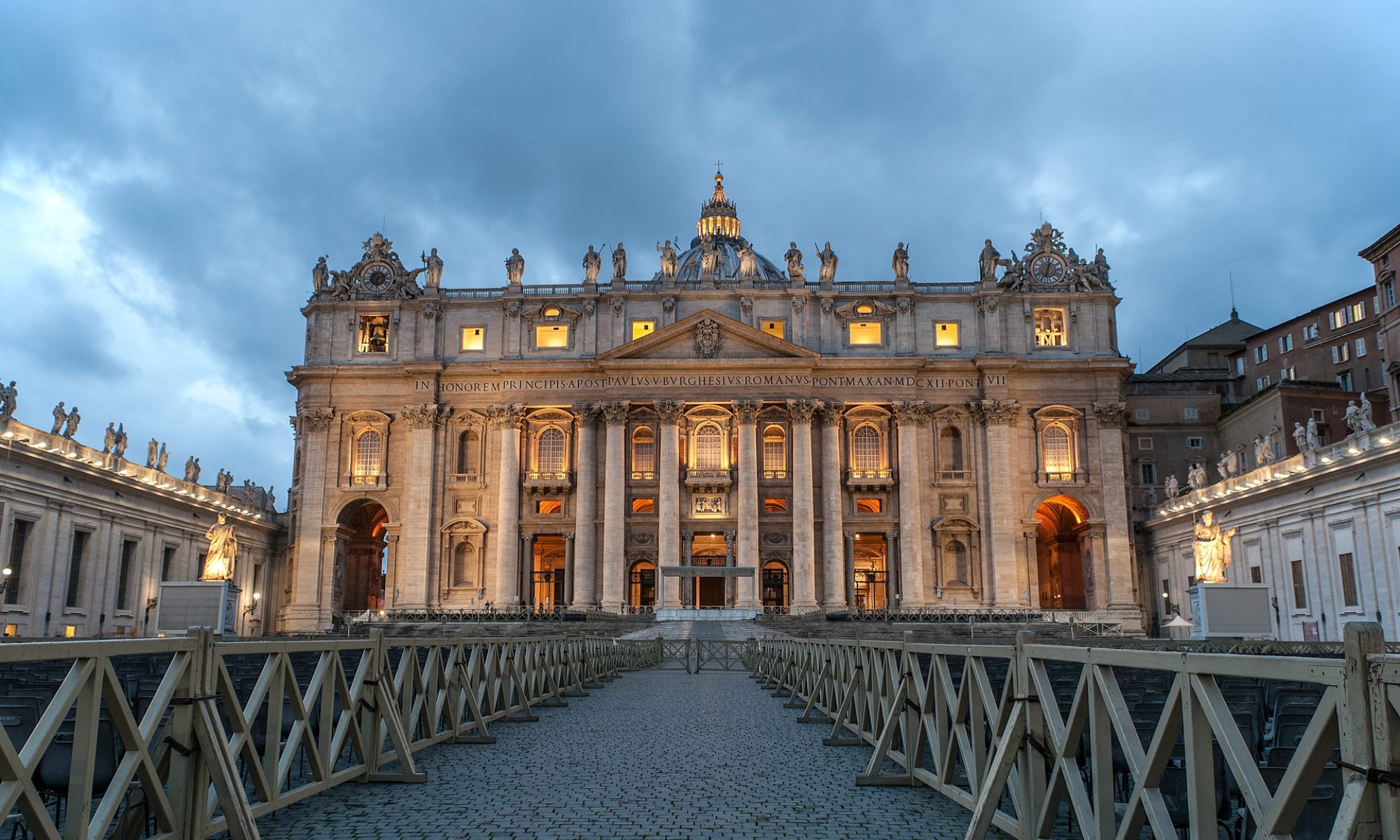
What remains at stake with the Roman Catholic Church 500 years after the Protestant Reformation? This question is of capital importance given the general ecumenical climate, which blurs differences and even finds them disturbing to talk about. The book Roman but Not Catholic: What Remains at Stake 500 Years after the Reformation provides timely food for thought in assessing the historical and theological implausibility of Rome being “catholic” and “Roman” at the same time. Written by two evangelical scholars (Kenneth Collins, professor of historical theology at Asbury Theological Seminary, and Jerry Walls, professor of philosophy at Houston Baptist University), this work is an engaging exercise in historical theology that helpfully grapples with the defining claims of the Roman Catholic Church: on the one hand, its claim of  “catholicity” (universality), and on the other, its “Roman” structure. This combination is essential to the self-understanding of the Roman Catholic Church, but it is highly questionable on various grounds. The book is a well-argued critique of the very fabric of Roman Catholicism.

Roman and Catholic?
First, let’s have a look at the main claim that shapes Roman Catholicism. Its catholicity has a Roman element so intertwined that it is an inextricable part of the whole. “Roman” is not just a geographical reference, but an essential and constitutive part of a system that is both Roman and catholic, or better still, “Roman Catholic” in a single breath. The romanitas of the system is co-essential with its catholicity. According to Jaroslav Pelikan, “the name ‘Roman Catholic’ conjoined the universality of the Church over the entire world, which has long been the content of the term ‘Catholic’, with the specificity of only one single see”[1], that of Rome.

Within the Western tradition, then, Roman catholicity is a long-established union of catholic universality and Roman particularity, catholic plurality and Roman unity, catholic comprehensiveness and Roman distinctiveness, the catholic totus (whole) and the Roman locus (place), catholic fullness and Roman partiality, catholic breadth and Roman narrowness, catholic elasticity and Roman rigidity, the catholic universe and the Roman center, catholic organism and Roman organization, the catholic faith and the Roman structure. Roman Catholicism wants to affirm both. But is it a warranted claim biblically or even historically?

Pointed Critique
Having briefly described the nature of the combination of Roman and Catholic elements in the Roman Catholic Church, the main critique of the authors is intelligently summarized at a number of points in the book. For example, the authors state, “Roman Catholicism represents not the universal church, as is so often claimed, but instead a distinct theological tradition, one among others” (p. 30, emphasis in the text). If Roman Catholicism is Roman, it cannot be truly catholic, and since Roman Catholicism wants to be Roman, it is not truly catholic.

The book surveys the development of Roman traditions that departed from the catholic (read: biblical) stream of the ancient church. Along the way, ecclesiastical voice and power supplemented and ultimately overtook biblical authority (ch. 2-4). The Roman Church grew its exclusive claims (ch. 6-7). The rise of the papacy became the climax of the Romanization of Catholicism (ch. 8 and 11-12). The sacraments were used to divide rather than to unite Christians (ch. 9). Accounts of the Mary of the Bible were idealized, which reflected the Roman Catholic synthesis (chps. 15-16).

“In short,” the authors say,“ironic though it is, the Church of Rome is not sufficiently catholic” (p. 83). The cumulative argument presented is that Rome wants to tie its romanitas (made of imperial structure, political power, hierarchical organization, extra-biblical traditions) to its status as the only church of Jesus Christ where the fullness of grace can be found. But this is exactly the point at issue. By wanting to be Roman, the Church ceases to be catholic. Hence the brilliant title: Roman but not Catholic!

This critique is always gently and respectfully put, but it has devastating effects on the self-understanding of the Roman Catholic Church if it is taken seriously. Among other things, it means that the Roman aspect of the church takes precedence over the biblical outlook and leads it away from clear biblical teaching in core areas like tradition, authority, Mariology, salvation, etc. It means that its Roman Catholicity was given primacy over its biblical catholicity, thus altering the fundamental commitments of the Roman Church.

One Standing Issue
The book is outstanding in its impressive scholarship and careful argumentation. I have many words of commendation with only one remaining criticism. The authors, though masterly at presenting a convincing case, don’t go far enough in coming to terms with its consequences. They still operate with the mindset that what divides Evangelicals and the Roman Catholic Church is less than what unites them. Here is the way they put it: “Deep Disagreement despite Deeper Agreement” (p. 78). According to them, the deeper agreement is the Trinitarian and Christological foundation of the “catholic” tradition (as it is enshrined in the early creeds of the ancient church), whereas the deep disagreement refers to the later Roman accretions (as they are, for example, reflected in the papacy).

This way of understanding the dividing line between Evangelicals and Catholics is popular in ecumenical circles, but it is not fully consistent with the thesis endorsed by the authors. The fact that the Roman Catholic Church is committed to its Roman identity and to its catholic heritage means that even the catholic (i.e. Trinitarian and Christological) core is affected by its Roman commitment. According to the Catholic Church, the Roman and non-biblical elements (i.e. the Roman pontiff, the Roman imperial institutions, the Roman hierarchical ecclesiology) are not accidents of history; they are considered to be de iure divino (i.e. stemming from divine law, being rooted in God’s will) constitutive components of the church. For Rome, its catholic and Roman dual identity is grounded in the divine will. So these foundational Roman commitments do impact the way  in which the “catholic” ones are understood and articulated in doctrine and practice. The “catholic” heritage of Rome has been shaped, curved, and bent by its Roman additions to the point that it is no longer the way it was in the ancient church. It is a different catholicity. It is Roman Catholicism.

Moreover, all of the spurious Roman elements are argued for in Trinitarian and Christological ways by Roman Catholic theology. For example, the Pope is believed to be the “vicar” of Christ and chosen by the Holy Spirit. This is a Trinitarian argument, but a kind of Trinitarianism that is significantly different from the biblical one to the point of allowing and demanding the wrong Roman developments.

The point is that the “deep disagreements despite deeper agreement” approach adopted in the book should actually be reversed. Between the Evangelical faith and Rome are deep agreements despite deeper disagreements. “Roman but not Catholic” means that the catholic that is in Rome is no longer biblically catholic, but distortedly Roman Catholic, and needs to be reformed according to the gospel.

[1]J. Pelikan, The Christian Tradition, vol. 4 (Philadelphia, PA: The Westminster Press, 1963) pp. 245-246.

154. The Loss of Credibility of the Roman Catholic Church and the Theological Issues at Stake

October 1st, 2018

The public image of the Roman Catholic Church emerging out of the sexual abuse scandals is that of a disrupted institution going through a season of internal turmoil. Having several top leaders (cardinals, bishops, priests) and institutions (seminaries, schools, the Vatican curia itself) incriminated for either abusing children or covering up abuses undermines the moral, spiritual, and institutional credibility of Rome.

Over the last ten years, horrible things have come to light: first in Ireland, then Australia, then Chile, and more recently in the USA (where a Pennsylvania Grand Jury report exposed systemic abuses committed by priests) and Germany (with a recent report saying that 3,677 children have been abused by Catholic priests since the 1940s).These are just five regions where exposure of the traumatic evidence meant that the scandals could no longer be covered up. The impression is that we have not yet reached the peak. The vast echo of these scandals reached the Vatican headquarters when former nuncio Carlo Maria Viganò accused vast sectors of the Roman Curia of covering them up and called for Francis’ resignation due to his inability to properly deal with the abuses.

Systemic Problem
The sexual abuse crisis has been on the table in a dramatically growing way since the years of Benedict XVI. Its increased scope was one of the reasons Pope Ratzinger felt overwhelmed, contributing to his abrupt resignation. The Roman Catholic Church has tried to deal with the issue first by using the analogy of the “black sheep”: these are terrible but isolated events and the church is dealing with them. Then, the magnitude and extent of the scandal revealed that the problem is neither regional nor limited to individual cases but lies within the culture and the structures of the church itself. Hence Francis’ recent letter to the Catholic people (20 August) calling for repentance and envisaging stricter procedures in the recruitment of the clergy, in the prevention of abuse, and in the prosecution of abusers.

The “black sheep” metaphor is no longer adequate. The problem is systemic and pervasive. The magnitude of the scandals challenges the doctrine of the indefectibility of the (Roman) church, i.e. the view that the church never errs and that only her “sons” make mistakes as individuals. No, the church as a whole is called into question by the abuse of thousands of children by its leaders.

There are several issues at stake here. When nearly half of its priests are sexually active (as evidenced in the book Sex and the Vatican), a structural problem is evident. It is more than the failure of many individuals. It is the failure of a whole system: its doctrines, practices, policies, and so on. In the words of the above mentioned Carlo Maria Viganò, former nuncio to the USA, “The homosexual networks present in the Church must be eradicated… These homosexual networks, which are now widespread in many dioceses, seminaries, religious orders, etc., act under the concealment of secrecy and lies with the power of octopus tentacles, and strangle innocent victims and priestly vocations, and are strangling the entire Church.” How will the church deal with the issue of homosexuality among its priests and its members? Will the church’s hierarchical structure be used to defend the victims, or to adopt a self-defending attitude? These continue to be standing and open questions.

More than a Moral Issue
Of course, every institution, every church, every community, every denomination is subject to failures. In this sense, the problem is not exclusively a Roman Catholic one. The Lord Jesus reminds us not to pass hypocritical judgment on others as if we were exempt from failing. If we are tempted to say, “Let me take the speck out of your eye”, we should be careful not to have “a plank in our own eye (Matthew 7:4).

Having said that, the disgusting scale of the scandal points to something bigger than a failure.

Here is what the above-mentioned report of Pennsylvania Grand Jury says:

There have been other reports about child sex abuse within the Catholic Church. But never on this scale. For many of us, those earlier stories happened someplace else, someplace away. Now we know the truth: it happened everywhere. We heard the testimony of dozens of witnesses concerning clergy sex abuse. We subpoenaed, and reviewed, half a million pages of internal diocesan documents. They contained credible allegations against over three hundred predator priests. Over one thousand child victims were identifiable, from the church’s own records. We believe that the real number – of children whose records were lost, or who were afraid ever to come forward – is in the thousands. Most of the victims were boys; but there were girls too. Some were teens; many were pre-pubescent. Some were manipulated with alcohol or pornography. Some were made to masturbate their assailants, or were groped by them. Some were raped orally, some vaginally, some anally. But all of them were brushed aside, in every part of the state, by church leaders who preferred to protect the abusers and their institution above all.

In Persona Christi?
A moral and institutional crisis? Yes, but there is more. One wonders whether a significant factor in determining the present-day moral disaster lies at the very heart of the theology of the Roman Church: not the only reason, but one that is often overlooked. The problem has to do with the Roman theology of priesthood and, in particular, with the organic association of the priest with Christ. The priest, by way of his office, acts in persona Christi, in the person of Christ, as if he were Christ himself. In Roman Catholicism, the priest acts in the person of Christ by pronouncing the words by which the bread becomes the body of Christ and the wine becomes the blood of Christ. The priest acts in the person of Christ by pronouncing God’s forgiveness in the sacrament of penance. The priest and bishop act in the person of Christ as the head through their leadership of the Church. The priest does not merely represent Christ, but acts as if he were Him.

This doctrine is grounded in the Roman Catholic understanding of the relationship between Christ and the church. According to Rome, the latter continues and prolongs the incarnation of the former. In his masterful assessment of Roman Catholic theology, Gregg Allison speaks of “the Christ-Church interconnection” as being one axis of the whole Catholic doctrine (Roman Catholic Theology and Practice, pp. 56-66). The church acts in persona Christi because she carries on the incarnation after Christ’s ascension as if she were Christ, claiming his authority, demanding the obedience that is due Him, ruling in His name and on His behalf.

When the leader of a church and the faithful who belong to it operate within such a theological framework, to “control” consciences becomes a natural outcome and to create a state of emotional dependency and submission is a consequence. When the priest (and the church that empowers and protects him) acts in persona Christi, he thinks he is beyond accountability from below. His priestly state is somewhat superior to that of the submitted, ordinary people. Moreover, the imperial, top-down hierarchical structures of the Church of Rome provide another theological reason for evil high-ranking priests to take advantage of weaker people belonging to an inferior rank.

Of course, there are other sociological and historical reasons that can explain the present-day abuses, but the theology encapsulated in the understanding of the priest as acting in persona Christi has had a role in creating a spiritual and cultural atmosphere of power in which abuses are tolerated. Will the church ever change its view of the priesthood as a separate, somewhat superior state acting in persona Christi?

As Martin Luther argued in his 1520 Address to the Nobility of the German Nation, the Church of Rome needed a biblical reformation of its theology of the priesthood based on the Christ-Church interconnection. For the Bible and for the Protestant Reformation, Christ alone is the head of the church, and its members are all equally endowed with the priestly role. None of them is “superior” to another. The Holy Spirit, not an institution or a class of people, is the only one who can be said as acting in persona Christi. This is a serious reform that Rome needed then and still needs today. Instead of defending its traditional outlook, which has lost all credibility, will Rome instead be open to change?

153. A Few Remarks on the Evangelical Fascination with the “Sacramental Tapestry” — A Book Review of Hans Boersma’s Two Volumes on the Topic

September 1st, 2018

In some evangelical circles, “sacramental theology” attracts a growing attention and, in a few cases, makes converts to Roman Catholicism. For many of those coming out of a neo-fundamentalist mindset, focused on battles for objective truth and the certainty of belief, and often fighting secondary battles, some evangelical theology finds in the present-day Catholic discourse on “mystery” a nuanced and intriguing attraction.

Two books by Hans Boersma, Nouvelle Théologie and Sacramental Ontology: A Return to Mystery (Oxford: Oxford University Press, 2009) and Heavenly Participation: The Weaving of the Sacramental Tapestry (Grand Rapids: Eerdmans, 2011), testify to the fascination some contemporary protestant theologians have for the categories of “sacrament” and “mystery.” These groupings were relaunched by the nouvelle théologie (new theology), a stream of Catholic thought (mainly French) that developed in the first half of the twentieth century. This strain of theology was highly influential at the Second Vatican Council and afterward.

These two volumes, the work of a professor at Regent College in Vancouver, Canada, form basically the same work: the first is the editio maior (expanded version) and the second is the editio minor (condensed version).

In the first volume, Boersma shows how, at the end of the 19thcentury, under the influence of the Enlightenment that had broken the relationship between faith and life, Catholic theology built a theological-philosophical system that, in order to fight against the Enlightenment, ended up assimilating its plausibility structures. The Neo-Thomism that was carved into the encyclical Aeterni Patris of Leo XIII (1879) was a rational, sophisticated, intellectualist apparatus that lost sight of the “mystery” of faith expressed in the liturgy and the sacraments.

The nouvelle théologie is a reaction to this drying up of faith through the rediscovery of a sacramental ontology that “opens” the eyes of faith to the world (M. Blondel, J. Maréchal, P. Rousselot), makes fluid the distinction between the natural and the supernatural (H. De Lubac and H. Bouillard), insists on the category of incarnation and human “participation” in the incarnation (H.U. von Balthasar and M.-D. Chenu), rediscovers the “spiritual” interpretation of Scripture and tradition (J. Daniélou and H. De Lubac), and invests a great deal on ecclesiology in sacramental terms (H. De Lubac and Y. Congar). In short, it proposes a re-appropriation of the pre-modern heritage of the Christian faith as a way to appreciate afresh its Roman Catholicity. Everything revolves around the category of ressourcement: return, re-appropriation, re-assimilation of the tradition and, by extension, of the “mystery”.

Boersma maintains that the Protestant Reformation has also been a movement of ressourcement, above all of the Word of God. However, because of its unresolved sacramentalogy and its dependence on Nominalism, the Reformation has lost sight of the ontology of the sacrament and has been instead absorbed into other accounts of reality (reason, feeling, “relevance”). His attempt, then, is to build a bridge between the rediscoveries made by the “new theology” and evangelical theology so that the sacramental ontology becomes an essential part of the latter.

By sacramental ontology, Boersma means “the conviction that historical realities of the created order served as divinely ordained, sacramental means leading to eternal divine mysteries” (289). To achieve this aim, he suggests an embrace of the category of “mystery”, to discover the dynamic unity between Scripture and tradition, to value the Eucharist as a sign of communion and the summit of ecclesial life, and to rethink the distinction between what is natural and what is supernatural in order to appreciate their substantial continuity.

If the first volume’s focus is historical, in the second volume the author opens up the implications of this immersion for evangelical theology. For him, it is a matter of rediscovering the “sacramental tapestry” of the created and redeemed reality. All the evangelical insistence on “propositional” truth should be tempered by the appreciation of a theology that is narrated, imagined, and symbolized, in search of deeper spiritual levels of meaning that go beyond the historical and literal sense and that are embodied in the sacraments. All the evangelical insistence on the “forensic” meaning of justification should be replaced by the experience of salvation as “participation” in divine realities. The sacramental mentality is imbued with real “participation”. Hence the title that indicates in “heavenly participation” the horizon of the Christian faith.

Boersma frequently uses the reference to “participation” without showing sufficient awareness of the implications of such use by Roman Catholic theology. In it, participation is used to dilute the understanding of Christ’s incarnation through its prolongation in the church, expanding the time of Christ’s revelation to that of the ecclesial tradition that supplements it, extending the presence of Christ in the Lord’s Supper to the “real presence” of the Eucharist, widening the work of salvation so as to include the human contribution to it, expanding Christology to make room for the claims of Mariology, etc. “Participation”, if not biblically defined and theologically understood, is the instrument through which theology becomes Roman Catholic theology.

After all, for Boersma what is at stake is to rebuild the synthesis between Platonism and Christianity that, well before the Protestant Reformation, was torn apart and replaced by the nominalist synthesis between Aristotelianism and Christianity. According to this view, the synthesis between Plato and the Gospel is the highest point of human thought. Is it really?

At this point, the author considers the Reformation to be a “tearing” of the one Church. However, was the church truly united before Luther? The Reformers did not separate from the church but gave the church a chance to rediscover the biblical gospel. Boersma’s view of the Reformation being the “tearing” of the one Church is historically simplistic and theologically reductionistic.

Dialoguing with Carl Raschke (The Next Reformation), Boersma hopes for a “forthcoming” and future Reformation that, away from the logic of  Scripture Alone, Faith Alone, and Christ Alone, will embrace the “great tradition” that unites all Christians and that is centered on the “catholic” emphases of the Eucharist, tradition, and the sacraments.

According to Boersma, the nouvelle théologie is the medicine that can heal the divisions between Catholics and evangelicals (190) by making the Catholics more evangelical and the Evangelicals more Roman Catholic. He seems to have a very idealized view of what Tradition and traditions are for Roman Catholicism. Has he ever visited a Catholic sanctuary or a Marian shrine or any religious festival? Is not his reading of Roman Catholicism based on the acquaintance of some enlightened theologian, rather than in real Catholic life?

Indeed, the “new theology” that Boersma wants to graft onto evangelical theology did not challenge the Catholic dogmas based on tradition rather than Scripture, did not change the traditional practices based on popular piety rather than Scripture, and did not modify the imperial structure of the Church based on tradition rather than Scripture. How can one be so optimistic about what the “new theology” can do if it has reinforced the Catholic system, rather than challenging it? It is evident that the author has felt its charming message and attraction to the point that his critical reading and overall analysis have lost their evangelical spine. Once the supreme authority of Scripture is fudged and justification by faith alone is blurred, is this theology still evangelical?

These books are a testimony of how theology can reach high levels of scholarship and sophistication without developing an adequate awareness of the issues debated. Alongside intelligent and timely observations, there are dangerous slips reflecting a theological naiveté when it comes to understanding the reality of Roman Catholicism as a whole.

The risk is that these sacramental accounts of theology fuel superficial ecumenical views without understanding what is at stake. The sacramental theology of present-day Roman Catholicism is the “heart” of Catholicism itself. One can understand how it can attract some evangelical circles that have not developed a biblically rich and historically aware theological imagination. Instead of the re-appropriation of the “great tradition” of the classical Christian faith (biblical, patristic, protestant, awakened, evangelical), they are fascinated with the version that is the core of the Roman Catholic synthesis. Is this the “next Reformation” they long for?

152. “Either Ecumenical or Proselytizer”? No, There is a Better Option

August 1st, 2018

Proselytism has become a bad word. Like fundamentalism or exclusivism, in today’s religious language, only the negative overtones of the term are retained and are used to convey a derogatory understanding of its meaning. In its original Greek context, the word simply meant “coming closer” to something. In the New Testament, a proselyte describes a non-Israelite who has come close to the Jewish faith (e.g. Matthew 23:15; Acts 2:10, 6:5, 13:43). In this sense, Christians have understood proselytism as akin to evangelism in the sense of calling all people to come closer to Jesus Christ. However, the historical record of proselytism carried out by Christians is tragically marred with all kinds of manipulative and violent means, making the word itself contrary to what biblical evangelism and mission should be.

In the present-day ecumenical context, Pope Francis has repeatedly warned against proselytism. The last episode in this campaign occurred a few weeks ago. Coming back from his visit to the Genevan headquarters of the World Council of Churches (June 21, 2018), Pope Francis gave an in-flight interview in which he summed up one of his main concerns as far as the prospects of the ecumenical movement are concerned. Here are his words: “In the ecumenical movement we have to take from the dictionary a word: ‘proselytism.’ Clear? You cannot have ecumenism with proselytism. You have to choose. Either you have an ecumenical spirit or you are a proselytizer.”

Blotting out the word? Choosing between being ecumenical or proselytizer? And these being the only two alternatives? What is happening here? What is behind all this?

What in the World is Proselytism?
The historical account for the way in which the word proselytism has been understood is long and lies beyond the scope of this article. To cut the story short, it will suffice to make reference to the 1995 document The Challenge of Proselytism and the Calling to Common Witness, drafted by the Joint Working Group between the Roman Catholic Church and the World Council of Churches (WCC). Here the main ecumenical body (WCC) and Rome articulate their concerns over the issue. Paragraph 19 states:

Proselytism stands in opposition to all ecumenical effort. It includes certain activities which often aim at having people change their church affiliation and which we believe must be avoided, such as the following:

– making unjust or uncharitable references to other churches’ beliefs and practices and even ridiculing them;

– comparing two Christian communities by emphasizing the achievements and ideals of one, and the weaknesses and practical problems of the other;

– employing any kind of physical violence, moral compulsion and psychological pressure e.g. the use of certain advertising techniques in mass media that might bring undue pressure on readers/viewers;

–  using political, social and economic power as a means of winning new members for one’s own church;

– extending explicit or implicit offers of education, healthcare or material inducements or using financial resources with the intent of making converts;

– manipulative attitudes and practices that exploit people’s needs, weaknesses or lack of education especially in situations of distress, and fail to respect their freedom and human dignity.

It is clear that the word is understood as carrying very bad connotations. Note the false alternative between Ecumenism and Proselytism (as if they are the only two options available to present-day Christians) and the lack of historical awareness and self-criticism (as if churches of all stripes have not used coercion in their endeavors to convert the world up to recent times). Of course, this description of proselytism (loaded with all kinds of evils, from violence to manipulation) makes the word utterly ugly. In this sense, proselytism is synonymous with abusive propaganda.

A shorter definition was already presented in 2001 in the European context by the WCC-related Conference of European Churches (CEC) and the Roman Catholic Council of European Bishops’ Conferences (CCEE). Together they produced a document that set the stage for ecumenism in the new millennium, the Charta Oecumenica (Ecumenical Charter), which contains the following description:

“Proselytism” is defined in multiple ways but is often understood as unethical or unfaithful practices in evangelizing those who are in some way already members of other churches or Christian communities.

Here again, proselytism is presented as being always marked by “unethical” and “unfaithful” behaviors. Certainly, it is the duty of Christians to evangelize in a manner worthy of the gospel, respecting the dignity of all human beings and acting in a Christ-like manner.

There is a further point to be underlined here that reinforces what has been previously observed. Notice that in the Charta Oecumenica what is rejected is to evangelize those who are “members of other churches or Christian communities”. Proselytism is therefore associated with the evangelization of those who are “members” of other churches, whether or not they are born-again Christians. What really matters is being a formal “member” of a church, not being regenerated by the Holy Spirit and being a believer in Jesus Christ. Charta Oecumenica adopts an ecclesiastical definition of who is a Christian, not a biblical one. According to this ecumenical document, we should not evangelize those who are already members of a given church. But does being a formal member of a church equal being a Christian in biblical terms? Obviously not.

At the recent Global Christian Forum in Bogotà (Colombia, April 24-27, 2018) the issue of proselytism again came out. In his speech at the Forum, the Roman Catholic representative, Bishop Brian Farrell, said the following:

By recognizing that we participate in a mutual baptism, Bishop Farrell provided a base on which to invite the Christian community to avoid all types of proselytism. Through baptism, “we enter into communion with God and the Christian community using the biblical form: through water and the Trinitarian formula.”

This is the standard ecumenical pattern already observed in the Charta Oecumenica: baptism (i.e. a sacrament of the church) is the entry point into fellowship with God (i.e. regeneration) and membership in the church, which in turn leads to the condemnation of “proselytism” towards those who are baptized. Hence evangelism to the “members” of a given church is proselytism and must be avoided at all cost.

Either Ecumenism or Proselytism?
Notice the subtle but significant shift that is taking place in ecumenical circles, which forms the background of the Pope’s statement: proselytism is no longer defined by unethical practices (e.g. violence and manipulation) but by its target (i.e. the “members” of a church). The recipient, rather than the manner, is the main qualifier of the term. Once the negative understanding of proselytism is in place, the real goal of this move becomes clearer. Since baptized people are already members of a church, it is unethical to evangelize them. Proselytism becomes a derogatory label to disqualify those who want to evangelize their neighbors because they are not believers, even though they might be “members” of a church, whatever that means for them.

We come back to where we started. The 1995 WCC-Catholic document said it clearly from the outset: “Proselytism stands in opposition to all ecumenical efforts”. The real issue is not so much the right exposing of all immoral practices that can accompany evangelism, but rather growing opposition to the fact that evangelism can be done by minority groups in places where the majority is nominally “Christian”. The trajectory of the ecumenical meaning of the word “proselytism” has moved from warning against immoral acts of a legitimate action to warning against all evangelism in already “Christianized” contexts by labeling it as proselytism.

Practically speaking, this means that all Catholics should not be evangelized by evangelicals because they are already members of the church; all Eastern Orthodox should not be evangelized by evangelicals because they are already members of the church; and so on. Evangelism has become unethical and is labeled as “proselytism”, not because it is carried out through immoral practices, but because it targets those who have been baptized. Hence, ecumenism – i.e. accepting all people as Christians on the basis of a sacrament administered by a church, not on the grounds of personal faith in the biblical Jesus Christ – stands in opposition to proselytism. Those who do not accept the ecumenical premise are bad people, i.e. proselytizers. Remember Pope Francis’ harsh comment:

“In the ecumenical movement we have to take from the dictionary a word: ‘proselytism.’ Clear? You cannot have ecumenism with proselytism. You have to choose. Either you have an ecumenical spirit or you are a proselytizer.”

The Better Option
If we follow this train of thought, here is the result. Take, for example, Italy. More than 90% of its population is a “member” of the Roman Catholic Church by virtue of baptism received at infancy. For most of these people, Christianity is a loose cultural marker with no spiritual significance whatsoever. Biblically speaking, most of them are not Christian at all, yet they are “members” of the Roman Church. If we evangelize them, are we committing the so-called sin of proselytism? If we follow the “logic” of the ecumenical definition endorsed by Pope Francis, the answer is “Yes”; evangelicals should not evangelize in majority Catholic, Orthodox and Protestant countries because the populations of these nations are “members” of the churches that baptized them.

If we take the train of thought that Pope Francis endorses, ecumenism becomes the “good” Christian platform that accepts all self-defined churches as legitimate expressions of the biblical church and all self-defined accounts of the gospel as legitimate versions of the biblical gospel. Those who maintain biblical standards for the definition of who is a Christian and what is the church, even if this means being outside of mainstream ecumenical correctness, are “bad” and pseudo-Christians, hence “proselytizers”. This is a trap for Bible-believing evangelical Christians: either evangelicals accept the definition of a Christian as being a “member” of a given church (and therefore stop evangelizing in majority Catholic and Orthodox contexts) or they become proselytizers (i.e. the ugly word of today’s religious vocabulary!). Evangelizing a “member” of a church becomes in itself an unethical and unfaithful practice. Will evangelicals fall into the trap that is there to discourage evangelism and mission in majority “Christianized” regions?

In asking to eradicate the word “proselytism” from the dictionary, Pope Francis stands on a recent tradition in Roman Catholic and ecumenical circles which on the surface rightly blames unethical practices in evangelism and warns against them. However, behind the surface, there are worrying elements that need to be considered.

This ecumenical consensus that Pope Francis now gives voice to blurs core elements of the gospel by replacing personal faith in Jesus Christ with a sacrament of the church as the main definition of who a Christian is. It also encourages a judgmental and negative attitude towards those evangelicals who work hard to evangelize in majority “Christianized” contexts, knowing that people might be “members” of a church without being born-again Christians. Furthermore, it can become a temptation to give new life to an old paradigm (cuius regio eius religio, i.e. “whose realm his religion”) that has done much harm in Europe by suffocating religious freedom. Instead of being forced to follow the religion of the ruler, as was the case in 16th century Europe, this new ecumenical consensus implies that the people need to stick to the religion they were baptized into when they were infants. These are all serious concerns that need to be addressed.

The choice between being ecumenical or a proselytizer that the Pope supports is both false and dangerous. It is false because it gives the idea that there are only two options available for Christians (which is not true), and it is dangerous because it warns against evangelism aimed at intentional persuasion addressed to all people regardless of their membership in a given church.

While clearly refuting all wrong methods of evangelism that betray the gospel itself (and therefore rejecting proselytism), Christians should treasure the privilege and the responsibility of presenting to all people the truth of the gospel of Jesus Christ, expecting their response and being aware that conversion implies change. As the Lausanne Covenant (1974), the most important document of contemporary evangelicalism, puts it in paragraph 4:

evangelism itself is the proclamation of the historical, biblical Christ as Saviour and Lord, with a view to persuading people to come to him personally and so be reconciled to God.

In other words, biblical evangelism needs to be faithfully practiced everywhere and towards all people, rather than being stigmatized and abandoned by this new wave of ecumenical correctness. Neither ecumenical nor proselytizer: Christians must be for the Gospel to all people. This is a far better option.


151. Eucharistic Hospitality? Between a Catholic “Yes” and a Roman “No”

July 1st, 2018

“Can a non-Catholic be given the Eucharist in the Catholic Church?” When asked this question by a Lutheran woman married to a Catholic man during his 2015 visit to a Lutheran Church in Rome, Pope Francis gave a convoluted answer, the gist which was “perhaps yes”, “perhaps no”, “I don’t know”, and “look at your conscience”. This was a personal question highlighting a more general and thorny issue. In times of increased ecumenical friendliness, when reconciliation among Christians is often portrayed as a given, people are asking why that purported unity is stopped by the Catholic Church when it comes to the Eucharist. This is especially true in countries like Germany where many couples are made up of Lutheran and Catholic spouses (and are therefore called “inter-confessional” families), who live together during the week and yet are divided on Sunday.

A Predominantly German Concern
This issue made headlines recently. In a nutshell, this is the background story: on 22 February of this year, the German Bishops’ Conference announced the publication of a pastoral guide on the sharing of the Eucharist by inter-confessional couples, providing some openings for the admission of the Eucharist to non-Catholic partners. The proposed opening was not yet generalized – it would have had to be decided on a case-by-case basis by individual bishops. Controversy arose immediately. In the weeks that followed, seven German bishops addressed the Vatican to seek clarification on an initiative that they believed violated the unity of the Church and undermined standard Catholic doctrine concerning the sacraments.

Pope Francis exhorted the German bishops to continue in dialogue and possibly reach a unanimous decision. A unanimous decision was not reached and, therefore, the Congregation for the Doctrine of the Faith (i.e. the Vatican office responsible for doctrinal issues) made it clear with a letter endorsed by the Pope himself that the text presented by the Bishops’ Conference raises considerable problems. The resulting decision: “The Holy Father has come to the conclusion that the document is not ripe for publication”.

A Specifically “Roman” Response
In the Vatican letter, the two main reasons for stopping the process are listed as follows:

 a. The question of admission to communion for evangelical Christians in inter-confessional marriages is an issue that touches on the faith of the Church and has significance for the universal Church.

b. This question has effects on ecumenical relations with other Churches and other ecclesial communities that are not to be underestimated. 

Here are some brief remarks. First, the Vatican reaffirms that, in dealing with the Eucharist, one touches on “the faith of the Church”, one of the main tenets of what Roman Catholicism stands for. Given the fact that the Eucharist is the “source and summit” of the Christian life (Lumen Gentium  11), the pastoral issues raised by inter-confessional couples need to be addressed within the dogmatic framework of Eucharistic doctrine, not at the expense of it, nor even at the relaxing of its parameters. Rome can be very flexible and nuanced (i.e. “catholic”) when it comes to discussing justification, conversion, mission, etc., but the Eucharist is what constitutes the sacramental self-understanding (i.e. Roman) of the Catholic Church and is one of its pillars. Rome could, therefore, sign the 1999 Joint Declaration on the Doctrine of Justification with the Lutherans without changing its eucharistic doctrine and practices, thus showing flexibility on the one hand and rigidity on the other. In 2016, the Pope could speak words of reconciliation and unity at the joint commemoration of the Protestant Reformation with the Lutherans in Lund (Sweden), but those kind words have no effect on the “real” unity around the Eucharistic table. Francis was very ecumenical then, and now he is very “papal” and “Roman”.

Secondly, the Vatican letter also shows concern that the openings envisioned by the German bishops would have an impact on other realities, such as couples formed by, say, Catholic and Methodist, Catholic and Anglican, or Catholic and Baptist spouses, thus paving the way to wide-spread and unwarranted Eucharistic hospitality. This “domino effect” is something that Rome is not prepared to accept if the doctrinal essence of the Catholic Eucharist is imperiled. Again, Rome can be very soft and adaptable in many respects, but the Eucharist is the core of its “Roman” identity and so it is strictly safeguarded.

In spite of the fact that Francis is perhaps the most ecumenical Pope that the Catholic Church has ever had, for the time being, no Eucharistic hospitality is on the horizon. And this is not by accident. This decision reflects the nature of Roman Catholicism, which is catholic in attitude only insofar as the Roman structures are maintained and reinforced. Rather than submission to biblical teaching, it is the dialectic between the “Roman” and the “Catholic” poles that governs the self-understanding and the policies of the Roman Catholic Church.