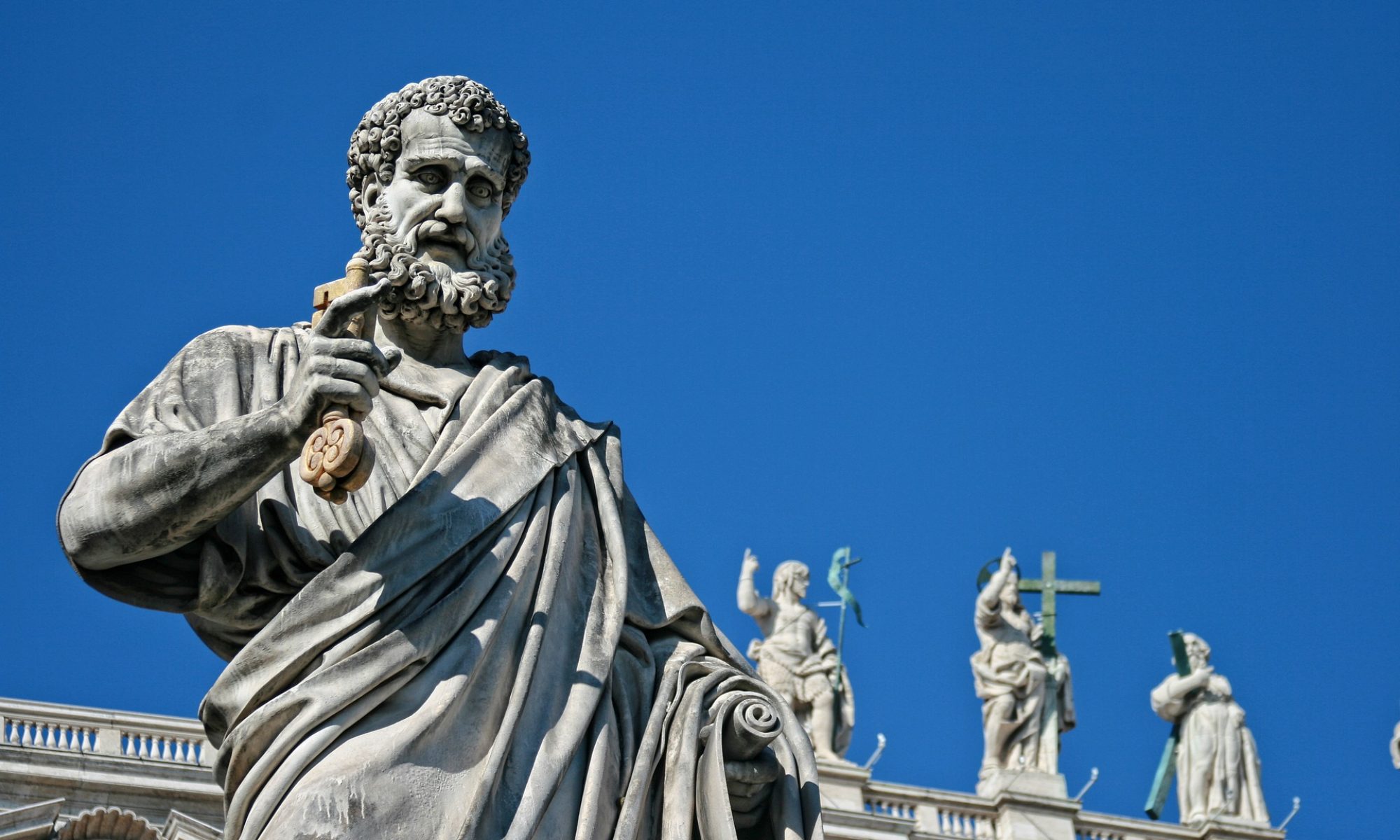
78. The New Saints and Pope Francis

April 5th, 2014

On 27th April two canonizations will take place in Rome. Two Twentieth century Popes will be proclaimed “saints” by the Catholic Church. John XXIII (Angelo Roncalli 1881-1963) and John Paul II (Karol Wojtyła 1920-2005) will be included in the canon, or list, of recognized saints. According to the Catechism of the Catholic Church “by canonizing some of the faithful, i.e., by solemnly proclaiming that they practiced heroic virtue and lived in fidelity to God’s grace, the Church recognizes the power of the Spirit of holiness within her and sustains the hope of believers by proposing the saints to them as models and intercessors” (828).

John XXIII and John Paul II were the two major Popes of the last century. It was John XXIII who convened the Second Vatican Council, the most significant event in contemporary Roman Catholic history. Then it was John Paul II that re-launched Catholicism as a global player, after decades, if not centuries, of prevailing self-defensiveness. The fact that the Church is canonizing the two together on the same day communicates a clear message concerning the present Pope. In a sense Francis wants to be identified with the “pastoral” afflatus of John XXIII while at the same time following the dynamism of John Paul II.

The Pastor Pope

Perhaps the most defining mark of John XXIII was the “pastoral” tone of his pontificate. Gentle in spirit, meek in manners, approachable by the people, Roncalli was the first modern Pope to not be perceived as a king but instead as a pastor. His language was simple and his human frame was humble. By no surprise, his main achievement, i.e. Vatican II, was meant to be a “pastoral” council. John XXIII did not want a rigidly “doctrinal” church that would judge the mistakes of the world but a loving “mother” who would offer protection and understanding for all.

Francis too is perceived as a “pastoral” Pope. Unlike his predecessor, the theologian Ratzinger, Francis continues to insist on the need for a change of attitude, leaving the doctrinal outlook of the Church in the background of what he says. His main message is centered around his pastoral sensitivity. Like John XXIII, Francis wants to embrace the world as it is. He does not want to change any doctrine, but wishes to draw nearer to the world. It is clear that John XXIII’s shadow is behind Francis’ way of interpreting his pontificate.

“To” and “From” the Ends of the Earth

John Paul II, however, is a more complex figure. In his long pontificate, this Pope travelled to the ends of the earth to take a strong Catholic identity and his energetic leadership to a polarized world (East/West and North/South). From the center of Catholicism, John Paul II went to the geographical peripheries to encourage Catholic renewal everywhere. Now, with the Argentinian Francis, the Pope who comes from the ends of the world, the Church travels back to Rome to bring the enthusiasm, the energy, and the concerns of the peripheries. Francis is reversing John Paul II’s journey. The direction of the movement is different (from periphery to center) but the energy that he is investing is similar. John Paul II re-ignited the Roman catholicity inside out, Francis is stirring the Catholic “mission” outside in.  The common thread between the two is that something is moving in a significant way.

The canonizations of John XXIII and John Paul II will focus on two past Popes but they will also speak of the present Pope. The pastoral catholicity of the former and the shaking and shaping ability of the latter are marks of Pope Francis. In some important respects Francis is reflected in both of these predecessors and this event will be a further opportunity to stress this identification.

77. Where is the Catholic Marriage Going?

March 21st, 2014

The family is at the center of Vatican concerns and activities. A Synod of Bishops is due to meet this coming October and then again in 2015. These important gatherings will address the challenges that the Catholic Church is facing concerning the difficult task of maintaining its traditional teaching in relationship with today’s realities, e.g.  many broken families, many divorces, many “new forms” of family even amongst practicing Catholics, not to mention what happens in secular society. Of course, the issue is huge and multifaceted.

One has to bear in mind that the present-day Catholic concern focuses primarily on the sacramental dimension of the problem. In other words, what does the Church do with the many Catholics who are divorced and are therefore excluded from the Eucharist? Should the Church soften the ban? Should it make provision for more “pastoral” approaches that could allow  their admission under certain circumstances? Ultimately, should the Church change its rigid sacramental categories and come to terms more with the “human”, frail, and transient aspects of marriage?

Kasper’s Way Forward

In preparation for the Synod Cardinal Walter Kasper was asked to introduce the discussion. His lecture (20th February) has stirred the internal debate and is polarizing opinions between reformists and traditionalists. The latest book by Kasper has a programmatic title: Mercy: The Essence of the Gospel and the Key to Christian Life (Paulist Press, 2014) and was publicly praised by Pope Francis as the best book he had personally read for some time. It is no chance that Francis has been insisting on “mercy” as the attitude that needs to characterize the Church in all its dealings with people.

Kasper’s lecture is a theological feast that blends Biblical exegesis, patristic writings, canon law and magisterial teaching throughout history. After revisiting all this against the background of the present-day crisis, Kasper envisages some possible “open doors” for those who have had failed marriages and whose conditions of life prevent them from any possible reconciliation. He makes references to the practice of the early church that used to re-admit people who divorced in some specific cases and that is still kept in the Eastern Orthodox Churches.

How can a well established Roman Catholic teaching change? Kasper is aware of the newness of his proposal and suggests that the current situation is analogous to that of the Second Vatican Council on issues of ecumenism and religious freedom. The Church had been against both issues for centuries, but “the Council opened doors” by deciding that a “development” should take place and therefore recognized religious freedom and embraced ecumenism. What should prevent the same from happening with the admission of divorced couples to the Eucharist?

The “Sacramental” Bottom-Line

Non-Catholics may fail to understand the depth and the intensity of the problem. It is not so much about the indissolubility of marriage per se and the realization that divorce is part of the fallen world. It has to do with the sacramental theology that lies at the heart of the Roman Catholic religion. According to Catholic doctrine, marriage is a sacrament, i.e. an “efficacious sign of grace, instituted by Christ and entrusted to the Church, by which divine life is dispensed to us” (Catechism of the Catholic Church, n. 1131). The essence of marriage is not a human covenant before God, but a divinely appointed channel of grace that is administered by the Church. “Normalizing” the failure means downplaying the sacrament and therefore shaking the sacramental institution that dispenses it. The fact that the discussion is also about the admission to the Eucharist, i.e. another sacrament, nay the chief sacrament, further amplifies the issue.

Any talk about marriage, divorce, re-marriage and the Eucharist is a talk about the sacramental nature of the Church. Kasper quoted the “development” that took place during Vatican II concerning ecumenism and religious freedom. This is true but neither of those issues impinged on the sacramental structure of the Church. They were sacramentally-free developments, so to speak. Re-admitting divorced people to the Eucharist surely has a “pastoral” dimension to it, but it is essentially a dogmatic issue in that it revolves around the identity of the sacrament, i.e. a divinely appointed efficacious sign of grace entrusted to the Church.

The Roman Church is built around the notion of the sacrament. It is a thoroughgoing sacramental institution. Cardinal Kasper (along with Pope Francis?) wants to emphasize the need for “mercy”, but is he counting the dogmatic weight of such a move? A more “human” and “merciful” sacrament will mean a more humble and modest Church, certainly not the Catholic Church that stemmed out of the Councils of Trent, Vatican I and Vatican II. 

77. ¿Hacia dónde va el matrimonio católico?

29 de Marzo de 2014

La familia está situada en el centro de las preocupaciones y actividades del Vaticano. Se está preparando un Sínodo de Obispos que tiene previsto congregarse el próximo octubre y luego de nuevo en 2015. En estas importantes reuniones se abordarán los desafíos que la Iglesia Católica está enfrentando con referencia a la difícil labor de mantener sus enseñanzas tradicionales en relación con las realidades de hoy en día, p.e., muchas familias desestructuradas, gran cantidad de divorcios así como copiosas “nuevas formas” de familia, incluso entre católicos practicantes, por no mencionar lo que ocurre en la sociedad secular. Por supuesto, este problema es enorme y multifacético.

Hay que tener en cuenta que la inquietud católica actual se concentra ante todo en la dimensión sacramental del problema. En otras palabras, ¿qué hace la Iglesia con los numerosos católicos que están divorciados y, por consiguiente, excluidos de la Eucaristía? ¿Debería la Iglesia suavizar las prohibiciones? ¿Debería establecer disposiciones para métodos más “pastorales” que pudieran permitir su admisión bajo ciertas circunstancias? Por último, ¿debería cambiar la Iglesia sus rígidas categorías sacramentales y aceptar los aspectos más pasajeros, frágiles y “humanos” del matrimonio?

 La Forma de Avanzar según Kasper

En vistas a la preparación del Sínodo se le pidió al Cardenal Walter Kasper que presentara el debate. Su conferencia (el 20 de febrero) ha suscitado la discusión interna y está polarizando las opiniones entre los reformistas y los tradicionalistas. El último libro de Kasper lleva el programático título:  “Mercy: The Essence of the Gospel and the Key to Christian Life”  (Misericordia: La Esencia del Evangelio y la Clave para la Vida Cristiana) (Paulist Press, 2014) y fue elogiado públicamente por el Papa Francisco como el mejor libro que personalmente había leído en bastante tiempo. No es casualidad que Francisco haya estado insistiendo en la “misericordia” como la actitud que debe caracterizar a la Iglesia en todas sus relaciones con la gente.

La conferencia de Kasper es una fiesta teológica que mezcla la exégesis bíblica, los escritos patrísticos, el derecho canónico y la enseñanza magisterial a lo largo de la historia. Después de revisar todo esto en el contexto de la crisis actual, Kasper contempla algunas posibles “puertas abiertas” para aquellos que han fracasado en sus matrimonios y cuyas condiciones de vida les impiden una posible reconciliación. Hace referencia a las prácticas de la iglesia primitiva que readmitían a las personas que se habían divorciado en algunos casos determinados y estas mismas costumbres todavía se mantienen en las Iglesias Ortodoxas Orientales.

¿Cómo puede un católico romano bien establecido enseñar un cambio? Kasper es consciente de la novedad de su propuesta y sugiere que la presente situación es análoga a la del Concilio Vaticano Segundo en los temas del ecumenismo y la libertad religiosa. La Iglesia ha estado en contra de ambos temas durante siglos, pero “el Concilio abrió las puertas” decidiendo que debía producirse una “evolución” y, por consiguiente, reconoció la libertad religiosa y abrazó el ecumenismo. ¿Qué impediría que sucediera lo mismo con la admisión de las parejas divorciadas en la Eucaristía?

 La Línea de Fondo “Sacramental”

Los no católicos puede que fracasen en comprender la profundidad y la intensidad del problema. No se trata tanto de la indisolubilidad del matrimonio  per se  y del discernimiento de que el divorcio forma parte del mundo caído. Tiene que ver con la teología sacramental que se halla en el corazón de la religión católico romana. Según la doctrina católica, el matrimonio es un sacramento, es decir, un “signo eficaz de la gracia, instituido por Cristo y confiado a la Iglesia por el cual nos es dispensada la vida divina”  (Catecismo de la Iglesia Católica, n. 1131).  La esencia del matrimonio no es un pacto humano ante Dios, sino un canal de la gracia divinamente designado que es administrado por la Iglesia. “Normalizar” el fracaso significa la minimización del sacramento y, por lo tanto sacudir la institución sacramental que lo dispensa. El hecho de que la discusión sea también acerca de la admisión en la Eucaristía, o sea, otro sacramento, mejor dicho el principal sacramento, amplifica más el tema.

Cualquier conversación sobre el matrimonio, el divorcio, el casarse de nuevo y la Eucaristía es un coloquio acerca de la naturaleza sacramental de la Iglesia. Kasper citó la “evolución” que tuvo lugar durante el Vaticano II concerniente al ecumenismo y a la libertad religiosa. Esto es cierto, pero ninguna de aquellas cuestiones incidía en la estructura sacramental de la Iglesia. Eran avances “sacramentalmente libres”, por así decirlo. Readmitir a personas divorciadas en la Eucaristía tiene seguramente una dimensión “pastoral” hacia las mismas, pero es fundamentalmente un tema dogmático en cuanto que gira en torno de la identidad del sacramento, es decir, un signo eficaz de la gracia divinamente instituido y confiado a la Iglesia.

La Iglesia Romana está construida alrededor del concepto del sacramento. Es una institución sacramental profunda. El Cardenal Kasper (¿junto con el Papa Francisco?) quiere resaltar la necesidad de la “misericordia”, pero ¿tiene en cuenta el peso dogmático de tal acción? Un sacramento más “humano” y “misericordioso” significará una Iglesia más humilde y modesta, que sin duda no será la Iglesia Católica que surgió a raíz del Concilio de Trento, del Vaticano I y del Vaticano II.

76. The Catholicity of Pope Francis

March 10th, 2013

One year ago (March 13th) Cardinal Bergoglio was elected as pope Francis. Different evaluations of the first year are mushrooming everywhere in the form of books and editorials. They suggest various interpretations of what the Pope has been doing, saying and implementing thus far. As his first anniversary approaches several questions seem appropriate to ask, and all of them assume that something significant has been happening. What has been the “Francis effect” on the church? The simplest answer is that he is envisaging a different kind of catholicity.

Roman Catholic Catholicity

In the Roman Catholic understanding catholicity has to do simultaneously with unity and totality. The basic premise is that multiplicity should be brought into a unity. The Church is seen as an expression, a guarantor and a promoter of true unity between God and humanity and within humanity itself. In Vatican II terms, the Church is a “sacrament of unity”. As long as the institutional structure which preserves this unity remains intact (i.e. the Roman element), everything can and must find its home somewhere within its realm (i.e. the catholic element).

The catholic mindset is characterized by an attitude of overall openness without losing touch with its Roman center. It is inherently dynamic and comprehensive, capable of holding together doctrines, ideas and practices that in other Christian traditions are thought of as being mutually exclusive. By way of its inclusive et-et (both-and) epistemology, in a catholic system two apparently contradicting elements can be reconciled into a synthesis which entail both. In principle, the system is wide enough to welcome everything and everyone. The defining term is not the Word of God written (sola Scriptura) but the Roman Church itself. From a catholic point of view then, affirming something does not necessarily mean denying something else, but simply means enlarging one’s own perspective of the whole truth. In this respect, what is perceived as being important is the integration of the part into the catholic whole by way of relating the thing newly affirmed with what is already existing.

Catholicity allows doctrinal development without a radical breach from the past and also allows different kinds of catholicity to co-exist. Each Pope has his own catholicity project. John Paul II pushed for the church to become a global player, thus expanding the geographical catholicity and its profile with the media. Benedict XVI tried to define catholicity in terms of its adherence to universal “reason”, thus trying to reconnect the chasm between faith and reason that Western Enlightenment had introduced. These catholicity projects are not mutually exclusive, but they all contribute to the overall dynamic catholicity of the Church. They were all organically related to the Roman element that safeguards the continuity of the system.

Mapping Francis’ Catholicity

After one year of his pontificate it is becoming apparent what kind of catholicity Francis has in mind. He wants to build on John Paul II’s global catholicity while shifting emphases from Wojtyła’s doctrinal rigidity to more inclusive patterns. He pays lip service to Ratzinger’s rational catholicity, but wants to move the agenda from Western ideological battles to “human” issues which find appeal across the global spectrum. If Ratzinger wanted to mark the difference between the Church and the world, Francis tries to make them overlap. In shaping the new catholicity he seems closer to the “pastoral” tone of John XXIII, who will be canonized (i.e. declared a “saint”) next April. So there is continuity and development. This is the gist of catholicity. 

Francis has little time for “non-negotiable” truths, and gives more attention to the variety of people’s conscience. He is more interested in warmth than light, more in empathy than judgment. He focuses on attitude rather than identity, and on embracing rather than teaching. He underlines the relational over the doctrinal. For him proximity is more important than integrity. Belonging together has priority over believing differently. Reaching out to people comes before calling them back. Of course all these marks are not pitted against each other, but their relationship is worked out within a new balance whereby the first one determines the overall orientation. Roman catholicity works this way: never abandoning the past, always enlarging the synthesis by repositioning the elements around the Roman center.

Francis calls this catholicity “mission”. The word is familiar and intriguing for Bible-believing Christians, yet one needs to understand what he means by it beyond what it appears to mean on the surface.


76. La Catolicidad del Papa Francisco

15 DE MARZO DE 2014

Hace un año (el 13 de Marzo), el Cardenal Bergoglio era elegido como el Papa Francisco. Diferentes evaluaciones de este primer año proliferan por todas partes en forma de libros y editoriales. Las mismas muestran varias interpretaciones de lo que el Papa ha hecho, dicho y realizado hasta ahora. Como su primer aniversario se aproxima parece adecuado formular varias preguntas, y en todas ellas se supone que algo significativo ha estado ocurriendo. ¿Cuál ha sido el “efecto Francisco” en la iglesia? La respuesta más sencilla es que el Papa está imaginando una clase diferente de catolicidad.

 La Catolicidad Católico Romana

La comprensión católico romana de la catolicidad tiene que ver simultáneamente con la unidad y la totalidad. La premisa básica es que la multiplicidad debe adaptarse a una unidad. La Iglesia es vista como una expresión, un garante y un promotor de la unidad verdadera entre Dios y la humanidad y dentro de la propia humanidad. En términos del Vaticano II, la Iglesia es un “sacramento de unidad”. Siempre y cuando la estructura institucional que preserva esta unidad permanezca intacta (es decir, el elemento romano), todo puede y debe encontrar su hogar en algún lugar dentro de su reino (o sea, el elemento romano).

La mentalidad católica se caracteriza por una actitud de apertura total sin perder el contacto con su centro romano. Es intrínsicamente dinámica y global, capaz de mantener juntas doctrinas, ideas y prácticas que en otras tradiciones cristianas son consideradas como mutuamente excluyentes. Por medio de su inclusiva epistemología  et-et , en un sistema católico dos elementos aparentemente contradictorios pueden conciliarse en una síntesis que implica a ambos. En principio, el sistema es lo suficientemente amplio para dar la bienvenida a todo y a todos. El término a definir no es la Palabra de Dios escrita  (sola Escritura)  sino la propia Iglesia Romana. Entonces, desde un punto de vista católico afirmar algo no significa necesariamente negar otra cosa, sino simplemente quiere decir ensanchar la propia perspectiva de la verdad entera. A este respecto, lo que se percibe como importante es la integración de la parte en el todo católico por el medio de relacionar lo recién afirmado con lo que ya existe.

La Catolicidad permite un desarrollo doctrinal sin una ruptura radical con el pasado y también admite que coexistan diferentes clases de catolicidad. Cada Papa tiene su propio proyecto de catolicidad. Juan Pablo II presionó mucho para que la iglesia se convirtiera en un actor global, expandiendo en consecuencia la catolicidad geográfica y su perfil con los medios de comunicación. Benedicto XVI intentó definir la catolicidad en términos de su adhesión a la “razón” universal, tratando así de volver a conectar el abismo entre la fe y la razón que la Ilustración Occidental había introducido. Estos proyectos de catolicidad no son mutuamente exclusivos, pero todos ellos contribuyen a la dinámica global de la catolicidad de la Iglesia. Todos estaban orgánicamente relacionados con el elemento romano que garantiza la continuidad del sistema.

 La Planificación de la Catolicidad de Francisco

Después de un año de pontificado es cada vez más evidente la clase de catolicidad que tiene Francisco en mente. Quiere construir sobre la catolicidad global de Juan Pablo II al tiempo que cambia el énfasis de la rigidez doctrinal de Wojtyla a modelos más integradores. Defiende “de palabra” la catolicidad racional de Ratzinger, pero desea impulsar el programa desde las batallas ideológicas de Occidente a los asuntos “humanos” que son más atractivos en todo el espectro mundial. Si Ratzinger quería marcar la diferencia entre la Iglesia y el mundo, Francisco intenta hacer una superposición. Al modelar la nueva catolicidad parece estar más cerca del tono “pastoral” de Juan XXIII, quien será canonizado (es decir, declarado “santo”) el próximo mes de abril. Así hay continuidad y desarrollo. Esta es la esencia de la catolicidad.

Francisco tiene poco tiempo para las verdades “no negociables” y presta más atención a la diversidad de la conciencia de las personas. Está más interesado en la calidez que en la luz y más en la empatía que en el juicio. Se centra en las actitudes más que en las identidades y en abrazar más que en enseñar. Destaca las relaciones sobre las doctrinas. Para él la proximidad es más importante que la integridad. La pertenencia conjunta tiene prioridad sobre la creencia diferente. Llegar a las personas está antes que invitarles a regresar. Por supuesto, todas estas calificaciones no se oponen mutuamente, pero su relación se ha elaborado en el marco de un nuevo equilibrio, por lo cual el primero determina la orientación general. La catolicidad romana funciona de esta forma: no abandonar nunca el pasado y ampliar siempre la síntesis por medio del reposicionamiento de los elementos que están alrededor del centro romano.

Francisco llama “misión” a esta catolicidad. La palabra es familiar e intrigante para los cristianos creyentes en la Biblia; sin embargo, se tiene que comprender lo que quiere decir con ello, más allá de lo parece significar en la superficie.