83. What Francis Really Thinks of the Reformation (and of Calvin in Particular)

June 23rd, 2014

Friendly. Appreciative. Always wanting to stress commonalities and to lay aside differences. This has been the popular image of Pope Francis in his dealings with non-Catholics thus far. Many are impressed by his easy-going style that often seeks to affirm others. This may have been the rule but now there is an exception, and a very significant one. The recent re-publication of a lecture on the history of the Jesuits that Archbishop Bergoglio gave in Argentina in 1985 indicates the kind of harsh assessment that he gave of the Protestant Reformation in general and of John Calvin in particular. The lecture was re-published in Spain in 2013 and then translated into Italian in book form (Chi sono i gesuiti, Bologna: EMI, 2014). Since there is no indication that he has changed his mind, we have to consider the contents of the book an accurate reflection of what Francis still thinks of the Protestant Reformation.

Protestantism as the Root of all Evils

In examining the history of the Jesuits Bergoglio gives special attention to their interactions with the Reformation and their role in the Latin-American missions. According to him the inevitable consequences of the Reformation are the annihilation of man in his anxiety (resulting in existential atheism), and a leap in the dark by a type of superman (as envisaged by Nietzsche). Both outcomes lead to “the death of God”, and a kind of “paganism” that manifests itself as Nazism and Marxism. All this originating from the “Lutheran position”! Bergoglio argues that the Reformation is the root of all the tragedies of the modern West, from secularization to the death of God, from totalitarian regimes to ideological suicides.

There is nothing new under the sun. This disparaging and appalling view of the Reformation has been the common reading of modern European history by scores of Counter-reformation Catholic polemists until recent decades. Bergoglio did not invent it. He rather reaffirms it as if more thorough historical research and theological and cultural analyses never took place after the Council of Trent. What can we make of his friendly tones towards Protestants if he really thinks that the “Lutheran position” is to be blamed for all the evils of Western civilization?

John Calvin the Spiritual Executioner

There is more. Bergoglio makes a distinction between Martin Luther the “heretic” and John Calvin the “heretic” and “schismatic”. The Lutheran heresy is “a good idea gone foolish”, but Calvin is even worse because he also tore apart man, society, and the church. As for man, Bergoglio’s Calvin split reason from the heart, thus producing the “Calvinist squalor”. In society, Calvin pitted the bourgeoisie against the other working classes, thus becoming “the father of liberalism”. The worst schism happened in the church, however. There Calvin “beheaded the people of God from being united with the Father”. He beheaded the people of God from its patron saints. He also beheaded it from the mass, i.e. the mediation of the “really present” Christ. In summary, Calvin was an executioner that destroyed man, poisoned society, and ruined the church!

To say that Bergoglio does not like Calvin is an understatement. He has strong feelings against him. But are we sure that he understands Calvin beyond totally biased and outdated clichés? 2017 will mark the 500th anniversary of the Protestant Reformation and will be an opportunity for Francis to go back to more recent history books and get a fairer and more accurate picture of what happened from the XVI century onwards. If he does not revise his assessment of the Reformation all “ecumenical” language will be a superficial mask hiding a real hatred for Luther and (especially) Calvin.

Share Button

82. A Mini-Assisi for the Holy Land?

June 17th, 2014

Assisi is the small town where Francis of Assisi (1181- 1226) lived most of his life and is now a destination for thousands of pilgrims every year. Assisi is also the place where in 1986 Pope John Paul II convened a prayer meeting for peace where different religious leaders came together to pray, each one in his own way and to his own G/god(s). This inter-religious prayer initiative raised some concerns within the Catholic Church as well as outside of it. Was it an endorsement of religious universalism? Was it a way to downplay the exclusive claims of the Gospel? Did it give the impression that all religions are equal? What kind of theology supported that inter-faith and multi-religious prayer? Although Pope Benedict tried to address some of these issues, this debate continues.   

Now Pope Francis has entered the debate in a most unpredictable way. During his recent visit to the Holy Land he invited the Israeli President Shimon Peres and the Palestinian leader Mahmoud Abbas to pray for peace in the region (June 8th). In a way this was a mini-Assisi type of event.

The Power of Symbols and the Inherent Confusion

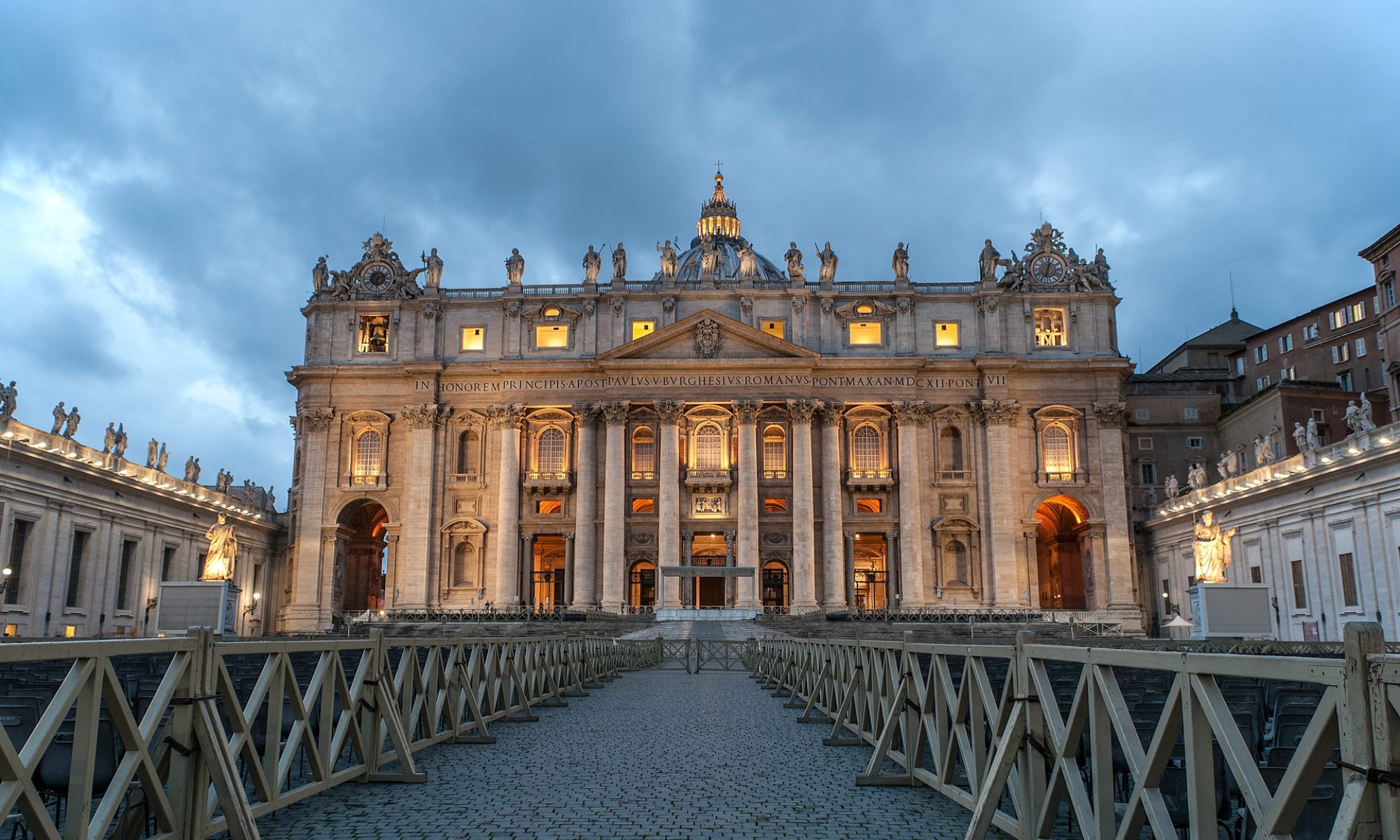
The prayer took place in the Vatican, but the scene was very similar to what happened in Assisi. The Pope (dressed in his usual white robes) sat at the center of a semi-circle, with the Israeli and Palestinian delegations (all dressed in dark black suits) at his right and left hand sides. St. Peter’s cupola overshadowed them all. It was the same setting of Assisi with the Pope being recognized as the “center” of inter-faith dialogue and presiding over inter-religious prayers. In their short speeches both Peres and Abbas readily praised the strategic leadership of the Pope in bringing reconciliation. All the symbols present strongly supported the view that the Papacy is a key institution in bringing the whole of humanity together.

The main difference is that in Assisi John Paul II had invited religious leaders whereas Francis brought political leaders together to pray. No matter what one thinks of inter-faith prayer, the 1986 event was at least coherent in that it called religious leaders to take part. Now, Francis wanted presidents to pray with him instead. The significance of this can be hardly overestimated. The Pope is also head of a state (i.e. the Vatican City) and therefore wears two hats, so to speak. He is a peer of both religious and political leaders. In asking the Israeli President to pray a Jewish prayer and the Palestinian President to pray a Muslim prayer, however, he wrongly attributed to them the role of being representatives of the majority religions of their countries. He exchanged their responsibilities of representing all citizens (e.g. Israeli Christians and Palestinian Christians included) by giving them the hat of Jewish and Muslim religious leaders.

The confusion lies at the heart of the Roman Catholic Church. Because the Pope is both a religious leader and a head of state the distinction between what belongs in the realms of both religion and state is significantly blurred. Francis invited his fellow heads of state and asked them to perform a religious duty as if they were religious leaders. He projected his own dual-identity (religious and political) onto his guests. This in no way represents a healthy relationship between the two spheres.

Standing Perplexities

The 2014 mini-Assisi gathering also used similar language that was used in 1986. In his prayer Francis invoked God as “God of Abraham, God of the Prophets, God of Love” who calls us to live “as brothers and sisters”. He strongly advocated the idea that we have to “acknowledge one another as children of one Father”. “Brother” was the most frequently used word in his speech and the universal Fatherhood of God was the theological framework of the event.

Now this whole language is ambiguous at best. It can be used to indicate the need for peoples of different backgrounds and religions to live together in peace as if they were brothers and sisters. Or it can mean that they are already brothers and sisters, children of the same Father, no matter what their religious convictions are. The stress on the “same God” idea strongly suggests that the latter interpretation is what Francis really meant. The fact that a Christian prayer (with a final invocation to Mary, “the daughter of the Holy Land and our Mother”), a Jewish prayer, and a Muslim prayer were offered one after the other, all containing references to the “same God-same humanity”, points to the idea that all religions are in the end good in themselves, provided that they restore and maintain peace. This is actually what most people took from the mini-Assisi of Pope Francis. After the cautious reservations of Pope Benedict, the “spirit of Assisi” still breathes in the Vatican.

Share Button