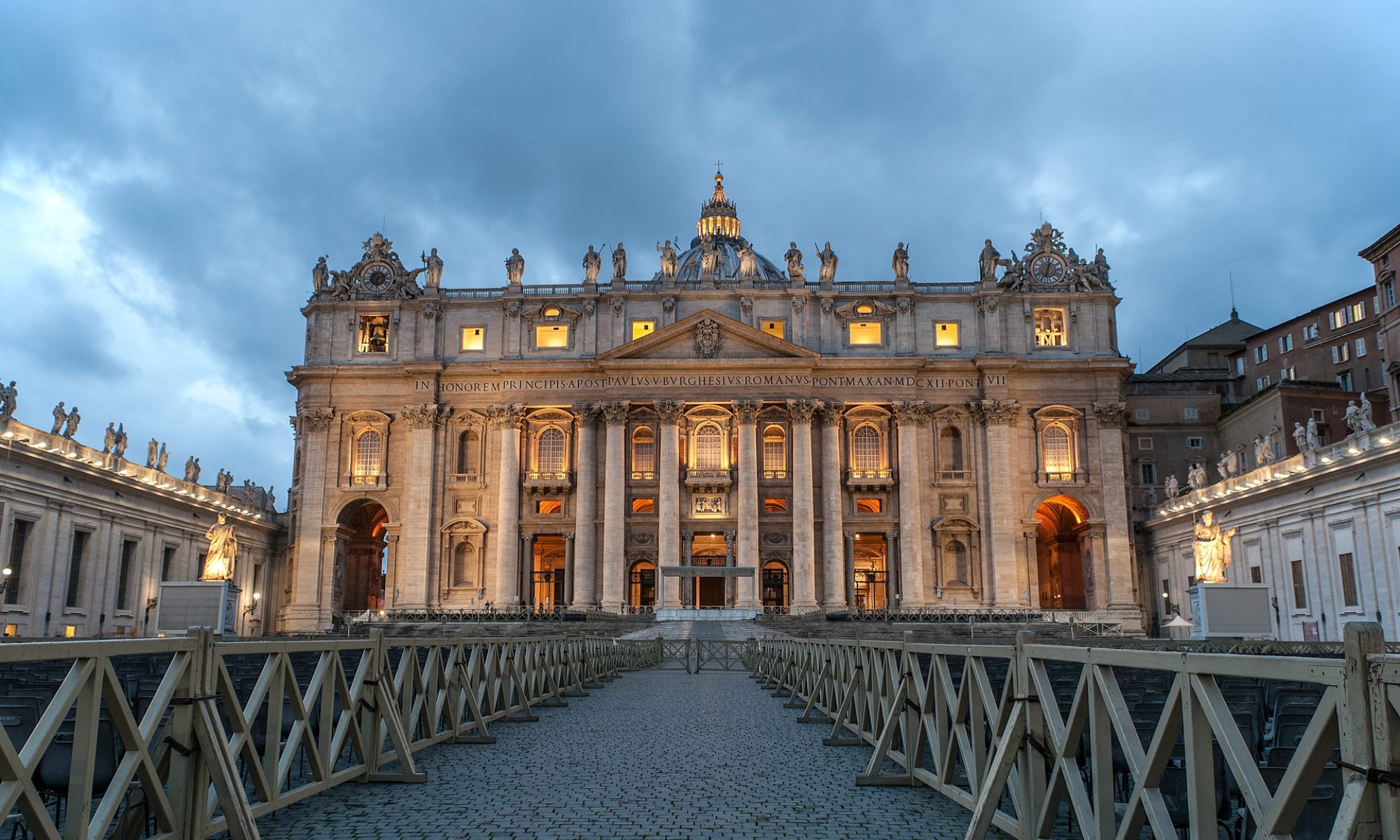
100. The Idols of Rome

January 31st, 2015

Idolatry has become a theme of renewed interest in recent theological discussion. It neatly describes what the Bible warns against, and it helps to make sense of the overarching narrative of the Christian message. Idols are the enemies of God and try to replace God as the ultimate source of human life. Here is how Tim Keller identifies the essence of an idol in Augustinian terms: “If you love anything more than God, even though you believe in God, if there is anything in your life that is more important to your significance or security than God, then that is an idol – a kind of pseudo-god, a false god, a covenant master”.[1]

Idols are counterfeit gods that infiltrate personal lives and divert them from searching for God and following Him. It would be utterly simplistic to think of idols only operating in individuals or groups of people. If the presence of idols is so pervasive in the whole of human life, certainly they have a place in cities. Actually, cities are spatial and cultural spaces for idols to shape and destroy what comes under their dominion. Idolatry is therefore an “interpretative key” to come to terms with the spiritual condition of the city. Here I offer my homework as far as the city of Rome is concerned. This is a tentative sketch of what the idols of Rome look like. They are in chronological order, going back to the ancient past of Rome down to its present-day outlook. The idols do not replace one another, but they build on each other.

Idol n. 1 PAX ROMANA (The Roman Peace)

From the second century BC until 476 AD, Rome dominated the ancient world. Its status quo was named pax romana, the Roman peace. Its goal was to have dominion over nations and to exercise political power. Through military conquest this “peace” was taken to the world. But it was hardly a real “peace” for anyone. It was actually based on the use of violence, the imposition of slavery and the oppression of dissenters. The Pax Romana is gone as a political system but its achievements in terms of architecture and ruins are famous throughout the world. Moreover, it influences the culture of the city by way of infusing a kind of spiritual arrogance and the illusion of being at the center of the world. The gospel brings another kind of peace: the shalom of God, the peace of God that gives dignity and reconciliation in Christ.

Idol n. 2 PAPAL CATHOLICA (The Religious Stronghold)

As the Rome Empire faded away, the city was run until 1870 by the Roman Catholic Church with its highest institution, i.e. the Pope. Popes considered themselves to be the true inheritors of the emperors. Of course, they also brought some Christian elements, thus practicing a kind of assimilation between pagan and gospel motives. The main ideology that drove the city was still “imperial” and political at its very heart. The city grew full of magnificent religious buildings, wanting to show greatness and power. As far as the spiritual influence of the Papal “catholica” is concerned, the church has been running people’s lives for centuries, exercising political and economic power. The gospel that Rome needs to hear and see is instead a message based on God’s word alone (sola Scriptura), centered on Christ alone (solus Christus), grounded on grace alone (sola gratia).

Idol n. 3 THE PALAZZO (The Palazzo)

After the unification of Italy (1861), Rome became the capital of the Italian nation (1870). Following the Roman Empire and the Catholic Church, now the state ruled the city, adding another layer to its spiritual outlook. Rome is a city where political structures are far from transparent, and its standards of governance are far from just. A general shrewdness of spirit marks public life. Rome is a city of political maneuvering where things can be settled if you are “in” the right circle. As the gospel alternative, the church needs to be the place where a culture of responsibility is promoted, in personal life, family, society, politics, etc.

Idol n. 4  LA DOLCE VITA (Sweet Life)

Finally, Rome is also famous for its “sweet life”, from the title of the movie by Federico Fellini La dolce vita (1960). Good food, easy life, a-moral pleasures, and sex without commitment – all contribute to the shape of the dream of a good life. Of course, there is much emptiness around and its promises are futile. Real life is different, yet the sweet life inspires people and nurtures their expectations. The gospel needs to match the aspiration of a good life, while denouncing the slippery slope of a life without Christ. After all, the Christian life means to glorify God and to enjoy Him forever.

The church needs to be aware of these idols, as well as to embody viable gospel alternatives. The gospel not only denounces the bankruptcy of idolatry, but also fills life with real meaning, love and hope.

(This is an excerpt of my article “Identifying the Idols of the City” in Tim Keller, Center Church Europe. Doing Balanced, Gospel-Centered Ministry in Your City, Franeker: Uitgeverij Van Wijnen, 2014, pp. 168-174. The book can be bought at http://www.amazon.co.uk/Center-church-Europe-balanced-gospel-centered/dp/9051944802)

[1] Timothy J. Keller, ‘Getting Out (Exodus 4)’, in: D.A. Carson (ed.), The Scriptures Testify About Me, Nottingham: IVP 2013, p. 41.

Share Button

99. Las 15 enfermedades de la Curia Romana, excepto una

24 DE ENERO DE 2015
En la cúspide de la crisis que precedió a la dimisión de Benedicto XVI en 2013 la Curia Romana era representada como “un nido de cuervos”. Este órgano del gobierno central de la Iglesia Católica, compuesto por varios departamentos y dirigido por oficiales de alto rango (la mayoría son cardenales), se había convertido en un lugar de conflictos personales feroces y luchas internas. Benedicto XVI renunció a su pontificado también, entre otras causas, porque se sintió incapaz de encontrar una solución al caos que estaba derramando una luz siniestra sobre el Vaticano. El Papa Francisco fue elegido “del extremo del mundo” con la esperanza de que iba a tratar la crisis de la Curia Romana como un “outsider”. Desde que fue elegido ha estado enviando señales claras de su desazón hacia la organización vaticana. El último ejemplo de su crítica fue su mensaje a la Curia Romana justo antes de Navidad (22 Diciembre 2014) cuando diagnosticó una realidad espiritualmente gangrenosa.
UNA IMPRESIONANTE LISTA DE PLAGAS
El análisis papal de la condición espiritual de la Curia Romana en su denuncia es asombroso. A continuación, la devastadora lista de enfermedades que identificó cuando examinó a sus miembrosi: 1. La enfermedad de sentirse “inmortal”, “inmune” o, en realidad “indispensable”. 2. La enfermedad del “Marta-ismo” (que proviene de Marta), de tareas excesivas. 3. La enfermedad de la “petrificación” mental y espiritual: es decir, el corazón de piedra y “el cuello rígido”. 4. La enfermedad de la excesiva planificación y funcionalismo. 5. La enfermedad de la mala coordinación. 6. La enfermedad del mal de Alzheimer espiritual. 7. La enfermedad de la rivalidad y la vanagloria. 8. La enfermedad de la esquizofrenia existencial. 9. La enfermedad de las habladurías, las quejas y las charlas. 10. La enfermedad de divinizar a los consejeros. 11. La enfermedad de la indiferencia hacia los demás. 12. La enfermedad de las caras lúgubres. 13. La enfermedad de la acumulación. 14. La enfermedad de los círculos cerrados. 15. Y, la última: la enfermedad de los beneficios mundanos, del exhibicionismo. ¿Qué más puede añadirse a esta lista? El que tenga oídos, que oiga. Más que un nido de cuervos el cuadro se parece más a un grupo de clérigos altamente disfuncionales y egocéntricos. Esta es la condición espiritual de la Curia Romana, no de acuerdo con la opinión de un observador anticlerical incondicional sino según la propia cabeza: ¡el Papa!
LA ENFERMEDAD QUE FALTA
La honestidad y el coraje del Papa Francisco en este caso son dignos de elogio. La amarga ironía de comunicar el mensaje con ocasión de la presentación de las felicitaciones de Navidad, cuando la mayoría se limitaría a decir cosas “agradables”, es también notable. Una de las cosas que hizo después del discurso fue elegir a quince nuevos cardenales, de los cuales únicamente uno de ellos pertenece a la Curia, mientras que la mayoría de los demás “vienen del fin del mundo” como él. Otra característica interesante de estos nuevos cardenales es que algunos de ellos están claramente a favor de un planteamiento más “pastoral” y abierto en el sentido de admitir en la Eucaristía a las personas que mantienen relaciones “irregulares”, tal como parece estar el Papa. Este es otro tema candente que el Papa está manejando con dificultad creciente y que será un caso de prueba de la estabilidad de su pontificado este año. Volviendo a la lista de enfermedades hay una consideración que merece la pena mencionar. Históricamente la Curia Romana es un descendiente de las cortes del Renacimiento que rodeaban a los príncipes en sus diferentes cometidos como monarcas absolutos. El Papa al igual que un príncipe del Renacimiento también tuvo asignados sus dignatarios y los Papas, incluso hoy, continúan teniéndolos en el Estado Vaticano. A lo largo de los siglos la Curia fue obteniendo un estatus teológico como si se tratara de un pequeño modelo de la propia Iglesia; de hecho la Iglesia en su mejor momento a pequeña escala. La Curia es un producto de una visión monárquica de la iglesia y el papel del Papa como monarca absoluto de un estado es también parte de la misma estirpe. El Papa Francisco criticó la espiritualidad horrible de la Curia, pero no fue tan lejos como para cuestionar su naturaleza política y monárquica. Si bien denuncia sus comportamientos erróneos, no aborda la teología equivocada detrás de los mismos. Una razón para su reticencia es que la Curia Romana como modo de gobierno va de la mano con el Papado como una forma de liderazgo. Ambos son inseparables. Cuestionar a uno significa cuestionar al otro y Francisco no está preparado para hacer ninguna de las cosas. Esto significa que reformar la Curia supone mucho más que denunciar las pobres condiciones espirituales de sus miembros o cambiar el personal en los puestos clave. Implica una nueva concepción radical de las estructuras de la iglesia según la enseñanza apostólica suprema, es decir, la Biblia, donde la iglesia no tiene corte de dignatarios ni príncipe a su cabeza, sino a Jesucristo solo, que fue crucificado, resucitó y ahora es exaltado. Al comienzo de su parlamento a la Curia, Francisco citó 1 Corintios 12 donde Pablo habla de la Iglesia como un cuerpo con muchos miembros. Este es el proyecto original bíblico de la Iglesia mediante el cual sus plagas más graves pueden curarse y la dignidad del pueblo de Dios puede ser restaurada.
i El discurso completo está en: http://www.zenit.org/en/articles/pope-s-address-to-roman-curia
Share Button