95. Roman Catholic Theology and Practice by Gregg Allison. A Review

November 19th, 2014

Gregg R. Allison, Roman Catholic Theology and Practice: An Evangelical AssessmentWheaton, IL: Crossway, 2014. 496 pps. $28.00. This review is also posted on http://9marks.org/review/book-review-roman-catholic-theology-by-gregg-allison/

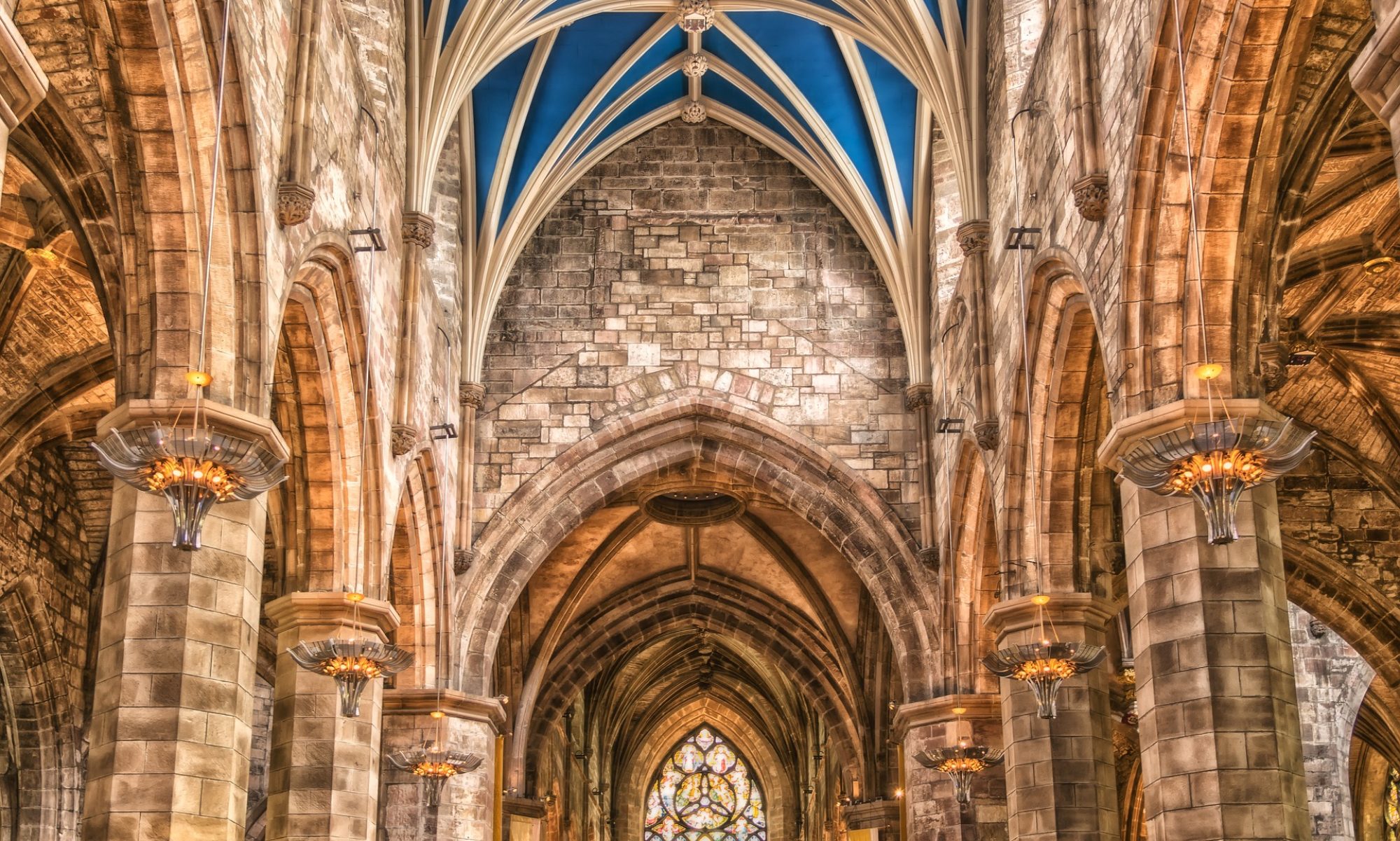
Since the time of Gerrit Berkouwer’s The Conflict with Rome (1948) and Loraine Boettner’s Roman Catholicism (1962), evangelical theology has been lacking a thorough assessment of Roman Catholicism that penetrates the real theological issues at stake. There has been little work on the Second Vatican Council (1962-1965), and many evangelicals don’t have the tools to grasp theologically what happened then and how it has been impacting the Roman Church since. Growing numbers of people are impressed by the “aggiornamento” (update of language and expressions without substantial change) that is taking place in Rome and are asking whether or not the Reformation is definitely over. Most of these analyses are based on a pick-and-choose approach to Roman Catholicism. Bits of its theology, fragments of its practice, pieces of its history, and sectors of its universe are considered as representing the whole of Roman Catholicism. When the big picture of the Roman Catholic theological cathedral is lost, interpretations become superficial and patchy.

Professor Allison’s new book is good news to all those who have long desired a reliable theological guide in dealing with Roman Catholicism. Based on a painstaking analysis of the 1992 Catechism of the Catholic Church, it covers the all-embracing trajectory of Roman Catholic theology and practice. Instead of juxtaposing ephemeral impressions and disconnected data, Allison provides a theological framework that accounts for the complexity of the Roman Catholic system and its dynamic unity.

In the first chapter he sets the theological framework that will give orientation to his analysis of the Catechism. In Roman Catholicism there are two main axes that form its background. On the one hand, the “nature-grace interdependence” and, on the other, the “Christ-Church interconnection.” Historically, the Roman magisterium has given assent to both the Augustinian tradition (philosophically influenced by Neoplatonic thought) and the Thomistic tradition (emerging from a Christian reinterpretation of Aristotle via Aquinas). Whereas Augustinianism has stressed the corrupting reality of sin and the utter primacy of grace, Thomism has given a more positive account of human nature’s intrinsic disposition towards the operations of grace. Both traditions manage to coexist, in that the Roman Catholic system provides a sufficiently capable platform which can host both, while not being totally identified nor identifiable with any one of them. This is another significant pointer to the catholicity of the system itself.

The spheres of nature and grace are thus in irreversible theological continuity, as “nature” in Catholicism incorporates both creation and sin, in contrast to the Reformed distinction between creation, sin, and redemption. This differing understanding of sin’s impact means grace finds in “Roman” nature a receptive attitude (enabling Catholicism’s humanistic optimism), as against a Reformed doctrine whereby entrenched sin leaves us unaware of our reprobate state. This stark anthropological difference underpins even Catholicism’s veneration of Mary. The Roman Catholic epistemological openness, its trust in man’s abilities, and its overall reliance on the possibility of human co-operation all converge in the articulated theology regarding the biblically sober figure of Mary. In this respect, Mariology expresses, therefore, the quintessential characteristics of the Roman Catholic nature-grace motif.

Secondly, Roman Catholicism needs a mediating subject to relate grace to nature and nature to grace—namely, the Roman Church—and thus Allison speaks of the “Christ-Church interconnection.” The Church is considered a prolongation of the Incarnation, mirroring Christ as a Divine-human reality, acting as an altera persona Christi, a second “Christ.” It is therefore impossible for Roman Catholicism to cry with the Reformers solus Christus, for this would be seen as breaching the organic bond between Christ and the Church. The threefold ministry of Christ as King, Priest, and Prophet is thus transposed to the Roman Church—in its hierarchical rule, its magisterial interpretation of the Word, and its administration of the sacraments. There is never solus Christus (Christ alone), only Christus in ecclesia (Christ in the Church) and ecclesia in Christo (the Church in Christ).

At this point, Allison offers his detailed analysis chapter by chapter of the Catechism, summarizing its main tenets and offering an intrigued yet critical evangelical assessment. The picture that comes out is different from what Mark Noll and Carolyn Nystrom wrote in their 2005 Is The Reformation Over? In that book, Noll and Nystrom argued that “evangelicals can embrace at least two-thirds” of the Catechism of the Catholic Church. Later, they admit that when the Catechism speaks of Christ, it interweaves him to the Church to the point of making them one, which is unacceptable for evangelicals who consider the exaltation of a created reality an instance of idolatry. So, on the one hand, there is an apparent “common orthodoxy”; on the other, there is a profound difference on the meaning of its basic words (e.g. Christ, the church, etc.).

Building on the “nature-grace interdependence” and the “Christ-Church interconnection,” Allison helps the reader to make sense of both areas of agreements and disagreements while always pointing to the hermeneutical grid that was set at the beginning. For example, the Catechism teaches a doctrine of “justification by faith.” What the catechism means, though, is a synergistic work that is not forensic in nature but transformative and that is administered via the sacramental system of the Church and by taking into account one’s own merits. The word is the same but the theological meaning, which is confirmed by the devotional practices of Rome, is far away from the biblical understanding of the doctrine of justification. The same is true as far as all key gospel terms are concerned.

Roman Catholicism is an all-encompassing system and one needs to approach it as such, trying to make sense of its teachings not as if they were isolated items but trying to penetrate the fact that they belong to a dynamic yet organic system.

In dealing with Roman Catholicism, especially in times of mounting ecumenical pressure, evangelical theology should go beyond the surface of theological statements and attempt to grasp the internal framework of reference of Roman Catholic theology. From there, one may try to assess it from an evangelical perspective.

This is exactly the point that is tackled by Allison’s book and its main contribution. Professor Allison’s masterly book is to be commended for its biblical depth, theological acuteness, historical alertness, and systemic awareness. Evangelical theology has finally begun to do its homework in parsing the vision of present-day Roman Catholicism. My hope is that this landmark book will re-orientate evangelical theology away from its attraction towards a shallow ecumenicity with Rome towards a serious dialogue based on the Word of God. The Reformation according to the gospel is as alive and relevant as ever.

Share Button

95. ‘Teología y Práctica Católico Romana’, de Gregg Allison

14 DE NOVIEMBRE DE 2014
Desde la época de The Conflict with Rome [El conflicto con Roma] de Gerrit Berkouwer (1948) y de Roman Catholicism [El Catolicismo Romano] de Loraine Boettner (1962), a la teología evangélica le ha faltado la evaluación exhaustiva del catolicismo romano que penetra en los verdaderos problemas teológicos que están en juego. Ha habido pocas obras sobre el concilio Vaticano II (1962-1965) y la mayoría de evangélicos no tienen los instrumentos suficientes para captar teológicamente lo que sucedió entonces y como ha continuado impactando a la Iglesia Romana.
Un número creciente de personas están impresionadas por el “aggiornamento” (puesta al día del lenguaje y las expresiones sin un cambio sustancial) que tiene lugar en Roma y se preguntan si la Reforma ha terminado definitivamente. Muchos de estos análisis se han hecho escudriñando y escogiendo una aproximación al catolicismo romano. Los pedacitos de su teología, los fragmentos de sus prácticas, los segmentos de su historia y los sectores de su universo están considerados como si representaran la totalidad del catolicismo romano. Cuando la gran imagen de la catedral teológica católico romana se pierde, las interpretaciones se vuelven superficiales y dispersas.
El nuevo libro del Profesor Allison es una buena noticia para todos aquellos que han deseado durante mucho tiempo una guía teológica fiable cuando tratan con el catolicismo romano. Cimentado sobre un esmerado análisis del Catecismo de la Iglesia Católica de 1992, incluye la trayectoria global de la teología y la práctica católico romanas. En lugar de la yuxtaposición de impresiones efímeras y datos desconectados, Allison proporciona un marco teológico que representa la complejidad del sistema católico romano y su dinámica unidad. En el primer capítulo establece el marco teológico que dará orientación a su análisis del Catecismo.
En el catolicismo romano hay dos ejes principales que forman su historial. Por una parte, la “interdependencia naturaleza-gracia” y, por la otra, la “interconexión Cristo-Iglesia”. Históricamente, el magisterio romano ha dado el asentimiento tanto a la tradición Agustiniana (filosóficamente influenciada por el pensamiento neoplatónico) como a la tradición Tomista (emergente de una reinterpretación cristiana de Aristóteles a través de Aquino). Mientras que el agustinianismo ha hecho hincapié en la realidad corruptora del pecado y la absoluta primacía de la gracia, el tomismo ha dado una consideración más positiva a la intrínseca disposición de la naturaleza humana hacia las operaciones de la gracia. Ambas tradiciones consiguen coexistir, siempre y cuando el sistema católico romano proporcione una plataforma lo suficientemente poderosa para poder albergar a las dos, al mismo tiempo que no está completamente identificado ni es identificable con ninguna de ellas. Este es otro indicador significativo de la catolicidad del propio sistema. Los ámbitos de la naturaleza y la gracia están, pues, en continuidad teológica irreversible, como la “naturaleza” en el catolicismo incorpora tanto la creación como el pecado, en contraste con la distinción Reformada entre la creación, el pecado y la redención. Esta comprensión diferente de la repercusión del pecado significa que la gracia encuentra en la naturaleza “Romana” una actitud receptiva (permitiendo un optimismo humanista del catolicismo) frente a una doctrina Reformada por la que el pecado arraigado nos deja inconscientes de nuestro reprobable estado. Esta rígida diferencia antropológica respalda incluso la veneración del catolicismo a María. La apertura epistemológica católico romana, su confianza en la capacidad del hombre, y su dependencia total sobre la posibilidad de la cooperación humana convergen en la articulada teología en lo que se refiere a la bíblicamente sobria figura de María. En este sentido, la mariología expresa, por tanto, las características por excelencia de los motivos naturaleza-gracia católico romanas. Segundo, el catolicismo romano necesita un sujeto mediador para relacionar la gracia con la naturaleza y la naturaleza con la gracia -es decir, la Iglesia Romana- y así Allison habla de la “interconexión Cristo-Iglesia”.
La Iglesia es considerada una prolongación de la Encarnación, reflejando a Cristo como una realidad Divina-humana, actuando como una altera persona Christi, o sea, un segundo “Cristo”. Por consiguiente, es imposible para el catolicismo romano clamar con los reformadores solus Christus, ya que esto se vería como un rompimiento del vínculo orgánico entre Cristo y la Iglesia. El triple ministerio de Cristo como Rey, Sacerdote y Profeta es así transpuesto a la Iglesia Romana, en su regla jerárquica, su interpretación magisterial de la Palabra y su administración de los sacramentos. Nunca hay solus Christus (sólo Cristo), únicamente Christus in ecclesia (Cristo en la Iglesia) y ecclesia in Christus (la Iglesia en Cristo). Al llegar a este punto, Allison hace su detallado análisis, capítulo a capítulo, del Catecismo, resumiendo sus principales principios y ofreciendo una evaluación evangélica fascinante aunque crítica.
La imagen que nos llega es diferente de la que Mark Noll y Carolyn Nystrom escribieron en su tratado de 2005 Is The Reformation Over? [¿Ha terminado la Reforma?] En este libro, Noll y Nystrom argumentaban que “los evangélicos pueden aceptar al menos dos tercios” del Catecismo de la Iglesia Católica. Más adelante, admiten que cuando el Catecismo habla de Cristo, se entrelaza con la Iglesia hasta el punto de hacer de los dos uno, lo cual es inaceptable para los evangélicos que consideran la exaltación de la realidad creada un caso de idolatría. Así, por una parte, hay una aparente “ortodoxia común”; por la otra, existe una profunda diferencia sobre el significado de las palabras básicas (p.e. Cristo, la iglesia, etc.). Sobre la base de la “interdependencia naturaleza-gracia” y la “interconexión Cristo-Iglesia”, Allison ayuda al lector a encontrar sentido a ambas áreas de acuerdos y desacuerdos al tiempo que apunta siempre a la red hermenéutica que se estableció al principio. Por ejemplo, el Catecismo enseña una doctrina de “justificación por la fe”.
Aunque, lo que el catecismo quiere decir, es un trabajo sinérgico que no es forense en su naturaleza pero sí transformador y que se administra a través del sistema sacramental de la Iglesia y teniendo en cuenta los méritos propios. La palabra es la misma pero el significado teológico, que es confirmado por las prácticas devocionales de Roma, está lejos del entendimiento bíblico de la doctrina de la justificación. Lo mismo es cierto en cuanto concierne a todos los términos clave del evangelio. El catolicismo romano es un sistema que lo abarca todo y se necesita abordarlo como tal, intentando dar sentido a sus enseñanzas, no como si fueran temas aislados sino tratando de penetrar en el hecho de que pertenecen a un sistema dinámico aunque orgánico. Al tratar con el catolicismo romano, especialmente en tiempos de creciente presión ecuménica, la teología evangélica debería ir más allá de la superficie de las afirmaciones teológicas e intentar captar el marco interno de referencia de la teología católica. Desde allí, se puede probar valorarlo desde una perspectiva evangélica.
Este es exactamente el punto abordado por el libro de Allison y también su mayor contribución. El libro magistral del Profesor Allison es encomiable por su profundidad bíblica, su agudeza teológica, su atención histórica y su conciencia sistémica. La teología evangélica ha empezado finalmente a hacer su tarea al analizar la visión del actual catolicismo romano. Mi esperanza es que este libro de referencia reorientará la teología evangélica desde su atracción a un ecumenismo superficial con Roma hacia un diálogo serio fundamentado en la Palabra de Dios. La Reforma según el Evangelio es tan viva y relevante como siempre.
Teología y Práctica Católico Romana: Una Evaluación Evangélica de Gregg R. Allison. Wheaton, IL: Crossway, 2014. 496 pps. 28 $. Esta reseña también está publicada en http://9marks.org/review/book-review-roman-catholic-theology-by-gregg-allison/
Share Button