216. Thomas Aquinas, the Evangelical?

Thomas Aquinas (1225-1274) is the Roman Catholic theologian par excellence. For centuries he has embodied the letter and the spirit of the theology of the church of Rome. Combining rationality and contemplation, rigor and passion, study and devotion, his thought has touched on the different traits of Catholic life inspiring the intellectual sophistications and the popular beliefs, the academic pursuits, and the devotional imaginations. The reception of his legacy has not been without conflicts of interpretation and different seasons of greater or lesser influence. Yet, the Wirkungsgeschichte (history of effects) indicates that there would not have been the anti-Protestant Roman Catholicism of the Council of Trent (1545-1563), the anti-modernist Roman Catholicism of Vatican I (1870), and then the ecumenical Roman Catholicism of Vatican II (1962-1965) without Thomas Aquinas inspiring them all in different ways. Difficult to dispute is church historian David Schaff’s claim that “the theology of the Angelic Doctor (Thomas’s nickname in Catholic circles) and the theology of the Roman Catholic Church are identical in all particulars except the immaculate conception. Anyone who understands Thomas understands medieval theology at its peak and has access to the doctrinal system of the Roman Church.”[1] At least symbolically if not theologically, Thomas is to Roman Catholicism in all its internal versions what Luther and Calvin are to the Reformation in all its variants: father-like figures.

By contrast, until a few years ago, precisely because of his close identification with Roman Catholicism, few would have dreamed of seeing Thomas associated with a “Protestant” sensibility. It is true that, in Thomistic studies, there is a vein that interpreted Thomas from the point of view of him being associated with evangelical traits. For example, M.-D. Chenu refers to this view when he claims that “the evangelical vocation of brother Thomas Aquinas is at the origin of his theology.”[2] Certainly, the reference to the “evangelical” must be interpreted here in a very broad sense that is vaguely inspired by the Gospel in a form compatible with traditional Roman Catholic doctrine and experience.

In recent decades and with increasing intensification, Thomas has instead been brought closer to a Protestant theological sensibility. In the German and Lutheran context, in 1964, Ulrich Kühn wondered whether Thomas belonged only to the Roman church as the apex of the medieval synthesis or whether an “Evangelical Thomas or at least a Thomas who has important things to say to evangelical theology”[3] was in need to be discovered. In the Anglo-Saxon circles, in 1985, a book critically scrutinized the perceived distrust of contemporary evangelical thought (for example: Cornelius Van Til and Francis Schaeffer) towards Thomas and considered it more of a reaction towards 19th century Neo-thomist images of Thomas than on Aquinas himself.[4] Then there were those who worked hard to provide a very positive “evangelical” evaluation of Thomas in an attempt to rehabilitate above all his metaphysics and epistemology in their apologetical endeavors.[5] In an unassuming little article, but which opened a crack that later became a gash, a respected North American evangelical theologian peremptorily entitled his essay: “Thomas Aquinas was a Protestant.”[6] According to the article’s daring thesis, Thomas’s theology was close, not to say overlapping, to the “formal principle” of the Protestant Reformation (Scripture Alone) and its “material principle” (Faith Alone), making him a forerunner of the Reformation, also with regard to the doctrine of justification. In more recent years, academic circles influenced by the theology of Karl Barth have also begun an operation of re-appropriation of Thomas in the form of theological ecumenism and referred to as “Protestant Thomism” or “Thomistic Protestantism.”[7] Similar phenomena can be found in the works stemming from “radical orthodoxy.”[8]

In fact, there seems to be a widespread perception today that Thomas is no longer a heritage for Roman Catholics alone[9] and that Evangelicals can and should learn a great deal from Thomas.[10] On the Roman Catholic side, there are even those who have gone so far as to argue that the Roman Catholic Thomas Aquinas is both Protestant and Evangelical:[11] the real Doctor communis! If even a theologian as critical of Thomas as Scott Oliphint answers, “perhaps”,[12] when asked if Thomas would have joined the Reformation had he lived 250 later, then we must understand that it is not far-fetched theologically to ask if Thomas could indeed be considered an evangelical.

In light of this changing scenario, today, the most serious evangelical research on Thomas Aquinas looks in a series of directions:[13]

– on the use of Thomas that the Magisterial Reformers made of Thomas—above all reformed and Lutheran scholasticism. While Luther’s contemptuous judgment of Thomas is known (“Thomas est loquacissimus quia metaphysica est seductus,” “Thomas is very loquacious because he is seduced by metaphysics”),[14] the subsequent interpretations in the Lutheran and Reformed traditions are less trenchant, sometimes sympathetic.[15]

– on the sustainability of a kind of anti-Thomas prejudice of certain contemporary evangelical thought which seems more committed to combating the deviant rigidities of neo-Thomism than to understanding Thomas himself in his complexity.

– on the theological gain that evangelical research would receive from the re-evaluation of the legacy of Thomas to counter certain traits of Fundamentalism (which has an unresolved view of “tradition”) and the temptations of incipient neo-liberalism (which is attracted to what is modern for the sake of being accepted by the mainstream culture).[16]

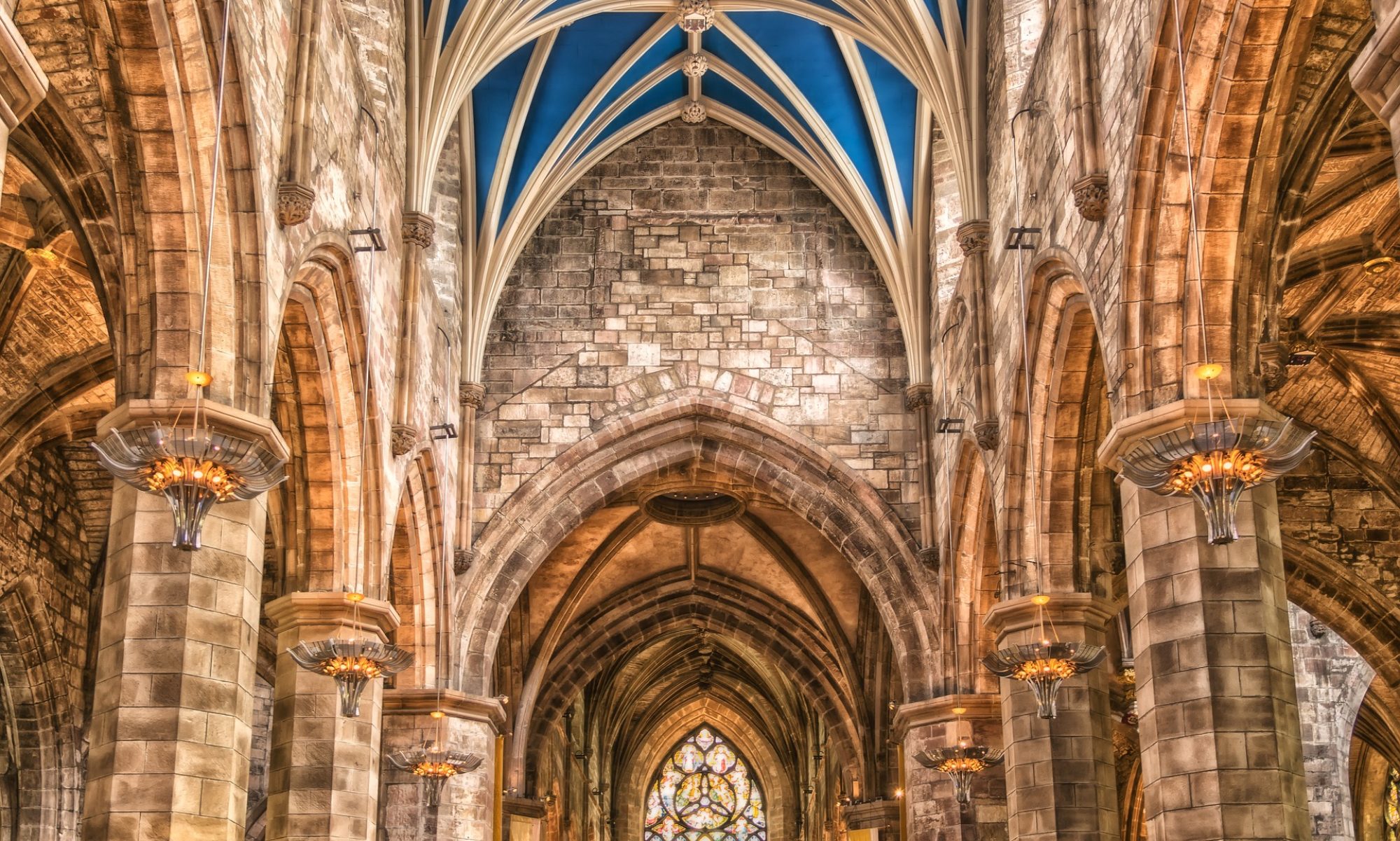
In our current cultural climate, the reference to the metaphysics of Thomas, capable of keeping Plato, Aristotle, and the Bible together—in short, the entire pre-modern Western tradition—produces an anxiolytic effect in some sectors of evangelical theology. Thomas functions as a primary symbol of the “great tradition” that unites Christian antiquity and modernity. In a world that is skeptical and suspicious of any meta-narrative, Thomas’s metaphysics and epistemology exerts some apologetic appeal, claiming to harmoniously combine faith and reason and to challenge skepticism in the name of the reasonableness of faith.[17] In the ruined landscape of present-day culture, Thomas Aquinas looks like an impressive cathedral that reassures, comforts, and inspires.

To balance this evangelical romance with Thomas, something more needs to be said in view of refining a theologically robust evangelical reading of his thought:

– Thomas has been fully and convincingly appropriated by Roman Catholic theology for centuries. One cannot naively assume that he is “Protestant” unless one acknowledges the persistent unfoundedness of all Roman Catholic interpretations of Thomas for the last 750 years.

– Thomas is the acknowledged authority behind many of the non-biblical developments in medieval and modern Roman Catholicism, from Trent to Vatican I and Vatican II. One cannot fail to see the distorting elements which are present at the heart of his system, and which have generated several departures from the biblical faith, e.g., in the areas of Catholic soteriology, ecclesiology, sacramentology, and devotions.

– Thomas laid the foundations for the theological framework, which is typical of Roman Catholicism as a system, i.e., the nature-grace interdependence,[18] which is highly problematic from the biblical point of view. Evangelical theology must be aware (and biblically proud) of operating not with a purely ontological scheme mainly deduced from philosophical categories as Thomas does, but with the historical-redemptive motif of the Bible: Creation/Sin/Redemption. Here the difference is critical.

Finally, the following elements garnered from the wisdom of the best evangelical theology throughout history should not be forgotten:

– the best Protestant theologians have read and studied Thomas, since he was the main exponent of medieval theology. They did not have reverential fears nor inferiority complexes. Rather, they faced him head-on with an attitude inspired by evangelical boldness and the biblical principle “omnia probate, quod bonum est tenete,” “Test all things; hold fast to that which is good” (1 Thessalonians 5:21).

– Protestant theologians at their best (from Peter Martyr Vermigli to Herman Bavinck, through Francis Turrettin) have generally exercised theological discernment which has allowed them to appreciate aspects of Thomas’s theology that were in line with biblical faith and to reject his teaching where it conflicted with Scripture. In other words, they did not embrace the Thomist system as such—even his metaphysics and epistemology as integrated components of it—but broke it down into its parts as far as possible with integrity and used it “eclectically.”[19] They did not reject him as a hopelessly compromised theologian (the anti-Thomas temptation), nor elevate him as the chief parameter of Christian orthodoxy (the Roman Catholic temptation), but treated Thomas as an unavoidable conversation partner in the history of Christian thought to be read critically and generously in light of the Scripture Alone principle that the Protestant Reformation recovered for the whole church. This approach is not original but seems to be the historic and best evangelical approach to Thomas Aquinas.

N.B. This article touches on issues that will be extensively dealt with in my forthcoming book Engaging with Thomas Aquinas which will be published by IVP (UK) in 2024.


[1] Quoted by his father P. Schaff, History of the Christian Church (1907) (repr. Grand Rapids, MI: Eerdmans, 1960, vol. V) p. 662.

[2] M.-D. Chenu, Aquinas and His Role in Theology (1959) (Collegeville, MN: Liturgical Press, 2002) p. 11.

[3] U. Kühn, Via Caritatis. Theologie des Gesetzes bei Thomas von Aquin (Berlin: Ev. Verlagsanstalt, 1964) p. 14.

[4] A. Vos, Aquinas, Calvin, and Contemporary Protestant Thought: A Critique of Protestant Views on the Thought of Thomas Aquinas (Washington, DC: Christian University Press, 1985).

[5] N.L. Geisler, Thomas Aquinas, An Evangelical Appraisal (Grand Rapids, MI: Baker, 1991).

[6] J. Gerstner, “Aquinas was a Protestant”, TableTalk 18:5 (May 1994) pp. 13-15 and 52. The pushback by R.L. Reymond is worth referring too: “Dr. John H. Gerstner on Thomas Aquinas as Protestant”, Westminster Theological Journal 59 (1997) pp. 113-121.

[7] Cfr. J. Bowlin, “Contemporary Protestant Thomism” in P. Van Geest, H. Goris, C. Leget (edd.), Aquinas as Authority (Leuven: Peeters, 2002) pp. 235-251 and B.L. McCormack – T.J. White (edd.), Thomas Aquinas and Karl Barth. An Unofficial Catholic-Protestant Dialogue (Grand Rapids, MI: Eerdmans, 2013).

[8] For example: J. Milbank – C. Pickstock, Truth in Aquinas (London: Routledge, 2001).

[9] C. Trueman, “Thomas Aquinas: Not Just for Catholics Anymore”, Public Discourse (19 August 2018): https://www.thepublicdiscourse.com/2018/08/39373/ (retrieved: 2nd Jan 2023).

[10] “What Can Protestants Learn from Thomas Aquinas?”, Credo Magazine 12/2 (2022)

https://credomag.com/magazine_issue/what-can-protestants-learn-from-thomas-aquinas/ (retrieved: 2nd Jan 2023).

[11] F.J. Beckwith, Never Doubt Thomas. The Catholic Aquinas as Evangelical and Protestant (Waco, TX: Baylor University Press, 2019).

[12] K.S. Oliphint, Thomas Aquinas (Phillipsburg, NJ: Presbyterian & Reformed, 2017) p. 123.

[13] An important starting point for this discussion is M. Svensson – D. VanDrunen (edd.), Aquinas among the Protestants (Oxford: Wiley Blackwell, 2018).

[14] Tischreden 3, n. 3722.

[15] Cfr. D. Luy, “Sixteenth-Century Reception of Aquinas by Luther and Lutheran Reformers” and D. Systma, “Sixteenth-Century Reformed Reception of Aquinas” in M. Levering – M. Plested (edd.), The Oxford Handbook of the Reception of Aquinas (Oxford: Oxford University Press, 2021) pp. 104-120 and 121-143 respectively.

[16] As it is done by C. Carter, Contemplating God with the Great Tradition. Recovering Classical Trinitarian Theism (Grand Rapids, MI: Baker, 2021).

[17] As it is the case with the “classical” approach to apologetics championed by R.C. Sproul, J. Gestner, A. Lindsey, Classical Apologetics. A Rational Defense of the Christian Faith and a Critique of Presuppositionalist Apologetics (Grand Rapids, MI: Zondervan, 1984).

[18] For a brief presentation and pointed critique, see G.R. Allison, Roman Catholic Theology and Practice (Wheaton, IL: Crossway, 2014) pp. 46-55.

[19] C. Brock – N. Gray Sutanto, “Herman Bavinck’s Reformed eclecticism: On catholicity, consciousness and theological epistemology”, Scottish Journal of Theology 70/3 (2017) pp. 310-332.

Share Button

215. Gresham Machen and Roman Catholicism as a “Perversion” of Christianity

Exactly a century ago, J. Gresham Machen (1881-1937) in his book Christianity and Liberalism (1923)[1] confronted Liberalism as an alternative system to biblical Christianity by way of exposing its deviating premises and deviated outcomes. Machen identified in Liberalism as another religion which – while using traditional Christian terminology – had completely re-signified it in terms of the spirit of the modern age and therefore abandoned the gospel.[2] In Machen’s view, it is Liberalism that is the main threat to biblical Christianity, and it is against it that he focusses his attention. Roman Catholicism only gets a perfunctory mention that is nonetheless worth considering because it signals an important awareness of the more general context of yesterdays and today’s fronts where Christianity needs to develop its theological discernment.
 
1. Liberalism as Another Religion
The theological landscape around Machen is characterized by the pervasive infiltration of Liberalism in the Church. This is not a minor issue. To put it bluntly, the problem is that Liberalism is not Christianity at all. According to Machen, Liberalism is “a religion which is so entirely different from Christianity as to belong in a distinct category” (6). Machen interprets the liberal project in oppositional and confrontational terms with regards to Christianity. “With regard to the gospel itself, modern liberalism is diametrically opposed to Christianity” (47).
 
Machen’s analysis suggests an interpretation of the liberal project, i.e. the attempt at reconciling Christianity with the modern spirit, by rescuing certain general principles of religion and regarding them as the “essence of Christianity” (5 and 53). Even without directly quoting him, it is clear that Machen has in mind the seminal book by Adolph von Harnack (1851-1930), the champion of liberal theology in the generation preceding Machen, on the essence of Christianity.[3] As a matter of fact, Harnack had sought to achieve a historical understanding of Christianity wherein its original essence could be separated from subsequent accretions that he understood as unwarranted dogma. He attempted to isolate this essence using a scholarly historical method that abjured many biblical traits of the Christian faith. The roots and the outcomes of this project are alien to the gospel. According to Machen, Liberalism “proceeds from a totally different root” (146) and “relinquished everything distinctive of Christianity” (6).
 
In a summary of the main issues at stake, here is how Machen sees the chasm: “Liberalism differs from Christianity with regard to the presuppositions of the gospel (the view of God and the view of man), with regard to the Book in which the gospel is contained, and with regard to the Person whose work the gospel sets forth. It is not surprising then that it differs from Christianity in its account of the gospel itself” (99). The divergence does not revolve around points of speculative theology but impacts “the whole of life” (146). Thus, the title of the book Christianity and Liberalism is meant to set the former over against the latter and vice versa.
 
2. Roman Catholicism as a Perversion
Gresham Machen agrees with the reaction against the liberal re-interpretation of the gospel as it was articulated in The Fundamentals, a series of 12 volumes published between 1910 and 1915 in which the tenets of the traditional Protestant consensus were defended. His assessment of Liberalism does not mean that Machen displays a manichean mindset, i.e. having a black and white picture of the situation in and around Christianity.
 
First, not all members of liberal churches are to be considered outside of Christian fellowship. For all his opposition to Liberalism, Machen readily admits that “some liberals, though perhaps a decreasing number, are true believers in a personal God” (50-51). He can distinguish between Liberalism as a theological system that is diametrically opposed to Christianity and individual liberal Christians who despite of their being part of liberal churches are nonetheless true believers in Christ.
 
Second, not all different theological traditions outside of the Reformed camp are to be considered as opposed to Christianity in the same way as Liberalism is. Machen’s approach is not sectarian, but discerning what is primary and what is secondary for the Christian faith. For example, “the premillennial view” is an error, but not a “deadly error” (41). There is still much ground based on the Bible and the great creeds of the Church that unites all Christians, regardless their eschatological positions. A similar evangelical eirenism is applied by Machen to differences of “opinion” on sacramental issues between Lutheran and Reformed branches of the Church (42) or on “the nature and prerogatives of the Christian ministry” that divide Anglicans from other protestants (42-43), or even on the “difference of opinion” between Calvinistic theology and Arminianism (43) on God’s sovereignty and human responsibility. Machen cannot be suspected of downplaying all theological issues, yet he argues that “true evangelical fellowship is possible between those who hold … sharply opposing views” (43). This is to say that his apologetic theology does not stem from an oppositional and separatist mindset, but from a discerning spiritual assessment. 
 
At this point, Machen’s brief comments on Roman Catholicism can be properly evaluated. Whereas he has labeled Liberalism as another religion and has referred to intra-protestant debates on important yet secondary issues as differences of “opinion”, the relationship with Rome is marked by “division” (43). In Machen’s view, Rome represents a “perversion of the Christian religion”. No explanation is offered as to why this is so, but the theological reasons for the criticism are assumed as valid, even though not spelt out.[4] Having said that, Rome’s perversion is of a different kind than naturalistic Liberalism: the latter “is not Christianity at all” (43).
 
Perhaps with a hint of superficiality, Machen acknowledges that the Roman Catholic Church maintains “the authority of Holy Scripture” and accepts “the great early creeds”. In his mind these commitments make biblical Christianity closer to Rome than Liberalism, even though “the gulf” between Rome and the Reformation is believed to be profound. I dare take this comment as superficial and not indicative of Machen’s usual theological acumen. The reason is that even Liberalism upholds a certain authority of Scripture and a certain interpretation of the early creeds. These two elements are not rejected as such but re-interpreted in such a way as to be annulled. In Roman Catholicism too, a certain authority of Scripture is affirmed but, at the same time, is undermined given the intertwined role attributed to tradition and the magisterium of the church that make Rome dismiss “Scripture alone” and therefore reject the ultimate authority of Scripture.
 
Moreover, Rome for sure pays tribute to the early creeds of the church, yet interprets them in an expansive way given, for example, its Mariological inflated doctrine and its cooperative view of salvation. If Rome thinks of its Mariology and ecclesiology as organically stemming from the creeds, it is evident that formal adherence to the creeds does not necessarily translate into a biblically faithful reception of them. The point is that the authority of Scripture and the importance of the creeds are never dismissed blatantly, both in Liberalism and in Roman Catholicism. Both traditions have their own way of paying lip service to them while not submitting to them. Machen is right when he argues that “Christianity is founded upon the Bible. It bases upon the Bible both its thinking and its life. Liberalism on the other hand is founded upon the shifting emotions of sinful men” (67). What he omits to say is that Roman Catholicism too is not founded upon the Bible alone and therefore stands in contrast with biblical Christianity at all points.
 
3. Machen’s Strengths and Limits
Whereas Machen displays a penetrating understanding of Liberalism, i.e. its anti-Christian ideological roots and its pernicious outcomes, he does not show the same degree of doctrinal familiarity with Rome’s theological system. His comments on Roman Catholicism are therefore only perfunctory given also the fact that it is not the topic of his book. According to him the “chief modern rival of Christianity is liberalism” (45). Notice: the chief, not the only one. Christianity has other rivals around it and Roman Catholicism is one of them, not presenting exactly the same danger, but close to it.
 
Beside these brief annotations, there are other points that need to be highlighted in Machen’s theological argument. They show how his interpretation of Liberalism may fit Roman Catholicism too. For example, while discussing the entrance of paganism into the church in the name of Christianity, he maintains that “Modern liberalism is like the legalism of the middle ages, with its dependence upon the merit of man” (151). Here Liberalism is associated with the insistence upon human merit as a legacy of the Middle ages. Yet the true representative of it is Rome with its cooperative and synergistic view of salvation embedded in its sacramental system. Again, Machen argues that modern liberalism has lost the consciousness of sin and has developed a “supreme confidence in human goodness” (55). For sure, these are features of Liberalism, but present-day Roman Catholic theological trends are progressively underlining a similar reliance on human goodness as a distinguished mark of Rome’s anthropology and hamartiology. Finally, Machen refers to the liberal doctrine of the “universal fatherhood of God” (53) and “the brotherhood of man” (133) which liberalism considers as the essence of Christianity. True. In our contemporary world, however, there is no religious institution more committed than Roman Catholicism to universal fraternity and the universal fatherhood of God, as the recent encyclical “All Brothers” (2020) by Pope Francis indicates.[5]
 
The same universalist deviations that Machen observed in Liberalism can be observed in Roman Catholicism too, thus making it a “perversion” of Christianity, as Machen rightly points out. This is to say that Machen’s views of Roman Catholicism are limited and selective in scope, in need of more in-depth treatments that would nonetheless follow his theological approach to modern rivals of biblical Christianity.
 
After a century Christianity and Liberalism is as theologically sharp as it was then. Its analysis of the old Liberalism applies to the new liberal developments as well. While being aware of the “perversion” of Roman Catholicism, it lacks the same cutting edge in addressing what is at stake with Rome’s gospel. It is as if Machen sees the problem of Roman Catholicism but it’s not his main target nor the most severely perceived challenge. In celebrating this landmark book for evangelical theology, one can appreciate its strengths and its limitations which call for an on-going evangelical engagement with the flaws of Roman Catholicism and the need for a biblical reformation of its doctrines and practices.


[1]Christianity and Liberalism (New York, NY: The Macmillan Company, 1923). I am following the new edition: Grand Rapids, MI: Eerdmans, 2009. The number of pages will be reported directly in the main text.

[2] For my interpretation of Machen, I mainly rely upon George M. Marsden, “Understanding J. Gresham Machen”, Understanding Fundamentalism and Evangelicalism (Grand Rapids, MI: Eerdmans, 1991) pp. 182-201; Terry Chrisope, Toward a Sure Faith. J. Gresham Machen and the Dilemma of Biblical Criticism (Fearn: Christian Focus, 2000) and D.G. Hart, Defending the Faith. J. Gresham Machen and the Crisis of Conservative Protestantism in Modern America (Phillipsburg, NJ: Presbyterian & Reformed Publ. Co., 2003).

[3] Adolph von Harnack, Das Wesen des Christentums (1900); What is Christianity, trans. T.B. Saunders (New York, NY: G.B. Putman’s Sons, 1901).

[4] For Machen’s views on Roman Catholic political and cultural stances in his time, see D.G. Hart, Still Protesting. Why The Reformation Still Matters (Grand Rapids, MI: Reformation Heritage Books, 2018) pp. 162-164. For a Roman Catholic rebuttal of fundamentalist criticism of Roman Catholicism (which is not necessarily descriptive of Machen’s approach), see Karl Keeting, Catholicism and Fundamentalism. The Attack on “Romanism” by “Bible Christians” (San Francisco, CA: Ignatius Press, 1988).

[5] “Encyclical Letter Fratelli Tutti of the Holy Father Francis on Fraternity and Social Friendship” (2020): https://www.vatican.va/content/francesco/en/encyclicals/documents/papa-francesco_20201003_enciclica-fratelli-tutti.html (accessed 16/02/2022).

Share Button