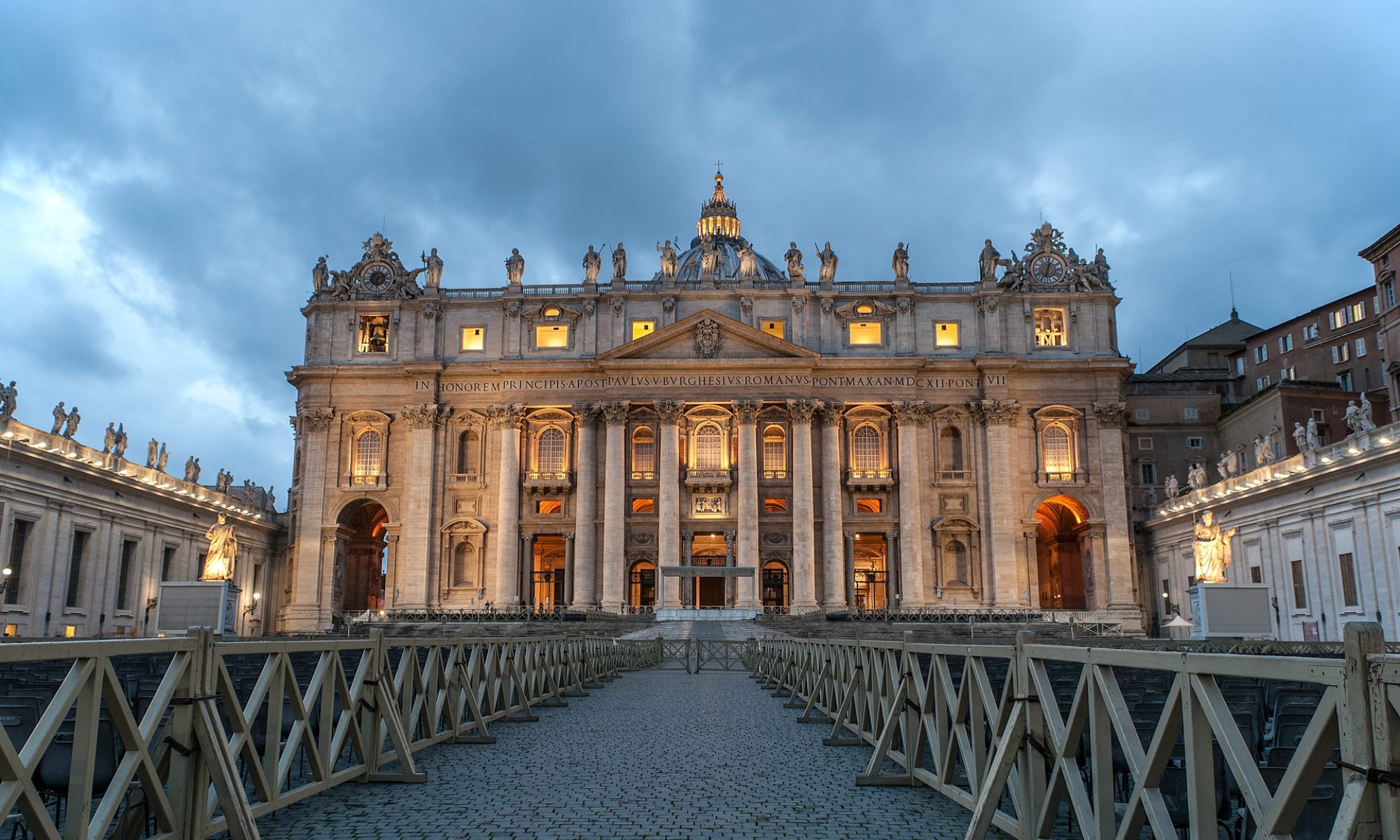
91. Ecumenismo en todas las direcciones

18 DE OCTUBRE DE 2014
Nada es sustancialmente nuevo, pero todo se concibe y se vive de una forma totalmente nueva. Así es como el Cardenal Walter Kasper, antiguo director del Consejo Pontificio para la Unidad de los Cristianos, resume el enfoque que hace el Papa Francisco del ecumenismo. En el prólogo de un libro que analiza los principales discursos y actos papales referentes a la unidad de la iglesia (Riccardo Burigana, Un cuore solo. Papa Francesco e l’unità della chiesa [Un solo corazón. El Papa Francisco y la unidad de la iglesia], Milán: Edizioni Terra Santa, 2014), Kasper sostiene que desde su primera alocución después de ser elegido hasta sus palabras y gestos cotidianos, el ecumenismo ha sido el tema central de todo lo que Francisco ha estado haciendo hasta ahora. Como ocurre a menudo en la Iglesia Católico Romana, no hay un cambio trascendente en el marco doctrinal general. La aproximación católica al ecumenismo es todavía la misma sin adiciones ni sustracciones. El objetivo final del ecumenismo es traer a toda la iglesia cum Petro (con Pedro, o sea, en comunión con el Papa) y sub Petro (bajo Pedro, es decir, con sumisión al Papa). Una vez dicho esto, los énfasis y las actitudes cambian y este Papa tiene ciertamente una manera distinta de interpretar su misión como principal promotor de la causa ecuménica.
EL ECUMENISMO DE LA AMISTAD
El libro refleja el compromiso incesante del Papa Francisco para promover su visión sobre la Unidad de los Cristianos. Después de leerlo, se pueden hacer las siguientes observaciones. Sus iniciativas ecuménicas están basadas más en contactos personales con líderes de diferentes iglesias y organizaciones que a través de los canales institucionales. En el desempeño de su papel el Papa no depende totalmente de la burocracia vaticana sino que conserva su propia esfera de iniciativa. Se subraya con frecuencia este aspecto relacional como la forma principal de fomentar la confianza mutua y lazos más estrechos. Según el punto de vista de Francisco los diálogos teológicos son menos importantes que los contactos personales. Nada cambia en lo que concierne al objetivo a largo plazo del Papa presidiendo toda la iglesia, pero este no es el asunto sobre el cual al Papa le gusta concentrarse. Lo importante para él es decir que los amigos, los hermanos, las hermanas, ya somos “uno” en cierto sentido. El quiere diferentes copartícipes y amigos ecuménicos para evaluarles, escucharles, atenderles e incluso admirarles. Quiere afianzarles y desea que se sientan apreciados. Los alineamientos eclesiásticos y teológicos son secundarios.
Cualquiera que esté interesado en lo que sucede con este Papa debería notar que el paradigma bajo el que está operando es el de un ecumenismo de amistad en lugar de uno de convicciones. Los dos no son opuestos, pero él pone el énfasis en el primero, no en el último. En su exhortación Evangelii Gaudium de 2013, Francisco dejó claro que el tiempo es más importante que el espacio. Lo que quiere decir es que aquellos que fijan en sus vidas trayectorias a largo plazo están mejor adaptados para conseguir algo que los que se concentran en el aquí y ahora. La abrumadora apreciación de los socios ecuménicos y la continua inversión en relaciones personales son dos pistas del sendero ecuménico que es coherente con esta opinión.
¿MÁS CERCA DE TODOS?
Otra marca impresionante del ecumenismo del Papa Francisco es que logra acercarse a todos sus socios ecuménicos sin hacer distinciones entre ellos. Tiene similares palabras, actitudes y aproximaciones hacia los ortodoxos orientales de varias bandas, los protestantes liberales, los anglicanos, los evangélicos, los pentecostales y otras clases de cristianos. Teológicamente hablando esto es más bien incómodo porque cuanto más se acerca uno al sacramentalismo y las devociones del Este, más lejos se va de la agenda liberal de la mayoría de las iglesias protestantes occidentales y viceversa. Además, a medida que se aproxima uno más a la “libre” tradición de la iglesia del Pentecostalismo se distancia al mismo tiempo de la eclesiología sumamente jerárquica y sacramental, tanto de las tradiciones romanas como de las orientales.
Pero no es así para el Papa Francisco. Como ya se ha señalado, este no es su enfoque. El invierte en relaciones con todo el mundo mientras deja de lado las tradiciones teológicas y los arreglos eclesiásticos. Quiere acercarse a todos. Una ilustración adicional a este punto es que mientras se aproxima a todos los cristianos, el Papa Francisco también está determinado a estar cerca de todas las gentes, ya sean religiosas o seglares. Las mismas fraternales y apreciativas inspiraciones es lo que caracteriza la actitud del Papa hacia los judíos, los musulmanes y los intelectuales agnósticos. Las cuestiones que causan división se dejan aparte, mientras que la dimensión “fraternal” está siempre en primer plano. El Papa está claramente empujando con la misma intensidad el lado relacional del ecumenismo y el diálogo inter-religioso como si ambos fueran dos caminos entrelazados para conseguir la totalidad del objetivo católico: cum Petro y sub Petro. El caso es que si el objetivo propio es acercarse a todo el mundo, esto significa que la preocupación principal no se dirige hacia el amor y la verdad bíblicos, que es el criterio de sensatez y de principios, sino a la catolicidad de amistad que es mucho más flexible y fluida. Al tiempo que reconocemos el tono simpático, el mantenimiento de la unidad de los cristianos no puede ser sólo un asunto de amistad. Unidad en la verdad es por lo que Jesús oró en Juan 17 y unidad en la verdad y el amor es sobre lo que Pablo escribió en Efesios 4.
Share Button

90. Church Planting in Rome?

September 29th, 2014

Catholic missiology speaks of “plantatio ecclesiae” to describe the process of church planting where currently there is no church. The rationale of this “plantatio” is that once the (Roman Catholic) church is planted there is no need to plant another church. This is even truer in the city of Rome! In the city where the Holy See has its center and where the heart of the Roman Catholic Church lies, how does one dare to plant a church? The Church (capital C) is already there by definition! So, church planting in the shadow of the Vatican requires extra-homework in order to identify a biblical warrant before embarking on such a task.

Spiritual Barriers
Church planting in Rome encounters lots of cultural and religious barriers: non-catholics are often perceived as sects, awkward people, foreigners, or new religious movements. Sometimes,  unfortunately, the evangelical performance (e.g. narrow-mindedness, tribal mentality, over-sensitivity to differences, estrangement from the real world) confirms these stereotypes. The intent, however, should be to show that evangelical churches are biblical, classical, orthodox, protestant churches that cherish church history, the heritage of the Church Fathers, and have a long legacy in the history of Christianity while reflecting a spiritual vitality that is lacking in so many spheres of the religious world.

Then there are the spiritual and theological roadblocks. Here the whole issue of mediation comes to the fore. How do we draw near to God? The standard Catholic view is that one approaches God through the sacramental system of “mother” Church. Many words that are used are the same (e.g. grace, cross, gospel, salvation), but they mean very different things and their meanings have to be addressed. Church planters must avoid the danger of assuming that terms such as grace, faith, Jesus, church, cross, and gospel, are understood as they are biblically defined. Dismantling old patterns and constructing new ones is an on-going task. Gently but firmly people need to distance themselves from catholic institutional/sacramental baggage and be exposed to the Gospel afresh.

Finally, there is the personal dimension. The ordinary Roman is struck by the personal element of the Gospel. Usually they have no concept of it. Their religion is mainly a set of practices and traditions, but not something that involves their whole life. Therefore community life, church life, and family life are all important ways to convey the practical difference that a saving faith in Jesus Christ brings to everyday life.

Ecclesiological Challenges and Gospel opportunities

The majority of Roman Catholic countries are as poorly evangelized as most secular countries in Europe. Rome is no exception. The vast majority are nominal Christians who have a loose sociological belonging to the community and no saving faith in Jesus Christ. For the most part Roman Catholic practice is based more on Folk Catholicism (e.g. devotions and processions) than Biblical Christianity. The reading of the Bible was prohibited for centuries and this censorship has produced a high level of biblical ignorance. People think they are “Christian” because they were baptized as infants and are part of a “Christian” culture, but there is little if no sense of personal engagement as far as the Gospel is concerned. Beyond the outward religious surface, there is a blend of religious and secular idolatries along with a mixture of pre and post-modern idolatries. While the presence of the institutional church is pervasive, the impact of the Gospel is minimal and significantly obscured by social convenience and practical indifference.

Rome therefore is a mission field and church planting is key to evangelism and Gospel transformation. Rome is certainly not accustomed to being a city where religious pluralism and the plurality of churches are welcomed. Over the centuries the Church has always been presented in the singular and anyone outside of the (Roman Catholic) Church was considered a heretic and/or a schismatic. The claim of being a “church” outside of the Roman Catholic Church is countercultural but something that most people find intriguing. This is especially true in celebrating the Lord’s Supper (the Eucharist being the center-piece of the entire Roman Catholic system where its sacramental, hierarchical, and dogmatic dimensions intersect). Here church planters are sending the message that the Christian church is certainly “one” and therefore “catholic” but not exclusively “Roman”. Church planting deconstructs the Roman Church’s claim to be the only church and emphasizes the “unity” of the church in terms of Gospel faithfulness instead of institutional adherence to the papal system.

In Rome there is much cynicism about the church and religion in general, as is the case in the rest of Europe. The cultural climate is skeptical and so opportunities exist to introduce the Gospel based on the virtuous circle of evangelical truth, evangelical community, and evangelical culture. Church planting is key to this goal because it joins believing and belonging, proclamation and service, the personal and the communal, creative contextualization and obedience to the Word of God. “Plantatio ecclesiae” used to be an action that went from Rome to the rest of the world. Now as ever it needs to be a commitment that reaches Rome as any other part of the world.

Share Button