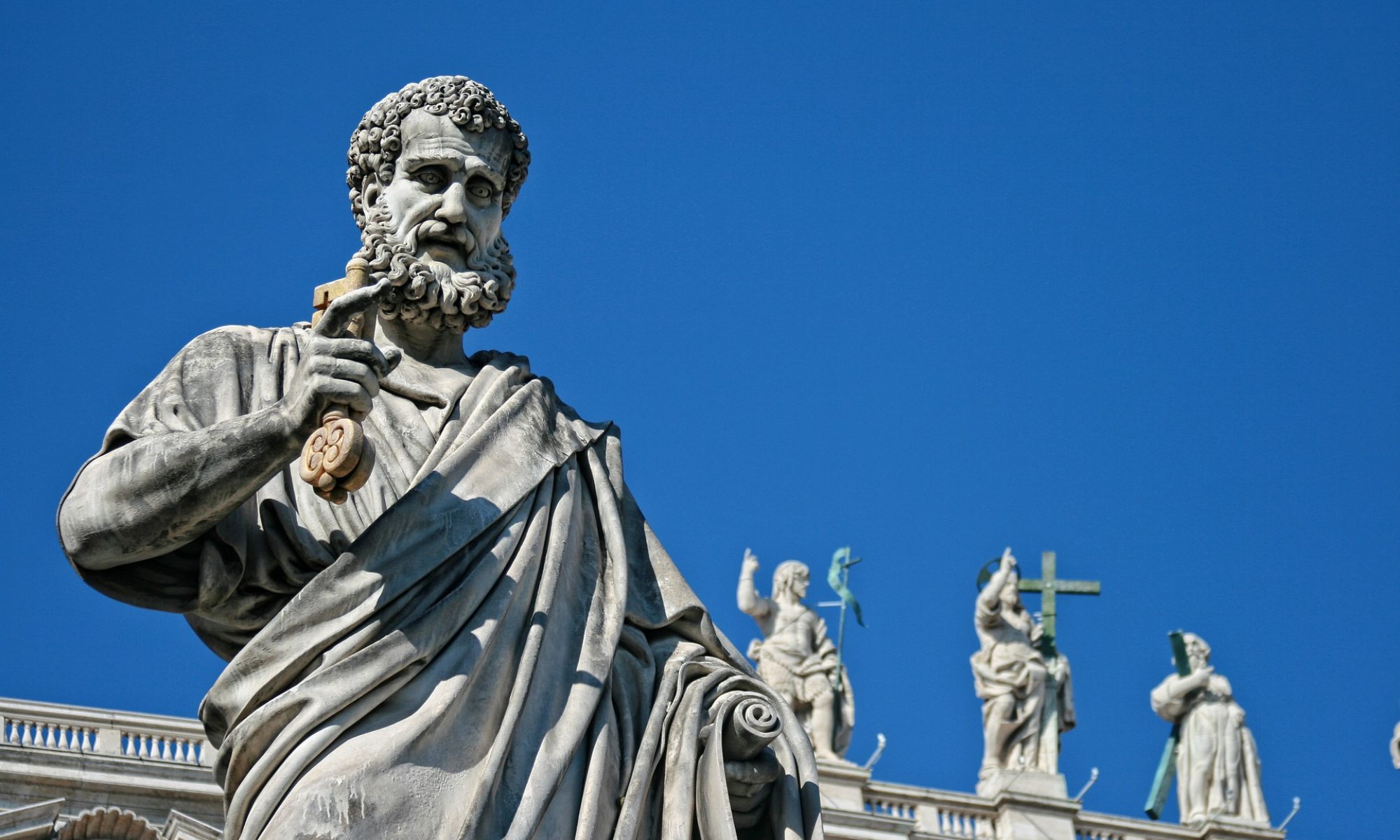
90. Church Planting in Rome?

September 29th, 2014

Catholic missiology speaks of “plantatio ecclesiae” to describe the process of church planting where currently there is no church. The rationale of this “plantatio” is that once the (Roman Catholic) church is planted there is no need to plant another church. This is even truer in the city of Rome! In the city where the Holy See has its center and where the heart of the Roman Catholic Church lies, how does one dare to plant a church? The Church (capital C) is already there by definition! So, church planting in the shadow of the Vatican requires extra-homework in order to identify a biblical warrant before embarking on such a task.

Spiritual Barriers
Church planting in Rome encounters lots of cultural and religious barriers: non-catholics are often perceived as sects, awkward people, foreigners, or new religious movements. Sometimes,  unfortunately, the evangelical performance (e.g. narrow-mindedness, tribal mentality, over-sensitivity to differences, estrangement from the real world) confirms these stereotypes. The intent, however, should be to show that evangelical churches are biblical, classical, orthodox, protestant churches that cherish church history, the heritage of the Church Fathers, and have a long legacy in the history of Christianity while reflecting a spiritual vitality that is lacking in so many spheres of the religious world.

Then there are the spiritual and theological roadblocks. Here the whole issue of mediation comes to the fore. How do we draw near to God? The standard Catholic view is that one approaches God through the sacramental system of “mother” Church. Many words that are used are the same (e.g. grace, cross, gospel, salvation), but they mean very different things and their meanings have to be addressed. Church planters must avoid the danger of assuming that terms such as grace, faith, Jesus, church, cross, and gospel, are understood as they are biblically defined. Dismantling old patterns and constructing new ones is an on-going task. Gently but firmly people need to distance themselves from catholic institutional/sacramental baggage and be exposed to the Gospel afresh.

Finally, there is the personal dimension. The ordinary Roman is struck by the personal element of the Gospel. Usually they have no concept of it. Their religion is mainly a set of practices and traditions, but not something that involves their whole life. Therefore community life, church life, and family life are all important ways to convey the practical difference that a saving faith in Jesus Christ brings to everyday life.

Ecclesiological Challenges and Gospel opportunities

The majority of Roman Catholic countries are as poorly evangelized as most secular countries in Europe. Rome is no exception. The vast majority are nominal Christians who have a loose sociological belonging to the community and no saving faith in Jesus Christ. For the most part Roman Catholic practice is based more on Folk Catholicism (e.g. devotions and processions) than Biblical Christianity. The reading of the Bible was prohibited for centuries and this censorship has produced a high level of biblical ignorance. People think they are “Christian” because they were baptized as infants and are part of a “Christian” culture, but there is little if no sense of personal engagement as far as the Gospel is concerned. Beyond the outward religious surface, there is a blend of religious and secular idolatries along with a mixture of pre and post-modern idolatries. While the presence of the institutional church is pervasive, the impact of the Gospel is minimal and significantly obscured by social convenience and practical indifference.

Rome therefore is a mission field and church planting is key to evangelism and Gospel transformation. Rome is certainly not accustomed to being a city where religious pluralism and the plurality of churches are welcomed. Over the centuries the Church has always been presented in the singular and anyone outside of the (Roman Catholic) Church was considered a heretic and/or a schismatic. The claim of being a “church” outside of the Roman Catholic Church is countercultural but something that most people find intriguing. This is especially true in celebrating the Lord’s Supper (the Eucharist being the center-piece of the entire Roman Catholic system where its sacramental, hierarchical, and dogmatic dimensions intersect). Here church planters are sending the message that the Christian church is certainly “one” and therefore “catholic” but not exclusively “Roman”. Church planting deconstructs the Roman Church’s claim to be the only church and emphasizes the “unity” of the church in terms of Gospel faithfulness instead of institutional adherence to the papal system.

In Rome there is much cynicism about the church and religion in general, as is the case in the rest of Europe. The cultural climate is skeptical and so opportunities exist to introduce the Gospel based on the virtuous circle of evangelical truth, evangelical community, and evangelical culture. Church planting is key to this goal because it joins believing and belonging, proclamation and service, the personal and the communal, creative contextualization and obedience to the Word of God. “Plantatio ecclesiae” used to be an action that went from Rome to the rest of the world. Now as ever it needs to be a commitment that reaches Rome as any other part of the world.

90. Roma, punto de misión

04 DE OCTUBRE DE 2014
La misionología habla de “plantatio ecclesiae” para describir el proceso de plantar una iglesia en una zona donde no hay ninguna. La razón fundamental de esta “plantatio” es que una vez la iglesia (católico romana) está instalada no es necesario plantar ninguna otra iglesia. ¡Esto es incluso más cierto en la ciudad de Roma! En la ciudad donde la Santa Sede tiene su centro y donde se encuentra el corazón de la Iglesia Católico Romana, ¿quién se atreve a plantar una iglesia? ¡La Iglesia (con mayúscula) ya existe, por definición! De este modo, la plantación de iglesias a la sombra del Vaticano requiere una tarea extra para identificar un mandato bíblico antes de embarcarse en semejante labor.
OBSTÁCULOS ESPIRITUALES
La plantación de iglesias en Roma tropieza con una gran cantidad de barreras religiosas y culturales: los no católicos a menudo son percibidos como sectas, gente torpe, extranjeros o movimientos religiosos nuevos. Algunas veces, lamentablemente, la actuación evangélica (p.e. la estrechez de miras, la mentalidad tribal, el exceso de sensibilidad a las diferencias y el alejamiento de la vida real) confirma estos estereotipos. El propósito, no obstante, debería ser mostrar que las iglesias evangélicas son bíblicas, clásicas, ortodoxas; iglesias protestantes que valoran la historia de la iglesia, el patrimonio de los Padres de la Iglesia y que tienen un largo legado en la historia del cristianismo, al tiempo que reflejan una vitalidad espiritual que les falta a tantas esferas del mundo religioso. Después, están las trabas teológicas y espirituales. Aquí todo el tema de la mediación pasa al primer plano. ¿Cómo nos acercamos a Dios? El punto de vista católico estándar es que las personas se relacionan con Dios mediante el sistema sacramental de la “madre” iglesia. La mayoría de las palabras que se utilizan son las mismas (p.e. la gracia, la cruz, el Evangelio, la salvación), pero quieren decir cosas muy diferentes y sus significados tienen que ser abordados. Los fundadores de iglesias deben evitar el peligro de suponer que términos tales como gracia, fe, Jesús, iglesia, cruz y Evangelio son comprendidos tal y como están definidos bíblicamente. Desmantelar los viejos patrones y construir de nuevos es una labor continua. Suave pero firmemente la gente necesita distanciarse del bagaje sacramental/institucional y descubrir el Evangelio de nuevo. Por último, existe la dimensión personal. El católico ordinario es alcanzado por el elemento personal del Evangelio pero, por lo general, no tiene conciencia de ello. Su religión es principalmente un conjunto de prácticas y tradiciones, pero no algo que involucra a toda su vida. Por consiguiente, la vida de comunidad, la vida de iglesia y la vida de familia son todos aspectos importantes para transmitir la diferencia práctica que una fe salvadora en Jesucristo trae a la vida cotidiana.
RETOS ECLESIOLÓGICOS Y OPORTUNIDADES DEL EVANGELIO
La casi totalidad de los países católico romanos están tan pobremente evangelizados como los países más laicos de Europa y Roma no es una excepción. La gran mayoría son cristianos nominales que tienen una pertenencia sociológica a una comunidad débil y ninguna fe salvífica en Jesucristo. Para la mayor parte de los católicos romanos la práctica se basa más en el catolicismo popular (p.e. devociones y procesiones) que en el cristianismo bíblico. La lectura de la Biblia estuvo prohibida durante siglos y esta censura ha producido un alto nivel de ignorancia bíblica. La gente cree que son “cristianos” porque fueron bautizados siendo niños y forman parte de una cultura “cristiana”, pero hay poco o ningún sentido de compromiso personal en lo que se refiere al Evangelio. Más allá de la superficie religiosa exterior, existe una mezcla de idolatrías religiosas y seculares junto con una combinación de paganismo pre y post moderno. Mientras que la presencia de la iglesia institucional es ominipresente, el impacto del Evangelio es mínimo y está oscurecido considerablemente por las conveniencias sociales y la indiferencia práctica. Roma es, por tanto, un campo de misión y la plantación de iglesias es la clave para el evangelismo y la transformación a través del Evangelio. Roma no está ciertamente acostumbrada a dar la bienvenida al pluralismo religioso y a la diversidad de iglesias. A lo largo de los siglos la Iglesia se ha presentado siempre como única y cualquiera fuera de la Iglesia (Católico Romana) era considerado un hereje y/o un cismático. La reivindicación de ser una “iglesia” fuera de la Iglesia Católico Romana es contracultural, pero es algo que la mayoría de la gente encuentra intrigante. Esto es especialmente cierto cuando se celebra la Cena del Señor (la Eucaristía es la parte central de todo el sistema católico romano donde se entrecruzan sus dimensiones dogmáticas, jerárquicas y sacramentales). Es aquí donde los fundadores de iglesias envían el mensaje que la iglesia cristiana es indudablemente “una” y, por consiguiente, “católica”, pero no exclusivamente “romana”. La plantación de iglesias deconstruye la reclamación de la Iglesia Romana de ser la única iglesia y enfatiza la “unidad” de la iglesia en términos de fidelidad al Evangelio en lugar de una adhesión institucional al sistema papal.
En Roma hay mucho cinismo sobre la iglesia y la religión en general, al igual que en el resto de Europa. El clima cultural es escéptico, por lo que existen oportunidades para introducir el evangelio basado en el círculo virtuoso de la verdad evangélica, la comunidad evangélica y la cultura evangélica. La plantación de iglesias es la clave para este objetivo ya que se une la creencia y la pertenencia, la proclamación y el servicio, lo personal y lo comunitario, la contextualización creativa y la obediencia a la Palabra de Dios. “Plantatio ecclesiae” solía ser una acción que iba desde Roma al resto del mundo. Ahora, como siempre, se necesita que haya un compromiso que alcance a Roma como a cualquier otra parte del mundo.

89. La Unidad ¿esfera o poliedro?

27 DE SEPTIEMBRE DE 2014
Al Papa Francisco no le gustan las esferas; le gustan los poliedros. En varios de sus recientes discursos y en diferentes contextos ha utilizado la imagen del poliedro para ilustrar lo que tiene presente cuando piensa en la unidad, es decir, la unidad de los cristianos y la unidad de la humanidad. En geometría elemental, un poliedro es una figura sólida de tres dimensiones con caras planas, bordes rectos y esquinas agudas o vértices. Sin entrar en demasiados detalles técnicos, la idea básica es que a un poliedro le falta la armonía y las proporciones de una esfera, pero conserva la unidad de un sólido. Y no sólo eso, tiene distancias variables desde su centro y no una sola manera de estar relacionado con él. Puede ser un tipo torpe de unidad, pero todavía mantiene el conjunto.
UNIDAD EN EL MUNDO GLOBAL
Francisco empezó a hablar inicialmente del poliedro en el contexto de la globalización. En un mensaje dirigido a un festival celebrado por la Doctrina Social de la Iglesia, que abordó la cuestión, dijo: “Me gustaría traducir el tema en una imagen: la esfera y el poliedro. Tomemos la esfera para representar la homologación, como una clase de globalización: es lisa, sin facetas e igual a sí misma en todas sus partes. El poliedro tiene una forma similar a la esfera, pero es multifácetico. Me gusta imaginar a la humanidad como un poliedro, en el cual las formas múltiples, a la hora de expresarse, constituyen los elementos que componen la familia humana en una pluralidad. Y esto es la verdadera globalización. La otra globalización, o sea la de la esfera, es una homologación” (6 de dic. de 2013).
Según este punto de vista, la globalización como una esfera puede llevar a la uniformidad cultural y a la homologación social, mediante las cuales un modelo de desarrollo y una forma de vida se convierten en el centro de lo que significa ser humano y el mundo entero debe ajustarse a ello. La globalización como un poliedro, por otra parte, permite múltiples soluciones que son diferentes unas de otras manteniendo al mismo tiempo relaciones vitales entre sus componentes. En este último, la homogeneidad no se impone y se fomenta la multiplicidad. En su Exhortación Apostólica del año 2013 Evangelii Gaudium, Francisco elaboró un trabajo sobre los peligros de reducir el mundo a un modelo económico único y a un paradigma cultural monolítico. Esta globalización trae “una economía de exclusión”, “la nueva idolatría del dinero”, “un sistema financiero que gobierna en lugar de servir” y “desigualdad que genera violencia”. La globalización, al querer moldear el mundo en un modelo único, lo que hace es matarlo. Por el contrario, si se celebra la diversidad del mundo hace que éste florezca. El centro de este poliedro es la humanidad común que todos los seres humanos comparten, mientras las diferentes caras representan las particularidades culturales que no pueden exprimirse ni ser ignoradas por la globalización.
LA UNIDAD DE LOS CRISTIANOS
Lo que es interesante de la utilización por parte de Francisco de estas imágenes geométricas es como las aplica al ámbito del ecumenismo. La unidad de los cristianos tiene sus propias metáforas bíblicas, tales como la de un único cuerpo con una cabeza y muchos órganos y partes (1 Corintios 12). En su visita a la Iglesia Pentecostal italiana (28 de Agosto de 2014) Francisco desarrolló su idea del ecumenismo como un poliedro: “Estamos en la era de la globalización, y nos preguntamos qué es la globalización y lo que podría ser la unidad de la iglesia: quizás una esfera, donde todos los puntos son equidistantes del centro, ¿todos iguales? ¡No! Esto es uniformidad. ¡Y el Espíritu Santo no crea la uniformidad! ¿Qué figura podemos encontrar? Estamos pensando en el poliedro puesto que el poliedro es una unidad, pero con todas las partes diferentes; cada una tiene su peculiaridad y su carisma. Esto es unidad en la diversidad”. Leyendo entre líneas, parece claro que la unidad como una esfera es el ecumenismo católico romano pre-Vaticano II, por el cual los otros cristianos eran drásticamente invitados a “volver” al redil católico y cumplir sus doctrinas y prácticas bajo la autoridad del Papa.
Con el Vaticano II el catolicismo romano actualizó su proyecto ecuménico y adoptó un tipo de círculo concéntrico de la unidad en el que la Iglesia única y sola “permanece en” la Iglesia Católico Romana y las otras iglesias y comunidades gravitan alrededor de su centro según su grado de proximidad o distancia. De acuerdo con el Vaticano II y las posteriores enseñanzas magisteriales, la unidad de los cristianos es triple: 1. profesar la misma fe, 2. celebrar la misma Eucaristía (es decir, en la forma católico romana) y 3. estar unidos bajo el mismo ministerio sacramental en la sucesión apostólica (o sea, bajo el Papa). ¿Cómo encaja un tipo poliedro de unión, como la promovida por el Papa Francisco, en esta visión de la unidad? Por ejemplo, en lo que se refiere al segundo signo mencionado antes, ¿está diciendo el Papa que la comprensión sacrificial de la Eucaristía y la teología de la transubstanciación pertenecen al centro de la unidad de los cristianos o son detalles que se pueden acomodar a las diferencias? ¿O dice el Papa que la sucesión apostólica, que es la base de la estructura jerárquica de la Iglesia Católico Romana, forma todavía parte del centro o es una variable secundaria para la unidad de los cristianos?
Los poliedros son sólidos fascinantes y el uso de Francisco de la imagen del poliedro invita a la reflexión. No obstante, el problema para la unidad de los cristianos no radica primordialmente en la metáfora que utiliza, sino en la visión teológica que la nutre. Si la Eucaristía católica y el sistema sacramental católico forman parte del centro de la unidad de los cristianos, pueden hacerse referencias a las esferas o a los poliedros tanto como se quiera, pero la sustancia del problema es que la unidad todavía gravita alrededor de la Iglesia Católico Romana y sus distintas perspectivas y no alrededor del Evangelio bíblico que llama a todos los cristianos a ajustarse a la mente de Cristo.

89. Is Unity Like a Sphere or a Polyhedron?

September 18th, 2014

Pope Francis does not like spheres: he likes polyhedrons. In various recent speeches and in different contexts he used the image of the polyhedron to illustrate what he has in mind when he thinks of unity, i.e. Christian unity and the unity of mankind. In elementary geometry, a polyhedron is a solid of three dimensions with flat faces, straight edges and sharp corners or vertices. Without going into too many technical details, the basic idea is that a polyhedron lacks the harmony and proportions of a sphere but retains the unity of a solid. Not only that, it has variable distances from its center and not a single way of being related to it. It may be an awkward type of unity, but it still holds the solid together.

Unity in the Global World

Francis first began talking about the polyhedron in the context of globalization.  In a message to a festival on the Social Doctrine of the Church, which addressed the issue, he said: “I would like to translate the theme into an image: the sphere and the polyhedron. Take the sphere to represent homologation, as a kind of globalization: it is smooth, without facets, and equal to itself in all its parts. The polyhedron has a form similar to the sphere, but it is multifaceted. I like to imagine humanity as a polyhedron, in which the multiple forms, in expressing themselves, constitute the elements that compose the one human family in a plurality. And this is true globalization. The other globalization — that of the sphere — is an homologation” (Dec 6th, 2013).

According to this vision, globalization as a sphere can lead to cultural uniformity and social homologation whereby one model of development and one way of life become the center of what it means to be human and the whole world must conform to it. Globalization as a polyhedron, on the other hand, allows for multiple solutions that are all different from one another while still maintaining vital relationships between its components. In the latter, homogeneity is not imposed and multiplicity is encouraged. In his 2013 Apostolic Exhortation Evangelii Gaudium, Francis elaborated on the dangers of reducing the world to a single economic pattern and a monolithic cultural paradigm. This globalization brings “an economy of exclusion”, “the new idolatry of money”, “a financial system which rules rather than serves”, and “inequality which spawns violence”. Globalization, by desiring to mould the world into a single pattern, kills it. Conversely, if it celebrates the world’s diversity it causes it to flourish. The center of this polyhedron is the common humanity that all human beings share while the different faces represent the cultural particulars that cannot be squeezed nor overlooked by globalization.

Christian Unity

What is interesting in Francis’ use of these geometric images is how he applies them to the realm of ecumenism. Christian unity has its own biblical metaphors, such as that of a single body with a head and many organs and parts (1 Corinthians 12). In his visit to the Italian Pentecostal church (August 28th, 2014), Francis developed his idea of ecumenism as a polyhedron: “We are in the age of globalization, and we wonder what globalization is and what the unity of the Church would be: perhaps a sphere, where all points are equidistant from the center, all are equal? No! This is uniformity. And the Holy Spirit does not create uniformity! What figure can we find? We think of the polyhedron: the polyhedron is a unity, but with all different parts; each one has its peculiarity, its charism. This is unity in diversity”.

Reading between the lines, it seems clear that unity as a sphere is pre-Vatican II Roman Catholic ecumenism whereby other Christians were drastically invited to “come back” into the Catholic fold and to conform to its doctrines and practices under the rule of the Pope. With Vatican II, Roman Catholicism updated its ecumenical project and embraced a concentric circle type of unity in which the one and only Church “subsists in” the Roman Catholic church and other churches and communities gravitate around this center according to their degree of nearness or distance from it. According to Vatican II and subsequent magisterial teachings, Christian unity is threefold: 1. professing the same faith, 2. celebrating the same Eucharist (i.e. the Roman Catholic way), and 3. being united under the same sacramental ministry in apostolic succession (i.e. under the Pope).

How does a polyhedron kind of unity as advocated by Pope Francis fit this view of unity? For example: as far as the second mark of unity is concerned, is the Pope saying that the sacrificial understanding of the Eucharist and the theology of transubstantiation belong at the center of Christian unity or are they particulars that can accommodate differences? Or is the Pope saying that apostolic succession, which is the basis of the hierarchical structure of the Roman Catholic Church, is still part of the center or is it a variable that is secondary to Christian unity?

Polyhedrons are fascinating solids and Francis’ use of the image of a polyhedron is thought-provoking. However, the problem for Christian unity does not primarily lie in the metaphors used, but in the theological vision that nurtures it. If the Catholic Eucharist and the Catholic sacramental system are part of the center of Christian unity, one can make reference to spheres or polyhedrons all he likes, but the substance of the problem is that unity still gravitates around the Roman Catholic Church and its distinct outlook, and not around the biblical Gospel that calls all Christians to conform to the mind of Christ.

88. Is Scripture True Only in a “Limited” Way? The Truth of the Bible According to the Pontifical Biblical Commission

August 28th, 2014

The “Biblical Renewal” is one of the most significant movements that has both preceded and followed the Second Vatican Council (1962-1965). After centuries of prohibiting the circulation of the Bible in the vernacular languages and forbidding access to it, the Roman Catholic Church has been working hard to reconnect with the Scriptures. Leo XIII’s encyclical Provvidentissum Deus (1893) defended a high view of the inspiration of the Bible while Pius XII’s encyclical Divino Afflante Spiritu (1943) welcomed historical-critical methods into Catholic exegesis. These two magisterial statements are the tracks within which the present-day Roman Catholic approach to the Bible can be found. A traditional appreciation of the Bible as an inspired book, on the one hand, and a critical reading of it which questions the clarity and finality of Scripture, on the other, are the two poles that open the door for the intervention of the Magisterium for the interpretation of Scripture.

Vatican II’s Dogmatic Constitution Dei Verbum (1965) is the highest authoritative statement on the Bible which combines the two emphases within the framework of a triangular dialectics between Tradition, Scripture and the Magisterium. A summary of Dei Verbum was offered by Pope Benedict XVI in his letter Verbum Domini (2010) in which he writes that the Word of God “precedes and exceeds sacred Scripture, nonetheless Scripture, as inspired by God, contains the divine word” (17). Here we find the classic reference to inspiration, but also the preceding existence of Tradition that envelops the Bible and speaks through the church’s Magisterium. According to Catholic teaching the Bible only “contains” the Word and this difference between Scripture and the Word allows for both critical readings of the Bible and the need for a human authority to discern what it contains and what it doesn’t.

The most recent pronouncement on this doctrine is an extended document released by the Pontifical Biblical Commission (February 22, 2014), which is the Vatican’s official study group on biblical issues. The title well captures the discussed topic: “The Inspiration and the Truth of Sacred Scripture”. This 250-page text is basically an elaboration of what Dei Verbum had argued as far as the scope of biblical inerrancy is concerned, i.e. that the Bible “teaches, without error that truth which God wanted put into the sacred writings for the sake of our salvation” (11). What, though, is the significance of relating inerrancy to “the sake of our salvation?” Is it then a kind of inerrancy that is limited only to the message of salvation? What about the rest of the Bible? Is it without error? And how can that which is related to salvation be distinguished from the rest? And who can discern what is without error and what is instead disputable? Roman Catholic theology has been discussing these issues since Vatican II and the Pontifical Biblical Commission has now entered this very important debate.

The document attempts to reaffirm and expand on what Dei Verbum highlights. The truth of the Bible is affirmed but is related to the “project of salvation” (3), the “salvific plan” (4), and “our salvation” (63). The detailed biblical overview on the truth of Scripture is understood as limiting the inerrancy of the text to its soteriological purpose. As for the rest, “in the Bible we encounter contradictions, historical inaccuracies, unlikely accounts, and in the Old Testament there are precepts and commands that are in conflict with the teaching of Jesus” (104). More specifically, the Abrahamic narratives are considered more as interpretations than historical facts (107), the crossing the Red Sea is more interested in actualizing the Exodus than reporting its original events (108), most of the book of Joshua has little historical value (127), and Jonah’s story is an imaginary account (110). In the New Testament, the reference to the earthquake in the passion’s narratives is a “literary motif” rather than a historical report (120). More generally, the Gospels have a normative value in affirming Jesus’ identity but their historical references have a “subordinate function” (123): in other words, the theology of the Gospels is valid, but their historical reliability is less important. How the two aspects can be neatly distinguished is not explained. In the end the truth of the Bible is “restricted” to what it says about salvation (105).

Another section of the document deals with the “ethical and social issues” raised by the alleged truth of the Bible, e.g. the theme of violence and the place of women. The hard and “offensive” texts of Scripture (e.g. the conquest narratives and the imprecatory Psalms) are not read in Catholic services due to “pastoral sensitivity” (125). According to the document, how can they be the Word of God is difficult to say. Again, the standard criterion to discern the inerrancy of the text is to “look at what it says about God and men’s salvation” (136) leaving the rest to the historical-critical readings and cultural sensibilities of the time. In a telling final statement, the document says that “the goal of the truth of Scripture is the salvation of believers” (144). The implication is that the Bible says beyond salvation (however defined) is not to be taken as necessarily true in the same sense.

What about the role of the Church in this matter? Since the truth of the Bible is not plenary but needs to be discerned according to its salvific purpose, it is the Church that mediates the acceptance and the proclamation of the truth of Sacred Scripture (149). It is the Church (the Roman Catholic Church) that selects and limits what is the truth of Scripture. According to the document then the Bible is true as far as its message of salvation is concerned and as far as higher criticism dictates. Ultimately, it is the Church that defines the truth of Scripture and rules over it.

The Pontifical Biblical Commission’s document “The Inspiration and the truth of Sacred Scripture” argues for a “limited inerrancy” of Scripture (limited to the message of salvation) and reiterates historical-critical views about the un-reliability of the historical accounts of both the Old and the New Testament. It is a Roman Catholic blend of traditional and critical views of the Bible which finally exalts the role of the Church. While rejoicing for some fruits of the “biblical renewal” that is taking place in Roman Catholicism, especially as far as the encouragement to all to read the Scriptures is concerned, the battle for the truth of Scripture still rages. In no way has Rome come closer to Sola Scriptura, i.e. the obedience to the self-attesting Word of God written that truly witnesses to the person and work of Jesus Christ. Roman Catholicism has nuanced its position and has relaxed the sharp edges of its opposition, but it still maintains the prominence of the Church over the Bible.