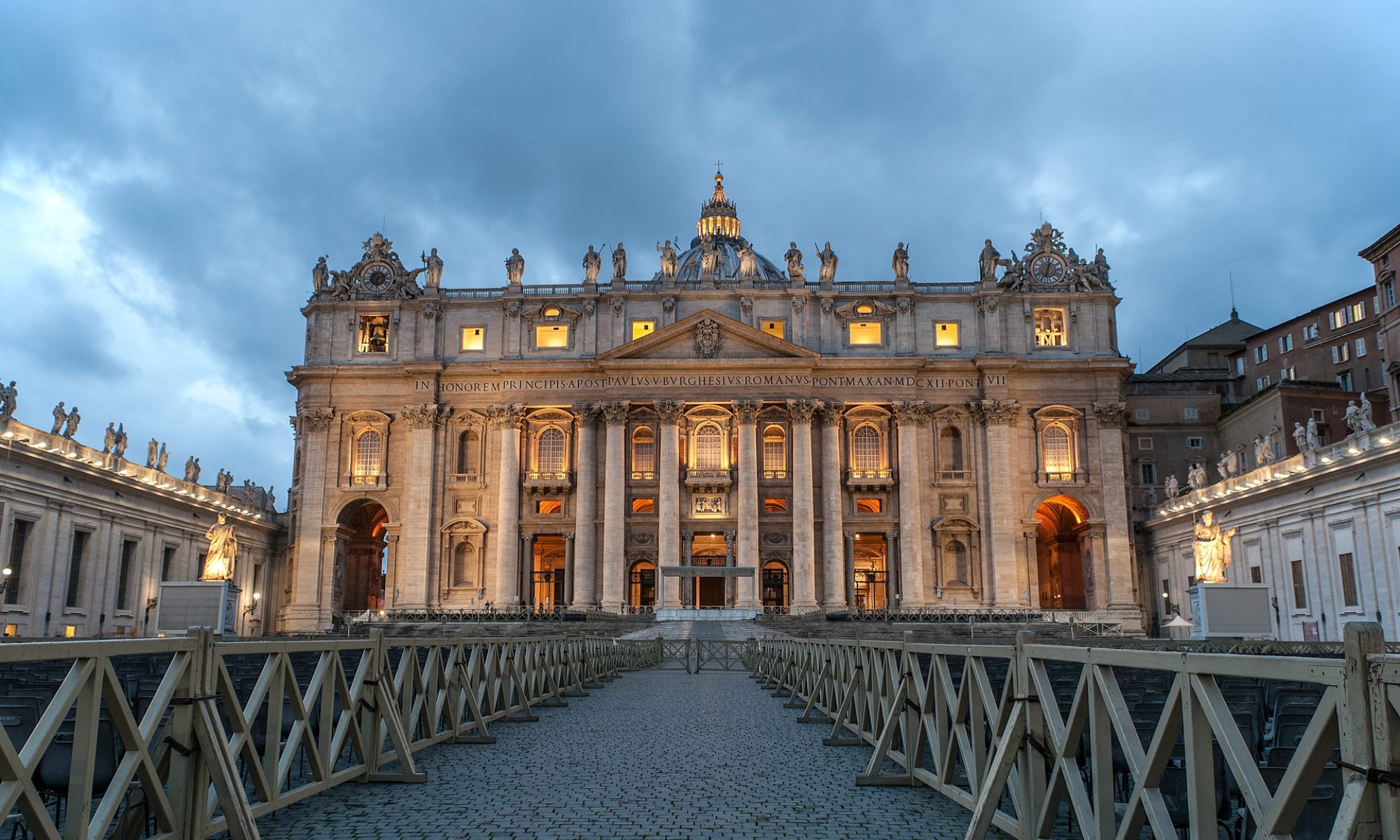
59. Not By Improvisation Alone. The Vatican at the Venice Biennale

June 1st, 2013

Today “the arts” is a term that captures the imagination of many Evangelical circles. Nowadays if you want to be hip and relevant as you envision your ministry you must talk about the arts. The problem, however, with all this talk about the arts is that it’s difficult to contribute intelligently if there’s no thorough understanding and expertise of the subject. It is not so much a matter of personal acquaintance or preparation, but is rather a matter of cultural insensitivity that at times verges towards naiveté. Broadly speaking, the Evangelical culture has been largely shaped by a suspicious attitude towards the arts, investing more on efficacy than aesthetics, trying to reach results rather than beauty, and aiming at the mind rather than inspiring the imagination. Our senses are poorly acclimated to the artistic life, and therefore cannot be nurtured by its signs and symbols. The outcome is that what we produce in terms of art work is often embarrassing, and what we say about the arts is superficial. But this is only part of the story.

Re-Opening the Dialogue Between the Church and the Arts

The Roman Catholic tradition, however, has followed another direction, going perhaps to the opposite extreme. There we find a saturation with the arts to the point in which there is a risk of idolizing it. Having said that, all Christian traditions have a problem with the arts. Since the end of the XIX century, contemporary arts has largely abandoned its general Christian inspiration. The Church has ceased to be considered the home of the arts and artists have in general felt alienated by Christianity and the church. As a result we have witnessed a significant breach between the two. Contemporary art continues to be deeply religious but seems to be hardly challenged and provoked by the Christian story. How is the Vatican dealing with the issue? The Vatican thinks and acts institutionally thorough its Pontifical Council for Culture. Its president, Cardinal Gianfranco Ravasi, has repeatedly said that the Church needs to reopen a channel of dialogue with artists. In 2009, during Benedict XVI’s pontificate, he arranged a meeting between hundreds of international artists with the Pope in the Sistine Chapel. There, in the “temple” that celebrated the marriage between the Church and the arts (think of Michelangelo painting there for various Popes), the Pope reasserted the fact that the Church used to be and still is the “home” and the “mother” of the arts. He added that there is no reason the two should divorce, but all the reason to reaffirm their mutual friendship.

A Vatican Exhibition in Venice

After a lot of talk and discussion, the Vatican will soon participate in a world-famous art exhibition. The Venice Biennale has for over a century been one of the most prestigious cultural institutions in the world. Ever since its foundation in 1895, it has been in the avant-garde, promoting new artistic trends and organizing international events in the contemporary arts: the International Film Festival, the International Art Exhibition and the International Architecture Exhibition, as well as the Festival of Contemporary Music, the Theatre Festival, now accompanied by accompanied by the Festival of Contemporary Dance. The 55th International Art Exhibition will be open to the public from June 1 to November 24, 2013 at the Giardini, the Arsenale, and in various venues around the city of Venice. The Vatican exhibition is entitled “In Principio” (In the Beginning) and contains the works of artists such as Studio Azzurro, Josef Koudelka, and Lawrence Carroll. Here is how the Pontifical Council describes it: “For this first participation of the Holy See with its own Pavilion at the Venice Biennale, we have chosen a theme that is fundamental for culture and Church tradition and a source of inspiration for many artists: the stories told in the Book of Genesis. Specifically the focus is on the first eleven chapters, as they are dedicated to the mystery of man’s origins, the introduction of evil into history, and our hope and future projects after the devastation that is symbolically represented by the Flood. Wide-ranging discussions on the multiplicity of the themes offered led to three thematic areas being chosen with which the artists have engaged: Creazione (Creation), De-Creazione (Uncreation), and the New Man or Ri-Creazione (Recreation)”. Fascinating.

Two Approaches

Will this exhibition reopen the dialogue? It is difficult to say. What is perhaps worth noticing, however, is the difference between Evangelical and Roman Catholic approaches to the issue. While Evangelicals tend to work bottom-up from a grassroots level, the Catholic Church chooses to work top-down, i.e. from the already accredited art exhibitions down to the worlds of media, scholarship, and the public opinion. While Evangelicals work at random and unconnected, the Catholic Church seems to have a long-term strategy that seeks to gradually implement. While Evangelicals naively think that if they talk about the arts they are “impacting” them and “making a difference”, the Catholic Church is more aware of the need to work in the institutions of the arts in order to hope for a significant result. The road may be longer, but the effects will perhaps be less ephemeral.

Leonardo De Chirico


58. Francisco venera a la Madona

 El Papa Francisco y la re-marianización del Papado

El Papa Francisco ha destacado el hecho de que quiere enfatizar su papel como obispo de Roma y ha empezado por dar a este énfasis un sabor mariano distintivo. 20 DE MAYO DE 2013 Que el Papa Francisco siente una intensa devoción mariana quedó inmediatamente claro después de su elección. En su primer discurso como Papa se encomendó él mismo y el mundo a María. Al día siguiente su primera visita fuera de los muros del Vaticano fue a la basílica de Santa María la Mayor, donde rezó a María. En sus homilías ha difundido a veces su piedad mariana. Ahora que el mes litúrgico mariano (mayo) ha empezado, el Papa ha expresado aún más su devoción. El día 3 de Mayo dirigió el rosario en la misma basílica mariana que visitó después de ser elegido y pronunció un discurso público a la gente que se había reunido allí.

MARÍA, LA SALVACIÓN DE ROMA

Esta especial basílica es conocida por acoger y mostrar el icono de María al que se le llama Salus Populi Romani (es decir, la salvación del pueblo romano). Este es un título mariano que subraya que ella es la protectora del pueblo romano. Delante del icono, el Papa Francisco comentó: “Estamos todos aquí delante de María; oramos para que nos guíe maternalmente; le llevamos nuestros gozos y tristezas, nuestras esperanzas y dificultades; la invocamos con el título Salus Populi Romani para pedir para nosotros, para Roma y para el mundo el don de la salud. Sí, ella da salud, ella es nuestra salud”. Al exponer su enseñanza, Francisco pasó a hablar sobre las maneras en las que María es nuestra salud en todos los aspectos: Nos ayuda a crecer como hombres y mujeres, exactamente como una madre cuida a sus hijos. Nos ayuda a hacer frente a nuestras dificultades, como una madre camina junto a sus hijos; por último nos ayuda a tomar las decisiones correctas en la vida, justo como una madre desea que sus hijos vivan responsablemente. Fuera de la piedad católico romana, es difícil comprender este profundo lenguaje “maternal” de devoción a María y concordarlo con una fe centrada en Cristo y basada en la Biblia que inequívocamente apunta a Jesucristo como el único Mediador entre Dios y el hombre. Bíblicamente, estas funciones se refieren a los oficios cristológicos de Jesús como Sacerdote y Rey. Sin embargo, el catolicismo romano los atribuye a María como una extensión del papel de Cristo como mediador. A causa de su sinergismo la fe católico romana permite, de hecho exige, tal veneración a María que tiene dimensiones teológicas, espirituales y emocionales. María es considerada como la protectora de la vida.

MARIANISMOS PAPALES

Al concluir su discurso, el Papa Francisco se dirigió a la multitud diciendo: “Gracias a todos por vuestra presencia aquí en la casa de la madre de Roma, nuestra Madre. Hurra a la Salus Populi Romani . Hurra a la Madona. Ella es nuestra Madre. Encomendémonos a ella porque nos cuida igual que lo haría una buena madre”. Esta vez el lenguaje devocional coincidía con el de los entusiastas del deporte: ¡Hurra!, ¡hurra! La magnitud del papel maternal de María agitó el corazón y el alma de muchas de las personas congregadas allí. El Papa Francisco ha destacado el hecho de que quiere enfatizar su papel como obispo de Roma y ha empezado por dar a este énfasis un sabor mariano distintivo. Ahora podemos empezar a ver la trayectoria del presente pontificado en lo que se refiere a su marianismo. El último papa en compartir tan alta opinión de María fue Juan Pablo II. Su lema era “totus tuus” (o sea, totalmente tuyo), y su veneración a los iconos de María y su práctica de las devociones marianas fueron muy evidentes. A Benedicto XVI se le consideró un Papa menos mariano, aunque rezaba a María a diario y ha incluido muchos elementos marianos en todas sus obras. Después de un pequeño descanso, María es otra vez una figura prominente con el Papa Francisco. Su pontificado parece estar conformado de manera significativa por la teología y la veneración marianas.


58. Hurrah to Madonna. Pope Francis and the Re-Marianization of the Papacy

May 10th, 2013 

.  

That Pope Francis has a strong Marian devotion became immediately clear after his election. In his first speech as Pope he committed himself and the world to Mary. The following day his first visit outside of the Vatican walls was to the basilica of St Mary Major where he prayed to Mary. In his homilies he has at times disseminated his Marian piety. Now that the liturgical Marian month (May) has begun, the Pope has further expressed his devotion. On May 3rd he lead the rosary in the same Marian basilica he visited after being elected and gave a public speech to the people that had gathered there.  

Mary, Salus Populi Romani

This particular basilica is known for hosting and displaying the icon of Mary who is called Salus Populi Romani (i.e. salvation of the Roman people). This is a Marian title that underlines her being the protector of the Roman people. In front of the icon, Pope Francis commented: “We are all here in front of Mary; we prayed for her motherly guidance; we took her our joys and sorrows, our hopes and difficulties; we invoked her with the title Salus Populi Romani to ask for ourselves, for Rome and for the world the gift of health. Yes, she gives health, she is our health”. In expounding his teaching, Francis went on to talk about three ways in which Mary is our health: She helps us grow as men and women, just as a mother cares for her children; She helps us face our difficulties, just as a mother walks with her children; Lastly she helps us make right decisions in life, just as a mother wants her children to live responsibly. Outside of Roman Catholic piety, it is difficult to understand such a profound “motherly” language of devotion to Mary and to square it with a Christ-centered and a Bible-based faith which unequivocally points to Jesus Christ as the only Mediator between God and man. Biblically, these roles relate to the Christological offices of Jesus as Priest and King. Yet Roman Catholicism attributes them to Mary as an extension of Christ’s role as mediator. Out of its synergism the Roman Catholic faith allows, indeed demands, such a veneration of Mary which has theological, spiritual, and emotional dimensions. Mary is seen as the protector of life.

Papal Marianisms

In closing his speech, Pope Francis addressed the crowd by saying: “Thank you for your presence here in the house of the mother of Rome, our Mother. Hurrah to the Salus Populi Romani. Hurrah to Madonna. She is our Mother. Let us entrust ourselves to her because she cares for us like a good mother”. This time the devotional language matched that of sports enthusiasts: Hurrah, hurrah! The magnitude of Mary’s motherly role stirred the heart and soul of many people gathered there. Pope Francis has stressed the fact that he wants to emphasize his role as bishop of Rome and has begun to give this emphasis a distinct Marian flavor. We can now begin to see the trajectory of this present pontificate as far as his Marianism is concerned. The last pope to share such a high view of Mary was John Paul II. His motto was “totus tuus” (i.e. totally yours), and his veneration of Marian icons and his practice of Marian devotions were very evident. Benedict XVI has been portrayed as a less Marian Pope, although he has always prayed to Mary on a daily basis and has included many Marian elements in all his work. After a short recess, Mary is once again a prominent figure with Pope Francis. His pontificate seems to be significantly shaped by Marian theology and veneration.

Leonardo De Chirico


57. Francisco encadena la Biblia a Trento

El catolicismo romano cree que el Magisterio de “la” Iglesia tiene la autoridad definitiva sobre la Escritura. Esto es lo que también cree el papa Francisco.

21 DE ABRIL DE 2013

Después de un mes de continuos acontecimientos alrededor del Vaticano, ha llegado el momento de cambiar a un estado de ánimo más rutinario.

El papa Francisco ha llamado tras su elección mucho la atención de los medios de comunicación y ha enviado varios mensajes de cambio y de renovación. Una vez pasada la sorpresa inicial, los diferentes departamentos vaticanos han llegado a un acuerdo para que haya un papado menos pomposo y el mismo papa está empezando a dar forma a sus propios puntos de vista en un gran número de cuestiones que estaban pendientes en la agenda vaticana.

Después de la primeras semanas marcadas por lo que parecía ser nuevo y extraordinario, el papa Francisco ha empezado ahora a hacer lo que un papa hace normalmente en Roma, p.e., presidir diferentes eventos litúrgicos, recibir a las delegaciones internacionales, reunirse con los obispos procedentes de todo el mundo, hablar en diversas ocasiones, etc.

El ritmo normal del papado está empezando a emerger. Tras haber utilizado un lenguaje más “pastoral” en su primera homilía que pareció gustar a todo el mundo, la inclinación más teológica del pensamiento de Francisco se ve a medida que tiene más oportunidades de pronunciar discursos en variadas formas.

Una de estas primeras ocasiones fue una disertación que hizo el 12 de abril a los miembros de la Pontificia Comisión Bíblica, convocada en el Vaticano para discutir sobre el tema “La inspiración y la verdad de la Biblia”. Este es un resumen de la dirección del pensamiento teológico de Francisco y algunas observaciones sobre este asunto tan importante para todos los cristianos en general, y para los evangélicos en particular.

LA TESIS DE LA NO IDENTIDAD
Después de encomiar a la Comisión por la elección del tema, el papa destacó la naturaleza de la Escritura y su relación con la Palabra de Dios. La Biblia, según Francisco, es “el testimonio en forma escrita de la Palabra de Dios”. La Escritura no está asociada con la Palabra de Dios en correspondencia exacta, sino que es más bien percibida como un testimonio de algo co-inherente, aunque diferente.

Siguiendo este comentario, el papa añade que “la Palabra de Dios precede y supera la Biblia”. En otras palabras, el Papa no aprueba una visión identitaria entre la Escritura y la Palabra pero apoya un punto de vista dinámico de la relación entre la Palabra de Dios y la Biblia, por lo cual la Escritura atestigua la Palabra que es anterior y va más allá de la Biblia. La Palabra está presente en la Biblia pero no está confinada a la misma.

En la Palabra se habla y se indica de la Biblia pero las dos visiones no coinciden, puesto que la Biblia es solamente un testigo (parcial) de la (más completa) Palabra. De acuerdo con este criterio, lo que la Biblia dice es lo que la Palabra dice, pero lo que la Palabra dice no es necesariamente lo que la Biblia dice.

Francisco reconoce correctamente que el centro de la fe cristiana es una “persona” y no un libro, es decir, la persona de Jesucristo, la encarnada Palabra de Dios.

Sin embargo, la deducción es que “el horizonte de la divina Palabra (o sea, Jesucristo) abarca la Escritura y se extiende sobre ella”. En un lenguaje más técnico, Francisco continúa diciendo que la Biblia es el “memorial canónico que da fe del evento de la Revelación”. La frase necesita un poco de desembalaje teológico pero resulta claro que el lenguaje “memorial” acoplado junto con la noción de “atestiguación” apoya la opinión de que hay una brecha entre la Biblia y la Palabra de Dios. No hay nada original en esta consideración; ha sido el estándar teológico de la Palabra defendido por el Iglesia católica desde el Vaticano II.

LA ESCRITURA ESTÁ SUJETA A LA IGLESIA
Una vez que la identidad entre la Palabra y la Biblia es rechazada y sustituida por el dinamismo de una Revelación “viva” que supera a la Biblia, surge la necesidad de un árbitro que sea capaz de reconocer la Palabra viva dentro y fuera de la Biblia.

Mientras que el liberalismo protestante somete la Biblia a la sentencia final de la conciencia o de la razón, el catolicismo romano cree que el Magisterio de la Iglesia tiene la autoridad definitiva sobre la Escritura. Esto es lo que también cree el Papa Francisco.

Al citar al Vaticano II (lo que es en realidad una cita del Vaticano I), dice que “todo lo que se ha dicho sobre la forma de interpretar la escritura está sometido al juicio definitivo de la Iglesia, que lleva a cabo la comisión y el ministerio divino de custodiar e interpretar la Palabra de Dios” ( Dei Verbum , 12).

Naturalmente, aquí Francisco está recordando el punto de vista católico romano de que hay una profunda unidad entre la Escritura, la Tradición y el Magisterio de la Iglesia hasta el punto de que uno no puede medirse con los otros dos y viceversa.

El punto crítico es que el Magisterio representa la única voz “viva” de la Palabra y su interpretación de la Escritura es lo que en realidad importa y lo que finalmente cuenta.

De este modo, en lugar de dejar que la Escritura hable a la Iglesia y por encima de la Iglesia mediante el Espíritu, la Iglesia es la única voz autorizada de la Palabra, la cual está atestiguada en la Biblia y que también se extiende más allá de la misma.

El Papa cita de nuevo el Vaticano II (que a su vez cita el Concilio de Trento) cuando dice que “no es de la Sagrada Escritura sola que la Iglesia recibe su certeza acerca de todo lo que ha sido revelado. Por tanto, la tradición y la Sagrada Escritura están para ser aceptadas y veneradas con el mismo sentido de lealtad y reverencia”( Dei Verbum , 9).

Habrá otras oportunidades para que el Papa Francisco aborde temas teológicos y pueda expresar sus opiniones. No obstante, este discurso a la Pontificia Comisión Bíblica es una indicación del hecho de que el Papa presumiblemente no traerá el cambio a los asuntos fundamentales doctrinales y que es más bien conservador en su actitud teológica católico romana. Realmente, en el énfasis y el tono de la disertación parece que está dispuesto a dibujar una línea entre lo que la Iglesia Católico Romana cree y la “Sola Escritura”, que es el principio de la fe protestante.

Traducción: Rosa Gubianas

57. “The Word of God Precedes and Exceeds the Bible”.

Pope Francis on Scripture and the Church

After a month of sparking events surrounding the Vatican, the time has come to shift into a more routine mood. Pope Francis has attracted a lot of attention from the media and has sent various messages of change and renewal. After the initial surprise, the various Vatican departments are coming to terms with a less pompous papacy, and the Pope himself is beginning to shape his own views on a number of open issues that are on the Vatican agenda.

After the first weeks marked by what seemed new and extraordinary, Pope Francis has now begun to do what a Pope in Rome normally does, e.g. presiding over different liturgical events, receiving international delegations, meeting with bishops from around the world, speaking at various occasions, etc. The normal pace of the papacy is beginning to emerge. After using more “pastoral” language in his first homilies that almost everybody seemed to like, the more theological bent of Francis’ thought is coming through as he has more opportunities to deliver speeches of various forms. One of his first opportunities was a speech he gave on April 12th to the members of the Pontifical Biblical Commission convened in the Vatican to discuss the theme “The inspiration and the truth of the Bible”. Here is a summary of Francis’ address and a few remarks on this very important subject for all Christians in general, and for Evangelicals in particular.

The Non-Identity Thesis

After commending the Commission for the choice of the topic, the Pope highlighted the nature of Scripture and its relationship to the Word of God. The Bible, according to Francis, is “the testimony in written form to the Word of God”. Scripture is not associated with the Word of God on a one-to-one basis, but is rather perceived as a witness to something co-inherent, yet different. Following this comment, the Pope adds that “the Word of God precedes and exceeds the Bible”. In other words, the Pope does not endorse an identity view between Scripture and the Word but supports a dynamic view of the relationship between the Word of God and the Bible whereby Scripture witnesses to a Word that is before and beyond the Bible. The Word is present in the Bible but not confined to it. The Word is spoken and told by the Bible but the two do not coincide, being that the Bible is only a (partial) witness to the (fuller) Word. According to this view, what the Bible says is what the Word says, but what the Word says is not necessarily what the Bible says.

Francis rightly recognizes that the center of the Christian faith is a “person” and not a book, i.e. the person of Jesus Christ, the incarnate Word of God. Yet the inference is that “the horizon of the divine Word (i.e. Jesus Christ) embraces Scripture and extends over it”. In a rather technical language, Francis goes on to say that the Bible is the “canonical memorial that attests the event of Revelation”. The sentence needs some theological unpacking but it is clear that the “memorial” language coupled with the notion of “attestation” support the view that there is a gap between the Bible and the Word of God. There is nothing original in this account; it has been the theological standard of the Word advocated by the Catholic Church since Vatican II.

 Scripture is Subject to the Church

Once the identity between the Word and the Bible is refused and substituted with the dynamism of a “living” Revelation that exceeds the Bible, there stems the need for an arbiter that is able to recognize the living Word in and beyond the Bible. While Protestant Liberalism submits the Bible to the final judgment of conscience or reason, Roman Catholicism believes that the Magisterium of the Church has ultimate authority over Scripture. This is what Pope Francis believes as well. In quoting Vatican II (which is actually a quotation of Vatican I), he says that “all of what has been said about the way of interpreting Scripture is subject finally to the judgment of the Church, which carries out the divine commission and ministry of guarding and interpreting the word of God” (Dei Verbum, 12). Of course here Francis is recalling the Roman Catholic view that there is a profound unity between Scripture, Tradition and the Magisterium of the Church to the extent that one cannot be pitted against the other two and vice versa. The critical point here is that the Magisterium represents the only “living” voice of the Word, and its interpretation of Scripture is what really matters and what finally counts. So, instead of letting Scripture speak to the Church and over the Church by the Spirit, the Church is the only authorized voice of the Word which is witnessed in Scripture, and which also extends beyond it. Again, the Pope quotes Vatican II (which in turn quotes the Council of Trent) when he says that “it is not from Sacred Scripture alone that the Church draws her certainty about everything which has been revealed. Therefore both sacred tradition and Sacred Scripture are to be accepted and venerated with the same sense of loyalty and reverence” (Dei Verbum, 9).

 There will be other times when Pope Francis will address theological issues to express his views. However, this speech to the Pontifical Biblical Commission is an indication of the fact that the Pope will presumably not bring change to basic doctrinal issues and that he is rather conservative in his Roman Catholic theological outlook. Actually the emphasis and tone of the speech seem to be willing to draw a line between what the Roman Catholic Church believes and the “Scripture Alone” principle of the Protestant faith.

 Leonardo De Chirico

leonardo.dechirico@ifeditalia.org

 Rome, 15th April 2013