Christian Unity vis-à-vis Roman Catholicism: a Critique of the Evangelicals and Catholics Together Dialogue

“Christian Unity vis-à-vis Roman Catholicism: a Critique of the Evangelicals and Catholics Together Dialogue”, Evangelical Review of Theology 27:4 (2003) 337-352.

In the aftermath of the Second Vatican Council (1962-1965) and the Berlin Congress on mission (1966), a new season in ecumenical relationships was inaugurated between Evangelicals and Roman Catholics on a world-wide scale. Two main initiatives should be remembered: the «Evangelical-Roman Catholic Dialogue on Mission» (ERCDOM),[1] which began after the publication of the encyclical «Evangelii Nutiandi» and the Lausanne Congress for World Evangelization (1974), and the on-going discussions between the World Evangelical Fellowship (WEF) and the Pontifical Council for the Promotion of Christian Unity[2] which were prompted by the 1986 WEF document “Roman Catholicism. A Contemporary Evangelical Perspective”.[3] Apart from these international meetings, more locally-based encounters are mushrooming everywhere. Following centuries of controversy, Evangelicals and Catholics are learning the art of dialogue based on mutual respect. The new attitude to dialogue would seem to suit most Evangelicals though the most frequently heard voices come from the two opposite extremes of this broad consensus. While some are willing to go beyond mere dialogue to explore closer forms of unity with Catholics, others are reluctant to accept any form of dialogue because they deem that, in ecumenical jargon, dialogue is never mere dialogue but is based on the premise of a unity which already exists though it may be somewhat imperfect. The issue of Christian unity is at the centre of the debate while dialogue goes on at different levels. On the whole, the situation is extremely fluid and is an example of the wide variety of positions within Evangelicalism which can be seen in other areas as well. As the ecumenical issue becomes more and more important in future years, so Evangelical-Catholic relationships are bound to become a “hot potato” with external and internal repercussions. For Evangelicals, the issue of Roman Catholicism is closely linked to the issue of evangelical unity. The two issues are interwoven because the way they face the former calls into question the way they consider and experience the latter. The evaluation of the dialoguing process which started in the USA in the early Nineties is an interesting case-study in the present scenario and provides the opportunity for an evangelical reflection on Roman Catholicism.

1. “Evangelicals and Catholics Together” (ECT)

The 1994 «Evangelicals and Catholics Together. Toward a Common Mission» does not seem to be directly related to the above mentioned dialogues nor does it appear to be in any way connected to the institutions which had been involved up to that point.[4] The alleged reasons for ECT and the North-American context where it was conceived and drafted are decisive elements in discerning its theological thrust and ecumenical weight. The architects of the whole project make it clear that its immediate background is to be sought in the American socio-political scene of the Eighties. From their critical perspective, that decade witnessed a dramatic deepening of the chasm between opposing cultural forces in the American “public square”.[5] To put it simply, the fighting forces confronting each other were, on the one hand, those sections of society who wished to defend a Christian-based moral vision and social policy, and, on the other, the emerging, rampant segments who wanted to abandon the traditionally American ethos or radically rethink it in terms of postmodern, relativistic trends of thought. The range of battle fields was extremely diverse and included thorny issues like abortion, pornography, homosexuality, euthanasia, the nature and integrity of the family, education value-systems and basic social patterns. However, all these areas were thought of as being single instances of a violent “culture war” in which the basic orientation of individual and national life was threatened. In the midst of this dramatic confrontation in American society, and perhaps because of it and through it, some Evangelicals and Catholics found themselves fighting on the same side.[6] Their encounter began to take shape at grass roots level in the Seventies, especially in the pro-life movement, after centuries of mutual harsh polemics,[7] but the new element in the situation was that confessionally divided Christians were sharing religiously grounded moral convictions and wanted to engage more vigorously in the challenge of saving America from the disastrous results of relativism. The relationship between Evangelicals and Catholics which is contemplated in ECT is what Timothy George has called “an ecumenism of the trenches”[8] emerging from a common moral struggle against secular trends in American society and encouraging proclamation and implementation of Christian values at all levels.


1.1 The Issue of “Christian unity” According to ECT

ECT is of theological interest in that this kind of coalition is said to have a theological basis. ECT drafters and supporters appeal not only to a relatively similar evaluation of current social trends and to the shared core values advocated by some politically conservative Evangelicals and Catholics. They have no difficulty in claiming that the possibility, indeed the necessity, of co-operation between conservative Christians in the “public square” is primarily warranted by their theological common roots in spite of past and present confessional divisions. Sharing a political and moral agenda for society is a fruit of a “theologically rooted alliance”.[9] The connection between socio-political motives and theological justification for common action is also clearly visible in the order of the statement whereby the section “We Contend Together”, which is focused on “culture war” concerns, is preceded by the section “We Affirm Together” where a basic confession of faith is outlined, and then followed by the programmatic paragraph entitled “We Witness Together” where a qualified commitment to Christian mission is envisaged. In other words, according to ECT, contending in society is based on affirming gospel truth and is aimed at witnessing to the world. This basic theological core is the real centre around which ECT revolves, most particularly as far as its Evangelical signatories are concerned. From a post-Vatican II Catholic perspective, in fact, there is nothing exceptional in acknowledging together with other Christians, as ECT does, the existence of “common convictions about Christian faith and mission” which warrant the possibility for the dialoguing partners to consider each other as “brothers and sisters in Christ”. For Evangelicals, however, this ecumenical readiness has not been a feature of their history and practice, especially in relation to Catholics. If it is borne in mind that until the Sixties, “Protestant anti-Romanism” was a very influential staple in American Evangelicalism,[10] the committed language of togetherness, oneness, unity, co-operation which permeates ECT is much more telling than its ordinary usage in widespread ecumenical jargon. Evidently, in the case of ECT, the pervasive “We-Together” pattern is much more ecumenically significant than in other bilateral documents where it is often employed.[11]

The doctrinal basis for this evangelically discovered or catholically reaffirmed unity in the gospel is the Apostles’ Creed which both parties wholeheartedly indicate as being “an accurate statement of scriptural truth”.[12] The appreciation of this basic, albeit foundational, agreement does not eschew the frank assertion of “authentic disagreements”, “deep and long-standing differences”, “communal and ecclesial separations” which are barriers to full communion even between otherwise like-minded Evangelicals and Catholics.[13] ECT drafters also provide a non-exhaustive but substantial list of problematic areas which includes fundamental issues regarding the nature of the church and ministry, the authority of Scripture, the sacraments and devotion to Mary and the saints. According to ECT, these matters are not to be avoided or downplayed but fully debated and thoroughly researched. They are mentioned in the section “We Search Together” which is a further commitment on the part of the signatories to work and study side by side. The aim of such an informal, “disciplined and sustained conversation” is intended to be positive and constructive, that is “to strengthen between us a relationship of trust in obedience of truth”.[14] The non-confrontational line espoused by ECT is also visible in the expressed goal of nonproselytization between professing Christians and in the encouragement which the statement gives to focusing attention on the task of reaching those who are outside the broad community of faith instead of trying to convert who are already believers.

As to its significance for the present state and future development of Evangelical-Catholic theological debate, ECT is concerned with the legitimacy of the dialogue to be pursued rather than with its theological profile. As far as the latter goes, ECT does not tread any further than the mere listing of the often repeated cahiers de doléances, as if the diversity can be reduced to a more or less congruous enumeration of areas of doctrinal dispute. In fairness, it is perhaps arguable that the contingent socio-cultural motivations and preoccupations which were predominant in ECT’s background tend to allow the whole dialoguing process to be shaped by a sort of theological pragmatism and not by a willingness to come to grips with the basic issues which divide Evangelicals and Catholics.


1.2 The Spectrum of Evangelical Reactions to ECT

ECT’s Evangelical signatories reached far across the wide spectrum of present-day American Evangelicalism, though they participated in it strictly as individuals acting from and to their denominational or parachurch constituencies but not on behalf of them. While on the Catholic side, “relatively little commotion has resulted from the conciliatory statement”,[15] the American Evangelical world does not seem to have received it with the enthusiasm its promoters hoped for. Although sundry ecumenically-minded Evangelicals have accepted ECT quite positively, the release of the statement has produced much bewilderment and disarray especially in Reformed Evangelical circles.[16] The debate following it has exposed the serious rift within Evangelicalism on fundamental theological orientations and concerns, and not just over the issue of how to relate to Catholicism.[17] In Packer’s vivid words, ECT has inevitably come “under evangelical fire”[18] with “bleak, skewed, fearful, and fear-driven things”[19] being said about it. In spite of all their diversity, such negative critical judgements share some basic common strands which can be highlighted, varying from the claim that ECT jeopardizes the gospel to the charge that it betrays the Reformation doctrine of justification by faith,[20] it blurs the meaning of the word “Christian”,[21] it confuses Christian mission with a social agenda, it undermines evangelism in Catholic countries, and so forth. The scope and tone of the criticism has been so drastic and clear-cut because for many Evangelicals “no less than Christian theological integrity is thought to be at stake”.[22] Apart from strong opposition from individual theologians, journals and church leaders, even a highly representative Evangelical institution, WEF, which is itself carrying on an official dialogue with the Roman Catholic Church, thought it appropriate to issue a “commentary on ECT” expressing perplexities on the document and distancing itself from the initiative as a whole.[23] More specifically, WEF refuses to link a commendable “ecumenism of the trenches” as far as culture war is concerned to the possibility for Evangelicals and Catholics to do evangelism and mission together when “the doctrinal differences … remain unresolved”. Furthermore, WEF underlines the semantic problem together with the interpretative issue involved in joint statements such as ECT whereby “the use of common language does not mean that the meanings are the same”. In other words, the mere act of subscribing a declaration is no indication of a genuinely recovered unity if each party attributes substantially different nuances to the agreed text.

Another significant response to ECT has come from an authoritative Evangelical parachurch agencies, the Alliance of Confessing Evangelicals (ACE). In reacting to ECT not only in negative terms but with the desire to suggest basic guidelines for subsequent Evangelical-Catholic discussion, ACE issued seven “Resolutions for Roman Catholic and Evangelical Dialogue”.[24] While questioning ECT’s purported creedal unity, the “Resolutions” affirm that “this catholic consensus” over the ecumenical creeds is not perceived “as a sufficent basis for declaring that agreement exists on all the essential elements of the Gospel” (1). According to ACE, this kind of confessional unity could be found only when the other essential tenet of the Gospel is included, that is “justification by faith alone” without which the “adequacy of any version of the Gospel” is deemed as falling short. As for this pivotal doctrine, “radical disagreement continues” between Evangelicals and Catholics (2). Creedal consensus as advocated by ECT, however, warrants “the making of common cause on moral and cultural issues in society” though this cooperation should not be regarded as a “common ecclesial action in fulfilling a common ecclesial mission” (4). While rejoicing in the awareness that “the Roman Catholic Church contains many .. believers”, ACE states that as an ecclesial institution, it is not “an acceptable Christian communion, let alone being the mother of all the faithful” (6). On the whole, then, ECT has stimulated much discussion and has provided an occasion for Evangelicals to reflect afresh on the issue of Roman Catholicism and on the wider stance of Evangelicalism in the present-day ecumenical scene.


2. “The Gift of Salvation” (GOS)

In the intention of the drafters, the ECT document was conceived as an initial step in the deeping of a mutual commitment to dialogue between its Evangelical and Catholic contributors. The negative appraisal of some Evangelicals on the main tenets of the statement apparently strengthened the conviction that there was a need for further conversations, especially on the weaker, problematic areas which had come under strong criticism. Further reflection ought to be aimed at a fuller exploration of the theological connotations and a more adequate articulation of this fundamental thrust of ECT. The first result of this continuing and more sharply focused debate was a shorter document released in November 1997 under the title of «The Gift of Salvation».[25] Sponsored and led by the same authors as ECT, namely Charles Colson and Richard Neuhaus, GOS stems from the continuation of the process initiated by ECT and can be thought of as being an elucidation of the controversial section “We Affirm Together” of the previous document. The filial connection with ECT is also evoked when GOS is sometimes called ECT II.


2.1 Unity and Justification by Faith in GOS

As has already been suggested in the section on ECT, the real gain of the whole ecumenical process which resulted in ECT according to its supporters was considered by some Evangelical critics to be its fatal flaw. Expressing a trenchant comment often repeated in Evangelical reactions to ECT, Sproul asks whether Evangelicals have the right to root an alleged confessional unity apart from, besides or beyond an unambiguous agreement on the doctrine of justification by faith alone. Granting the decisive importance of sola fide in historic Protestantism and noting the noisy silence in ECT over it, Sproul defines it “the missing doctrine” of the statement.[26] In his view, its omission either means that ECT does not perceive justification by faith to be an essential aspect of the Christian faith or that the long controversy over it between Evangelicals and Catholics has now been resolved. It is clear that both assumptions are not feasible and this omission can only be explained in terms of ecumenical diplomacy. The train of Sproul’s argument goes as far as to say that this kind of apparent neutrality or wilful bypassing fudges the whole effort and empties the statement of any ecumenical credibility. At this point, Sproul voices a conservative evangelical quasi-consensus in holding that without coming to terms with sola fide, that is without a full acceptance of the protestant doctrine of imputed righteousness on the Catholic side, even speaking of “unity” is a sheer impossibility, given the corner-stone role of justification in protestant Evangelicalism especially in relation to or against the catholic understanding of it which was framed at Trent. In light of this opinion shared by many Evangelical critics of ECT, Christian unity cannot be attained at the expense of the Reformation doctrine of justification by faith alone because without this doctrine there is no evangelically interpreted Christian gospel. Taking these reservations seriously into account, ECT drafters eventually decided to engage in the debate precisely over the crucial issue of sola fide. In this way, they wished to demonstrate that the kind of ecumenism favoured by the participants is an “ecumenism of conviction”, not one of “accommodation”[27] as was charged against the vagueness of ECT on various matters. Given this background, justification by faith comes to the fore as the obvious doctrine on which dialogue must concentrate if it is to go beyond socio-political concerns. The outcome of such an ecumenical endeavour is that, while restating with ECT the confession of a “common faith in Christ” and the acknowledgement of “one another as brothers and sisters in Christ”, GOS strives to deepen the theological quality of the professed unity after addressing the core soteriological issue of the Reformation. If ECT confessed unity on the basis of the Apostles’ Creed, GOS claims that it is also possible to envisage “a common understanding of salvation”, including an agreed version of sola fide. With this development, the ECT process has gained a theological merit, in its supporters’ opinion, in that the unity expressed in GOS is “not indeed unity in every aspect of the gospel, but unity in its basic dimension”[28] which bridges the confessions of faith of the undivided church and that of contemporary American conservative Christianity without ignoring the doctrinal specificity of the historic protestant tradition.

Rather boldly and with a hint of triumphalism, after outlining the content of the accord over salvation, GOS states that what has been affirmed “is in agreement with what the Reformation traditions have meant by justification by faith alone (sola fide)”. In view of such a statement, it should not be a surprise to read that, according to the signatories, “for the first time in 450 years, Evangelical Protestants and Roman Catholics have publicly agreed to a common understanding of salvation”.[29] Without making any reference to the Lutheran-Catholic dialogue nor to any other relevant ecumenical document on the same doctrine, these claims sound rather curious because they give the impression of a major breakthrough of historical importance achieved through an informal, unofficial and relatively short dialogue culminating in the release of a concise text. Reflecting on the ecumenical ethos of the whole initiative, it can be argued that the sort of pragmatic ecumenism resulting in ECT seems to have also operated in GOS with a certain measure of consistency. Apparently, the vaguely protestant outlook of the statement is moderated by the eloquent underestimation of the concept of imputation. The newly discovered possibility of confessing together “fundamental truths about the gift of salvation” goes hand in hand with the awareness of “some serious and persistent differences” between the Evangelical signatories and the Catholic ones on specific details or broad frameworks related to the doctrine itself which require “further and urgent exploration”. Among these “necessarily interrelated questions” there are “the meaning of baptismal regeneration, the Eucharist and sacramental grace, the historic uses of the language of justification as it relates to imputed and transformative righteousness” and “the normative status of justification in relation to all Christian doctrine”.

On the whole, then, while testifying to a further advancement along the path of an “ecumenism of conviction” than ECT was able to express, GOS is also in itself an interlocutory step. Its theological import is partially invalidated by its rather naïve approach to the controversy over sola fide which  is a highly complex matter. In Sproul’s telling words, “the ECT initiative is seriously, if not fatally, flawed since it proclaims too much way too soon”.[30] Another point underlined by some GOS Evangelical signatories is that the professed unity testified to in the statement is a bond between “some Roman Catholics and some evangelicals”, not implying at all “a unity of faith with the church of Rome”.[31] The level of brotherly recognition concerns individual believers involved in the process while no recognition of that kind is extended to Catholicism as an ecclesial institution. As Gerald Bray puts it, “one of the most painful parts of the ECT dialogue has been the need for Evangelicals to explain to the Catholics involved that we cannot regard the Roman Church in the way that a Baptist might look at Presbyterians. There is a qualitative difference between us”.[32]


2.2 Evangelical Criticism of GOS

As it might be expected, in spite of the good wishes of the promoters, GOS is facing nontheless the negative responses of the same strands of the Evangelical movement which reacted negatively to ECT. The tone of many appraisals sounds very similar to previous verdicts, including the charge of selling out the Reformation and of being a “disappointing sequel” to ECT.[33] As for the merits of the document, the main reservation advanced by the Alliance of Confessing Evangelicals (ACE) is that GOS fails “adequately to express the essential Protestant understanding of the gospel” in that it does not grapple with the concept of imputation.[34] What GOS does is to indulge in “ambiguous expressions” which are perfectly compatible within a Roman Catholic perspective. The blatant paradox seen by ACE is that “while ECT expressed concern over the relativization of truth in our day it has led in GOS to a relativizing of the most important truth of all, namely, the Gospel itself”. The problem of ambiguity is also evoked by Sproul, for whom GOS was drawn up with a “studied ambiguity by which agreement is reached in words but not in substance, leaving each side the opportunity to maintain its original position”.[35] Moreover, given the admission found in GOS of a “serious and persistent” difference on the language of imputation (which is inseparably linked to the concept of imputation), what is presented as an agreement on justification by faith as the protestant traditions understood it, is not sola fide but, at best, a limited version of it, if not a deformation of it. In this train of evaluation, GOS only affirms “ingredients” of sola fide, not sola fide itself. Of course, this criticism is mainly addressed at Evangelical participants who have presented the common declaration in a much more positive way. As for Catholic signatories, their unwillingness to embrace sola fide wholeheartedly is thought of as being perfectly legitimate from their point of view.

The question of how to approach Roman Catholicism is another area which has not seen any significant development. GOS, like ECT, appears to espouse an isolated, atomistic, fragmented way of conducting the conversation which seems to overlook the fact that doctrines are parts of a coherent system and that the difference between Evangelical and Catholic views of justification lies in the central core of their respective understandings of the reality of God’s saving work. In Sproul’s words, “the differences are systemic, not partial; they are radical, not slight”.[36] Applying these critical remarks to GOS, it can be said that “from an evangelical point of view, it is practically meaningless to uphold together with Catholics the doctrine of justification by faith, on the one hand, and express a sharp disagreement on «baptismal regeneration», «the Eucharist», «sacramental grace», «diverse understandings of merit, reward, purgatory, and indulgences», «Marian devotion and the assistance of the saints», etc., on the other. Unlike the Catholic one, the evangelical framework cannot tolerate such diversity and calls for a choice”.[37] In other words, an appreciation of the sharp edges of the evangelical doctrinal system should go together with an awareness of the open-ended and rounded shape of the Catholic one. The latter can subsume the former, provided that it renounces its sharpness, while the former cannot blunt itself to be a part of the latter, lest it lose its distinct adherence to the exclusivenness of the gospel. The acknowledgement of this basic contrast between the respective doctrinal systems should inform all theological discussions with Roman Catholics. GOS lacks a theologically “integrated approach” in dealing with the doctrine of justification by faith because it severs it from the whole of the biblical message and does not show a satisfactory degree of acquaintance with the Catholic synthesis which is unpalatable for Evangelicals. If this is the case, GOS achieves far less than is claimed by its proponents. Furthermore, because of its basic methodological and theological weakness, as a model for ecumenical dialogue with Catholics it is bound to be ambiguous and, in the end, unfruitful. The kind of dialogue Evangelicals should aspire to needs to be more historically conscious, theologically careful and ecumenically alert than their contributions to both ECT or GOS have been.


3. “The Gospel of  Jesus Christ” (GJC)

The process which has led from ECT to GOS has shown that while confronting Roman Catholicism, Evangelicals reflect and act upon their own identity. The question of how to deal with Roman Catholics can be answered only after one has tackled what does it mean to be an Evangelical. Differences in the area of ecumenism generally reflect divergences in understanding of what is constitutive for the evangelical faith. It should not be surprising therefore that after having ventured in conversations with Catholics and received some negative reactions from within the movement, the Evangelical promoters and their critics have come back to the issue of evangelical doctrinal identity, and inevitably so. This pause in evangelical reflection on the ecumenical process has given birth to «The Gospel of Jesus Christ. An Evangelical Celebration»[38] which is a basic statement on the evangel nurtured by strong evangelical convictions and aimed at a broad evangelical consensus, beyond past and present contrasts on ecumenical initiatives.


3.1 The Evangel as the Basis of Unity

GJC is meant to be a “celebration” of the gospel, a brief dogmatic outline of the content of the biblical message expressed in a rather doxological vein. A part from this general thrust, the main emphasis of the document revolves around the doctrine of justification by faith, its place within the evangelical confession of the gospel and its theological articulation vis-à-vis recent disputes within Evangelicalism itself. If GOS pointed the way to a possible convergence between Evangelicals and Catholics on justification which was criticised by some Evangelicals, GJC spells out the basic and shared evangelical understanding of the same doctrine. The paramount desire is to stress the forensic view of justification and this is achieved by the insertion in the text of a list of synonymous verbs or nouns when the meaning of justification is sketched out. So, it is said that “God «justifies the wicked» (ungodly: Rom 4:5) by imputing (reckoning, crediting, counting, accounting) righteousness to them”. Later GJC speaks of “the doctrine of the imputation (reckoning or counting) both of our sins to Christ and of his righteousness to us” (12) and of Christ’s righteousness which is “counted, reckoned, or imputed to us by the forensic (that is, legal) declaration of God” (13). All the semantic tree of the forensic language of justification is employed to focus on the declarative dimension of the act of justification. Another related concern is the willingness to underline what happens in justification in terms of a “decisive transition, here and now” and “transaction”. Of course, though unmentioned, the distinct protestant perspective on justification with its anti-Roman Catholic overtone is clearly in the background of such statements. Other aspects of the evangel are not as emphasised as justification by faith alone[39] but, in light of the history and purposes of GJC, the insistence on “sola fide” should not be taken as un underestimation of necessarily related truths concerning God’s saving work. Since every text has its context, GJC has its own in the debate over justification which ECT and GOS gave rise to.

It is too early to evaluate the reception that GJC will receive in Evangelical circles, in particular whether or not it will fuction as an adequate basis for drawing together Evangelicals who have different ecumenical sensitivities. It is certainly true that the only hope for Evangelicals to strive for unity is to appreciate the core of their faith. In the light of internal disputes over ecumenical issues, the message of GJC seems to be: back to square one, back to the evangel.


3.2 The Affirmation/Denial Pattern

After the introductory preamble, two paragraphs on “the Gospel” and “Unity in the Gospel” and before the final section on “Our Commitment”, the rest of GJC is construed using a composite pattern whereby affirmations concerning various constitutive elements of the evangel are followed by denials of possible misunderstandings or incompatible statements with the previously asserted truths. The rationale behind such a procedure seems to imply that the act of affirming something is only one side of the task related to the spelling out of the evangelical doctrinal identity. The other unavoidable aspect has to do with denying what is perceived as being contrary to what is positively affirmed. The gospel can be witnessed to propositionally by way of positive assertions and negative derivations. In contemporary history of confessional declarations, this pattern has noble precedents in the Barmen Declaration (1934) and the Chicago Statement on Biblical Inerrancy (1978). The model reflects the evangelical logic of theologizing, in which affirming something implies negating what is not in line with what has been affirmed. What is even more important is that the wise combination of “yes” and “no” is particularly vital for Evangelicals as they confront the ecumenical movement in general and Roman Catholicism in particular. This procedure is very far from the ecumenical (or catholic!) pattern in which two or more parties can uphold something together but are not costrained to work through the implications of what they have affirmed in an evangelically coherent way. Moreover, as will indicated later, the Catholic epistemological framework is characterised by a comprehensive et-et (both-and) pattern which enables it to hold together things which are different. The introduction of the “denial” element in GJC contrasts with this Catholic sensitivity towards the catholicity of doctrine. A Catholic theologian would perhaps subscribe to the “affirmation” sections of GJC but would feel extremely uncomfortable, if not totally uneasy, with the “denial” parts, especially nn. 1, 12, 13, 14 on issues like the authority of the church, justification as infusion of righteousness, the role of works and human cooperation with grace. Unlike ECT and GOS, GJC goes in the right direction in stressing the essential link between the “yes” and the “no” of the gospel evangelically interpreted. The misunderstanding caused by the previous documents should teach an important lesson in this respect, that is the need for Evangelicals to relearn to say their evangelical “no” (together with the “yes”, of course!) in ecumenical encounters when the truth of the gospel is under scrutiny. “No” is part of  their theological identity just as much as “yes” and makes it possible to avoid dangerous ambiguities. The hope is that the content, the pattern and the ethos of GJC will prove to be an useful reference point for future evangelical endeavors in the ecumenical scene.


4. Roman Catholicism, Evangelical diversity and witness

The ECT process, which has culminated thus far in GJC, indicates that Evangelicals, if they need to refine their interpretative categories in dealing with Roman Catholicism and to reassess their stance towards it, also need to reflect on their own identity. What is urgent then is an appreciation of what is fundamentally at stake between Evangelicalism and Catholicism as systems of thought, beyond mere polemical attitudes, historically entrenched suspicions, psychological bitterness or theological caricatures.[40]


4.1 The Catholic System is Eclectic by Definition

Although there is considerable diversity in its forms and expressions, Roman Catholicism is also a basically unitary reality because its underlying tenets hold together a magnificient cathedral of thought and life. While the thomistic motif of nature and grace is the basic feature of its worldview, the Roman Church, considered as the continuation of the incarnation of Christ, is its institutional centre. It is vital to bear in mind the fact that Catholicism is a multifaceted system where worldview and institution coinhere and foster its vision. If this is forgotten, it is easy to misrepresent its essence, goals and means. Any analysis of Roman Catholicism which does not take into account this systemic approach will easily fall prey to a superficial and fragmented understanding.

As a consequence of its system, Roman Catholicism appears to have no sense of the tragedy of sin, tends to encourage an optimistic view of man’s abilities, sees salvation as a gradual process in which nature is made more perfect, justifies the Church’s role as a mediator between man and God and enhances her prerogatives to achieve an ever increasing catholicity of doctrine and practice. Because it coordinates nature and grace without a tragic doctrine of sin, the Catholic system is characterised by an attitude of overall openness. It is inherently dynamic and comprehensive, capable of embracing doctrines, ideas and practices that in the Evangelical tradition are thought of as being mutually exclusive. By way of its inclusive et-et (both-and) epistemology, in a Catholic system two apparently contradicting elements can be reconciled into a synthesis which entails both and which safeguards the institutional unity.[41] In principle, the system is wide enough to welcome everything and everyone, not always appreciating the fact that biblical truth is also exclusive and demands integrity. From a Catholic point of view then, affirming something does not necessarily mean denying something else but simply enlarging one’s own perspective on the whole (i.e. Roman Catholic) truth. In this respect, what is perceived as being important is the integration of the part into the catholic whole by way of relating what is newly affirmed with the already existing body of truths. The essential criterion is not that of Evangelical purity or Christian authenticity but that of a progressive inclusion, that is the insertion of the particular into a broader perspective which eliminates its specificity by dissolving it in the service of universality. This means, for instance, that, in catholic eyes, a rather generic protestant view of the doctrine of justification is perfectly compatible with the traditionally catholic synergistic view of salvation; the use of terms such as “grace”, “faith”, “assurance” is always strictly correlated (though not always explicitely stated) to the Catholic sacramental system so that the word “sin” is used in the context of a more optimistic anthropology, etc. Examples of the way in which catholic presuppositions govern the understanding of biblical and theological language could be easily multiplied. In this respect, what is expressed in GOS is fully acceptable to Catholics without altering the catholic system in any significant way. It is a further addition to it but it does not question it. It is a contribution to it but it does not detract anything from it. This is possible because the catholic system allows, indeed demands, “aggiornamento”, that is integration without structural reformation.


4.2 The Catholic Ecumenical Strategy is Unequivocably Inclusive

The overall openness is not indiscriminate syncretism or relativism. From the Second Vatican Council onward, the Catholic Church has been undertaking an impressive process of redefining what used to be its merely polemical stance towards non-catholic confessions into a more dialoguing attitude. This paramount shift has been legitimated by the theological recognition of the existence of “sister churches” and “separated brethren” as well as finalised to their integration into the fully catholic communion. Since then, the promotion of several ecumenical initiatives on different levels has been a dominant feature of the catholic agenda. In all its extraordinary activism, Rome has attempted to expand its catholicity which has vast borders but a definite centre, multiple objectives but a distinct project. The Holy Year of 2000 is seen as a “providential” opportunity to enhance further this kind of ecumenical trend which will present the Catholic church as the only institution which, on the eve of the third millennium, can claim historical continuity, structural unity, sacramental fullness and ever increasing universality. As already noted, in the Roman Catholic understanding catholicity has to do simultaneously with unity and totality. The basic premise is that multiplicity should be brought into a unity and the Roman Church is seen as an expression, a guarantor and a promoter of the true unity of all mankind. As long as the institutional structure which preserves unity remains intact and is recognised for what it is supposed to be, everything can and must find its home somewhere within the kingdom of Catholicism. The distance from the centre is not so important as the acknowledgement that it is the centre.

In light of these remarks, Catholic efforts in ecumenism ought to be taken as stemming from this catholic vision of bringing together the whole of humanity around the institutional centre of the Roman Church. This is another aspect which Evangelicals should bear in mind while dialoguing with Catholics. Roman Catholic unity is never institutionally (i.e. Roman Church) free but aspires at increasing the catholicity of that institution without changing its fundamental features in an evangelical sense.


4.3 Evangelical Diversity with Respect to Roman Catholicism

In a recent comparison of  GOS and the Catholic Catechism on justification, Daryl Charles has stated: “Like Hodge and Spurgeon, contemporary Evangelicals face a similar dilemma: recognition that current Roman Catholic dogma acknowledges the same saving realities as Protestants affirm, even when they conceptualize and speak of them differently”.[42] Leaving aside the (im)plausibility of the reference to Hodge and Spurgeon as sharing the present-day need for evangelical discernement on Roman Catholicism,[43] the sentence well captures the common ecumenical idea that what is at stake between Evangelicals and Catholics is a matter of divergence in patterns of conceptualization or uses of language granted that the soteriological substance is the “same”. Against this well established view in ecumenical circles, the systemic analysis of Roman Catholicism would urge Evangelicals to rethink the “qualitative difference” in terms of a fundamental cleavage between the two systems. Although there are many differences between the Roman Catholic and the Evangelical faith at various levels, they are all inter-connected and, in the last analysis, stem from a radically different basic orientation which informs all their expressions. It is a difference which cannot simply be explained in psychological, historical or cultural terms, nor does it derive from different doctrinal emphases which could somehow be complementary in the catholic synthesis. The difference is at the level of presuppositions, that is in the basic apprehension of the way in which grace sustains and redeems creation. This is not a matter of nuances or details but of doctrinal substance and broader structures of thought. There can be, as there are, many differences in terms of language, concepts, practices, etc. but these are all dimensions not roots or causes of the fundamental difference. It is important not to confuse the phenomenology with the aetiology of the differentiation. Given the systemic chasm, the difference is noticeable in any point.

Even the doctrinal agreement between Catholics and Evangelicals, which is expressed in a common adherence to the Creeds and Councils of the first five centuries, is not an adequate basis on which to say that there is an agreement concerning the essentials of the gospel. Moreover, developments within the Catholic Church during the following centuries give rise to the suspicion that this adherence may be more formal than substantial. The same should be true as for the agreements between Evangelicals and Catholics when it comes to ethical and social issues. There is a similarity of perspective which has its roots in “common grace” and the influence on culture which Christianity has generally exercised in the course of history. Since theology and ethics cannot be separated, however, it is not possible to say that there is a common ethical understanding in that the underlying theologies are essentially different. As there is no basic agreement concerning the foundations of the gospel, even in ethical questions there may be affinities though these appear more formal than substantial.

So what is the fundamental difference? By way of introduction and preliminary consideration, it can be said that is has to do with the way in which nature and grace are related. The biblical teaching re-discovered during the 16th Century Reformation regarding the “sola, solus” of the gospel is a crux which sheds light on this fundamental contrast. Scripture alone, Christ alone, Grace alone, Faith alone, to God alone be glory, these together constitute not only the essential theological profile of the Evangelical faith but also examples of the basic divergence with respect to Roman Catholicism. The “sola, solus” point to the way in which the fallen creation of God receives the saving grace of God in Christ through the Spirit. While through the “sola, solus” Evangelicals affirm the sovereignty of God in creation, providence and redemption in contrast with man’s hopeless in sin, Catholicism continues to think of nature as essentially capable of receiving and cooperating with grace. This is evident in that Roman Catholicism adds to Scripture the authority of tradition and magisterial teaching; to Christ it has added the Church as an extension of the Incarnation; to grace it has added the necessity of the benefits which come through the sacramental office of the church; to faith it has added the necessity of good works for salvation; to the worship of God it has added the veneration of a host of other figures which detract from the worship of the only true God. This is true of tridentine Catholicism as well as of post-Vatican II Catholicism because that basic nature-grace motif is inherent to the Roman Catholic system. In this respect, the exclusiveness of the Evangelical faith concerning the essential elements of the Gospel must be seen as an alternative to the all encompassing synthesis  proposed by Catholicism.

Of course, what is true of the Catholic Church as a doctrinal and institutional reality is not necessarily true of individual Catholics and Evangelicals should be always ready to make that distinction. God’s grace is indeed at work in men and women who, although they may consider themselves Catholics, trust in God alone for their life and salvation. These brothers and sisters in the Lord must be nonetheless encouraged to examine critically residual Catholic elements in their thinking and life in the light of God’s Word alone.


4.4 Roman Catholicism and Evangelical Witness

In the fulfilment of the cultural mandate there may be co-operation and united action between Evangelicals and Catholics, as in fact may be possible between Evangelicals and people with other religious orientations and ideologies. Where common values are at stake in ethical, social, cultural and political issues, forms of co-belligerence are to be encouraged anywhere and at anytime. These necessary and inevitable forms of co-operation, however, must not be perceived as ecumenical initiatives, nor must they be deemed as implying the recovery of a doctrinal consensus which is not the case. It is one thing is to argue for co-belligerance in terms of “common grace” and on the basis of the influence of Christian values in different groupings around the world, it is an altogether different thing to warrant that co-operation in terms of “Christian unity” which presupposes unity in the gospel. Moreover, the fulfilment of the missionary mandate demands instead that its missionaries come from the community of believers who are united in a common confession of faith regarding all the fundamental aspects of the gospel, especially the crucial points which concern the five “sola, solus” of the Reformation. In this sense, all evangelistic activity in which there is a co-operation between Catholics and Evangelicals must be seriously questioned and re-examined. In this respect, Francis Schaeffer’s wise distinction between being “cobelligerents” and “allies” is fully applicable to the Evangelical-Catholic relationship in the XXI century as it was for the church at the end of the XX century.

Roman Catholicism is a reality which must be grappled with, today even more seriously than ever. The basic difference between Catholicism and the Evangelical faith is no reason for Evangelicals to ignore the internal developments within Catholicism, or to cultivate an arrogant attitude, or to be exclusively polemical. As much as is possible an open and constructive interaction with Catholicism should be sought, especially when it concerns the basic orientation of the respective systems of doctrine and life. In the present ecumenical scene, Evangelicalism and Roman Catholicism are the two religious constituencies within Christendom which, more than others, are showing signs of activism and renewal. Willy-nilly, Roman Catholicism is a reality so pervasive and comprehensive that can neither be ignored nor by-passed. Mutual indifference is not a viable option whereas unity is not feasible nor is it foreseeable because of the persistent “qualitative difference”. Co-operation in the public arena is possible given the proper theological framework and especially in those countries where traditionally Christian values are subjected to a heavy assault. Dialogue, frank dialogue, ought to be pursued: a sort of dialogue without ecumenical overtones which simply expresses the evangelical desire to love one’s neighbour, Roman Catholics included, and to witness to the saving grace of Christ alone in today’s world.


[1] B. Meeking, J. Stott (eds.), The Evangelical-Roman Catholic Dialogue on Mission 1977-1984. A Report, Exeter, Paternoster 1986.

[2] The proceedings of the two meetings can be found in ERT 21:2 (1997) and 23:1 (1999).

[3] ERT 10:4 (1986) and 11:1 (1987).

[4] Colson and Neuhaus explicitly say that the talks leading to ECT were “independent of the official conversations between the Roman Catholic and various evangelical Protestants bodies”; C. Colson, R. Neuhaus (eds.), Evangelicals and Catholics Together. Toward a Common Mission, Dallas, Word 1995, xiii.

[5] This kind of approach can be found, for instance, in R. Neuhaus, The Naked Public Square, Grand Rapids, Eerdmans 1984; C. Colson, Kingdoms in Conflict, Dallas, Word 1987; K. Fournier, A House United? Evangelicals and Catholics Together, Colorado Springs, NavPress 1994.

[6] The different stages of the history of ECT are summarized in C. Colson, R. Neuhaus (eds.), cit., x-xiii.

[7] Cf. M. Noll, “The History of the Encounter: Roman Catholics and Protestant Evangelicals” in C. Colson, R. Neuhaus (eds.), cit., 81-114. Cf. also R. Nash, “Evangelical and Catholic Cooperation in the Public Arena” in J. Armstrong (ed.), Roman Catholicism. Evangelical Protestants Analyze what Divides and Unites us, Chicago, Moody 1994, 181-197.

[8] T. George, “Catholics and Evangelicals in the Trenches”, Christianity Today (May 16, 1994) 16-17.

[9] Colson, “The Common Cultural Task” in C. Colson, R. Neuhaus (eds.), cit., 3.

[10] Noll, cit.

[11] Sproul reports that, according to Richard Neuhaus, this affirmation is “at the core of the entire document”, R.C. Sproul, By Faith Alone. The Doctrine that Divides, London, Hodder & Stoughton 1996, 15.

[12] ECT, Colson-Neuhaus (1995) xix.

[13] Idem, xx-xxii.

[14] C. Colson, R. Neuhaus (eds.), cit., xxi.

[15] D. Charles, “Evangelicals and Catholics Together: one year later”, ProEcclesia V:1 (1996) 73.

[16] Cf., for instance, J. MacArthur, Reckless Faith, Wheaton, Crossway Books 1994; J. Ankerberg, J. Weldon, Protestants and Catholics. Do they now agree?, Eugene, Harvest 1995; R. Zins, Romanism, Huntsville, White Horse Publ. 1995; J. McCarthy, Conversations with Catholics, Eugene, Harvest 1997.

[17] For a survey of Evangelical reactions, cf. N. Geisler, R. MacKenzie, Roman Catholics and Evangelicals, Grand Rapids, Baker 1995, 491-502 and D. Charles, cit.

[18] J. Packer, “Crosscurrents among Evangelicals” in C. Colson, R. Neuhaus (eds.), cit., 149. In this paper, Packer assesses and responds to the evangelical criticism of ECT. On Packer’s involvement in the ECT process, cf. A. McGrath, To Know and to Serve God. A Biography of J.I. Packer, London, Hodder & Stoughton 1997, 264-275.

[19] J. Packer, “Why I signed it”, Christianity Today (Dec 12, 1994) 34.

[20] R.C. Sproul, By Faith Alone, cit., 10-30 and 152-155; P. Eveson, The Great Exchange. Justification by Faith Alone in the Light of Recent Thought, Bromley, Day One Publ. 1996, 89-96.

[21] I. Murray, “Evangelicals and Catholics Together: A movement of watershed significance?”, The Banner of Truth, 393 (1996) 12.

[22] D. Charles, cit., 74.

[23] J. Vencer, “Commentary on ECT” in H. Fuller, People of the Mandate. The story of WEF, Carlisle-Grand Rapids, Paternoster-Baker 1996, 191-193. The next two quotations are taken from the same article.

[24] Modern Reformation (July 1994) 28-29. It is perhaps worth noticing that Jim Packer signed both ECT and these Resolutions.

[25] The GOS text was originally published in Christianity Today (Dec 8, 1997) 34.

[26] R.C. Sproul, By Faith Alone, cit., 22-24.

[27] These expressions are employed by T. George, T. Oden, J. Packer, “An Open Letter about The Gift of Salvation”, Christianity Today (April 27, 1998) 9.

[28] Ibidem.

[29] As reported by R. Frame, Christianity Today (Jan 12, 1998) 61.

[30] R.C. Sproul, “What ECTII Ignores. The inseparable link between imputation and the gospel”, Modern Reformation (Sept/Oct 1998). In the same respect, Neuhaus writes that “the Lutheran formula of simul iustus et peccator, which was Rome’s chief objection to JD (Lutheran-Catholic Joint Declaration), is no part of «The Gift of Salvation»”, First Things 86 (Oct 1998) 82. Neuhaus too recognises that the central issue of the Protestant-Catholic divergence on the doctrine was untouched by GOS.

[31] T. George, T. Oden, J. Packer, cit. – italics in the original.

[32] G. Bray, “Editorial”, Churchman 113 (1999) 197.

[33] Zins, cit., 255.

[34] “An Appeal to Fellow Evangelicals. The Alliance Response to the second ECT document The Gift of Salvation” (1998).

[35] R.C. Sproul, “What ECTII Ignores”, cit.

[36] R.C. Sproul, Getting the Gospel Right. The Tie that Binds Evangelicals Together, Grand Rapids, Baker 1999, 86.

[37] “The Gift of Salvation. A Reflection by IFED”, unpublished paper (1999). Part IV of this article is also indebted to it.

[38] The GJC text was published on Christianity Today (Jun 14, 1999) 51-56. R.C. Sproul provides an useful, article by article, commentary in Getting the Gospel Right, cit.

[39] In a brief letter Cornelius Plantinga, John Stackouse and Nicholas Wolterstorff, amongst others, have expressed reservations on the fact that GJC seems to refer to justification at the expense of sanctification, thus failing to represent a real evangelical consensus; cf. Christianity Today (Oct 4, 1999) 15.

[40] The following paragraphs are based on a statement issued by IFED and endorsed by the Italian Evangelical Alliance, “Orientamenti evangelici per pensare il cattolicesimo”, Ideaitalia III:5 (1999) 7-8.

[41] Classical protestant (read: neo-orthodox) works that deal with these aspects of Catholicism are those by Vittorio Subilia, Il problema del cattolicesimo (E.T. The Problem of Catholicism, London, SCM 1965) and La nuova cattolicità del cattolicesimo, Torino, Claudiana 1967.

[42] Daryl Charles, “Assessing Recent Pronouncements on Justification: Evidence from “The Gift of Salvation” and the Catholic Catechism”, Pro Ecclesia (1999).

[43] Hodge and Spurgeon do not seem to share the same dilemma if their positions on Catholicism are considered more fully. Hodge’s critique is epitomized in his 1869 “Letter to pope Pius IX”, The Banner of Truth 415 (1998) 22-25 written on behalf of the two General Assemblies of the Presbyterian Church in the USA. As for Spurgeon, cf. the anthology edited by T.F. Kauffman, Geese in Their Hoods. C.H. Spurgeon’s Writings on Roman Catholicism, Huntsville, White Horse Publ. 1997.
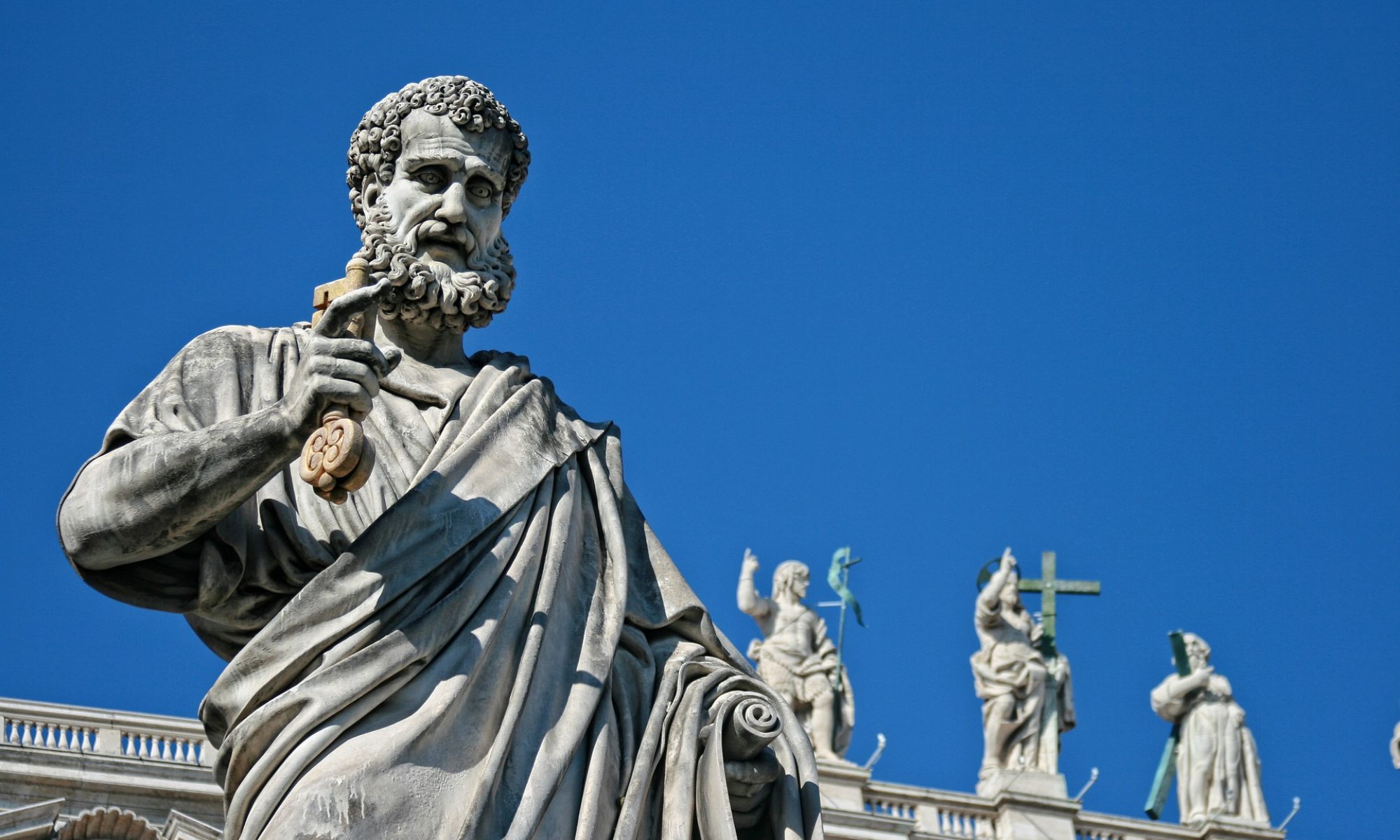
 

100. Los ídolos de Roma

07 DE FEBRERO DE 2015
La idolatría se ha convertido en un tema de renovado interés en las discusiones teológicas recientes. Esto describe perfectamente lo que la Biblia nos advierte que evitemos y ayuda a dar sentido a la narrativa primordial del mensaje cristiano. Los ídolos son los enemigos de Dios e intentan reemplazar a Dios como la fuente definitiva de la vida humana. De esta forma identifica Tim Keller la esencia de un ídolo en términos agustinianos: “Si amas a algo más que a Dios, aunque creas en Dios, si hay algo en tu vida que tiene más significado o es más importante para tu seguridad que Dios, entonces esto es un ídolo, es decir, una especie de pseudo-dios, un falso dios, un maestro del pacto”.i Los ídolos son falsificaciones de dioses que se infiltran en las vidas personales y las desvían de su objetivo de seguir la búsqueda y el seguimiento de Dios. Sería totalmente simplista pensar que los ídolos sólo operan en individuos o grupos de personas. Si la presencia de los ídolos es tan penetrante en el conjunto de la vida humana, sin duda tienen un lugar en las ciudades. Realmente, las metrópolis son zonas espaciales y culturales para formar los ídolos y destruir lo que cae bajo su dominio. La idolatría es, por consiguiente, una “clave interpretativa” para llegar a un acuerdo con la condición espiritual de la urbe. Yo ofrezco mi tarea en lo que se refiere a la ciudad de Roma. Este es un bosquejo provisional de lo que parecen ser los ídolos de Roma. Los mismos están en orden cronológico, remontándose a la antigüedad de Roma hasta su panorama actual. Los ídolos no se reemplazan unos a otros, sino que se crean unos a partir de otros.
Idolo n. 1 PAX ROMANA (La Paz Romana)
Desde el siglo segundo a.C. hasta el año 476 d.C. Roma dominó el mundo antiguo. Su status quo fue nombrado pax romana, la paz romana. Su objetivo era tener dominio sobre las naciones y ejercer el poder político. Mediante las conquistas militares esta “paz” fue llevada al mundo. Pero no era una “paz” verdadera para casi nadie. En realidad, se basaba en el uso de la violencia, la imposición de la esclavitud y la opresión de los disidentes. La Pax Romana se ha extinguido como sistema político pero sus logros en términos de arquitectura y ruinas son famosos en todo el mundo. Por otra parte, influye en la cultura de la ciudad infundiendo una especie de arrogancia espiritual y la ilusión de ser el centro del mundo. El Evangelio trae otra clase de paz: el Shalom de Dios, la paz de Dios que da dignidad y reconciliación en Cristo.
Idolo n. 2 PAPAL CATHOLICA (El Baluarte Religioso)
A medida que el Imperio Romano se desvanecía, la ciudad fue dirigida hasta 1870 por la Iglesia Católico Romana con su más alta institución al frente, o sea, el Papa. Los Papas se consideraban a sí mismos los verdaderos herederos de los emperadores. Por supuesto, también llevaron algunos elementos cristianos, practicando así una especie de asimilación entre los motivos del Evangelio y los paganos. La principal ideología que guió a la ciudad fue todavía la “imperial” y política en su pleno corazón. La urbe creció llena de edificios religiosos magníficos, con los que quería mostrar su grandeza y poder. En lo que se refiere a la influencia espiritual de la Papal “catholica”, la iglesia ha dirigido la vida de las gentes durante siglos, ejerciendo su poder económico y político. Sin embargo, el Evangelio que Roma necesita oír y ver es en cambio un mensaje fundamentado solo en la Palabra de Dios (sola Escritura), centrado solo en Cristo (solo Cristo) y basado solo en la gracia (sola gracia).
Idolo n. 3 THE PALAZZO (El Palacio)
Después de la unificación de Italia (1861), Roma se convirtió en la capital de la nación italiana (1870). Después del Imperio Romano y de la Iglesia Católica, ahora el estado gobernaba la ciudad, añadiendo otra capa a su perspectiva espiritual. Roma es una metrópoli donde las estructuras políticas están lejos de ser transparentes y sus estándares de gobierno distan mucho de ser justos. En general, la astucia de espíritu marca la vida pública. Roma es una ciudad de maniobras políticas donde las cosas pueden resolverse si se está “en” el círculo correcto. Como las alternativas del Evangelio, la iglesia necesita ser el lugar donde se promueve la cultura de la responsabilidad en la vida personal, la familia, la sociedad, la política, etc.
Idolo n. 4 LA DOLCE VITA (La Dulce Vida)
Para terminar, Roma es también famosa por su “dulce vida”, procedente del título de la película de Federico Fellini La dolce vita (1960). Buena comida, vida cómoda, placeres a-morales y sexo sin compromiso: todo contribuye a dar forma al sueño de una buena vida. Naturalmente, hay mucho vacío alrededor y sus promesas son vanas. La vida real es diferente, a pesar de que la dulce vida inspira a la gente y nutre sus expectativas. El Evangelio debe armonizar la aspiración de una vida buena, al tiempo que denuncia la pendiente resbaladiza de una vida sin Cristo. Después de todo, la vida cristiana significa glorificar a Dios y gozar de El para siempre. La iglesia tiene que ser consciente de estos ídolos, así como encarnar alternativas viables al Evangelio. El Evangelio no sólo denuncia la quiebra de la idolatría, sino que también llena la vida de significado real, amor y esperanza.
(Este escrito es un extracto de mi artículo “Identificando a los Idolos de la Ciudad” del libro Center Church Europe: Doing Balanced, Gospel-Centered Ministry in Your City [Iglesia Centro de Europa: Hacer el ministerio centrado en el Evangelio y equilibrado en la propia ciudad] de Timothy Keller. Editado en Franeker (Holanda) por Uitgeverij Van Wijnen, 2014, pp. 168-174. Puede comprarse este libro en http://www.amazon.co.uk/Center-church-Europe-balanced-gospel-centered/dp/9051944802).
i Timothy J. Keller, ‘Getting Out (Exodo 4)’,en: D.A.Carson (ed.), The Scriptures Testify About Me [Las Escrituras Dan Testimonio de Mi], Nottingham: IVP 2013, p.41.

100. The Idols of Rome

January 31st, 2015

Idolatry has become a theme of renewed interest in recent theological discussion. It neatly describes what the Bible warns against, and it helps to make sense of the overarching narrative of the Christian message. Idols are the enemies of God and try to replace God as the ultimate source of human life. Here is how Tim Keller identifies the essence of an idol in Augustinian terms: “If you love anything more than God, even though you believe in God, if there is anything in your life that is more important to your significance or security than God, then that is an idol – a kind of pseudo-god, a false god, a covenant master”.[1]

Idols are counterfeit gods that infiltrate personal lives and divert them from searching for God and following Him. It would be utterly simplistic to think of idols only operating in individuals or groups of people. If the presence of idols is so pervasive in the whole of human life, certainly they have a place in cities. Actually, cities are spatial and cultural spaces for idols to shape and destroy what comes under their dominion. Idolatry is therefore an “interpretative key” to come to terms with the spiritual condition of the city. Here I offer my homework as far as the city of Rome is concerned. This is a tentative sketch of what the idols of Rome look like. They are in chronological order, going back to the ancient past of Rome down to its present-day outlook. The idols do not replace one another, but they build on each other.

Idol n. 1 PAX ROMANA (The Roman Peace)

From the second century BC until 476 AD, Rome dominated the ancient world. Its status quo was named pax romana, the Roman peace. Its goal was to have dominion over nations and to exercise political power. Through military conquest this “peace” was taken to the world. But it was hardly a real “peace” for anyone. It was actually based on the use of violence, the imposition of slavery and the oppression of dissenters. The Pax Romana is gone as a political system but its achievements in terms of architecture and ruins are famous throughout the world. Moreover, it influences the culture of the city by way of infusing a kind of spiritual arrogance and the illusion of being at the center of the world. The gospel brings another kind of peace: the shalom of God, the peace of God that gives dignity and reconciliation in Christ.

Idol n. 2 PAPAL CATHOLICA (The Religious Stronghold)

As the Rome Empire faded away, the city was run until 1870 by the Roman Catholic Church with its highest institution, i.e. the Pope. Popes considered themselves to be the true inheritors of the emperors. Of course, they also brought some Christian elements, thus practicing a kind of assimilation between pagan and gospel motives. The main ideology that drove the city was still “imperial” and political at its very heart. The city grew full of magnificent religious buildings, wanting to show greatness and power. As far as the spiritual influence of the Papal “catholica” is concerned, the church has been running people’s lives for centuries, exercising political and economic power. The gospel that Rome needs to hear and see is instead a message based on God’s word alone (sola Scriptura), centered on Christ alone (solus Christus), grounded on grace alone (sola gratia).

Idol n. 3 THE PALAZZO (The Palazzo)

After the unification of Italy (1861), Rome became the capital of the Italian nation (1870). Following the Roman Empire and the Catholic Church, now the state ruled the city, adding another layer to its spiritual outlook. Rome is a city where political structures are far from transparent, and its standards of governance are far from just. A general shrewdness of spirit marks public life. Rome is a city of political maneuvering where things can be settled if you are “in” the right circle. As the gospel alternative, the church needs to be the place where a culture of responsibility is promoted, in personal life, family, society, politics, etc.

Idol n. 4  LA DOLCE VITA (Sweet Life)

Finally, Rome is also famous for its “sweet life”, from the title of the movie by Federico Fellini La dolce vita (1960). Good food, easy life, a-moral pleasures, and sex without commitment – all contribute to the shape of the dream of a good life. Of course, there is much emptiness around and its promises are futile. Real life is different, yet the sweet life inspires people and nurtures their expectations. The gospel needs to match the aspiration of a good life, while denouncing the slippery slope of a life without Christ. After all, the Christian life means to glorify God and to enjoy Him forever.

The church needs to be aware of these idols, as well as to embody viable gospel alternatives. The gospel not only denounces the bankruptcy of idolatry, but also fills life with real meaning, love and hope.

(This is an excerpt of my article “Identifying the Idols of the City” in Tim Keller, Center Church Europe. Doing Balanced, Gospel-Centered Ministry in Your City, Franeker: Uitgeverij Van Wijnen, 2014, pp. 168-174. The book can be bought at http://www.amazon.co.uk/Center-church-Europe-balanced-gospel-centered/dp/9051944802)

[1] Timothy J. Keller, ‘Getting Out (Exodus 4)’, in: D.A. Carson (ed.), The Scriptures Testify About Me, Nottingham: IVP 2013, p. 41.

99. Las 15 enfermedades de la Curia Romana, excepto una

24 DE ENERO DE 2015
En la cúspide de la crisis que precedió a la dimisión de Benedicto XVI en 2013 la Curia Romana era representada como “un nido de cuervos”. Este órgano del gobierno central de la Iglesia Católica, compuesto por varios departamentos y dirigido por oficiales de alto rango (la mayoría son cardenales), se había convertido en un lugar de conflictos personales feroces y luchas internas. Benedicto XVI renunció a su pontificado también, entre otras causas, porque se sintió incapaz de encontrar una solución al caos que estaba derramando una luz siniestra sobre el Vaticano. El Papa Francisco fue elegido “del extremo del mundo” con la esperanza de que iba a tratar la crisis de la Curia Romana como un “outsider”. Desde que fue elegido ha estado enviando señales claras de su desazón hacia la organización vaticana. El último ejemplo de su crítica fue su mensaje a la Curia Romana justo antes de Navidad (22 Diciembre 2014) cuando diagnosticó una realidad espiritualmente gangrenosa.
UNA IMPRESIONANTE LISTA DE PLAGAS
El análisis papal de la condición espiritual de la Curia Romana en su denuncia es asombroso. A continuación, la devastadora lista de enfermedades que identificó cuando examinó a sus miembrosi: 1. La enfermedad de sentirse “inmortal”, “inmune” o, en realidad “indispensable”. 2. La enfermedad del “Marta-ismo” (que proviene de Marta), de tareas excesivas. 3. La enfermedad de la “petrificación” mental y espiritual: es decir, el corazón de piedra y “el cuello rígido”. 4. La enfermedad de la excesiva planificación y funcionalismo. 5. La enfermedad de la mala coordinación. 6. La enfermedad del mal de Alzheimer espiritual. 7. La enfermedad de la rivalidad y la vanagloria. 8. La enfermedad de la esquizofrenia existencial. 9. La enfermedad de las habladurías, las quejas y las charlas. 10. La enfermedad de divinizar a los consejeros. 11. La enfermedad de la indiferencia hacia los demás. 12. La enfermedad de las caras lúgubres. 13. La enfermedad de la acumulación. 14. La enfermedad de los círculos cerrados. 15. Y, la última: la enfermedad de los beneficios mundanos, del exhibicionismo. ¿Qué más puede añadirse a esta lista? El que tenga oídos, que oiga. Más que un nido de cuervos el cuadro se parece más a un grupo de clérigos altamente disfuncionales y egocéntricos. Esta es la condición espiritual de la Curia Romana, no de acuerdo con la opinión de un observador anticlerical incondicional sino según la propia cabeza: ¡el Papa!
LA ENFERMEDAD QUE FALTA
La honestidad y el coraje del Papa Francisco en este caso son dignos de elogio. La amarga ironía de comunicar el mensaje con ocasión de la presentación de las felicitaciones de Navidad, cuando la mayoría se limitaría a decir cosas “agradables”, es también notable. Una de las cosas que hizo después del discurso fue elegir a quince nuevos cardenales, de los cuales únicamente uno de ellos pertenece a la Curia, mientras que la mayoría de los demás “vienen del fin del mundo” como él. Otra característica interesante de estos nuevos cardenales es que algunos de ellos están claramente a favor de un planteamiento más “pastoral” y abierto en el sentido de admitir en la Eucaristía a las personas que mantienen relaciones “irregulares”, tal como parece estar el Papa. Este es otro tema candente que el Papa está manejando con dificultad creciente y que será un caso de prueba de la estabilidad de su pontificado este año. Volviendo a la lista de enfermedades hay una consideración que merece la pena mencionar. Históricamente la Curia Romana es un descendiente de las cortes del Renacimiento que rodeaban a los príncipes en sus diferentes cometidos como monarcas absolutos. El Papa al igual que un príncipe del Renacimiento también tuvo asignados sus dignatarios y los Papas, incluso hoy, continúan teniéndolos en el Estado Vaticano. A lo largo de los siglos la Curia fue obteniendo un estatus teológico como si se tratara de un pequeño modelo de la propia Iglesia; de hecho la Iglesia en su mejor momento a pequeña escala. La Curia es un producto de una visión monárquica de la iglesia y el papel del Papa como monarca absoluto de un estado es también parte de la misma estirpe. El Papa Francisco criticó la espiritualidad horrible de la Curia, pero no fue tan lejos como para cuestionar su naturaleza política y monárquica. Si bien denuncia sus comportamientos erróneos, no aborda la teología equivocada detrás de los mismos. Una razón para su reticencia es que la Curia Romana como modo de gobierno va de la mano con el Papado como una forma de liderazgo. Ambos son inseparables. Cuestionar a uno significa cuestionar al otro y Francisco no está preparado para hacer ninguna de las cosas. Esto significa que reformar la Curia supone mucho más que denunciar las pobres condiciones espirituales de sus miembros o cambiar el personal en los puestos clave. Implica una nueva concepción radical de las estructuras de la iglesia según la enseñanza apostólica suprema, es decir, la Biblia, donde la iglesia no tiene corte de dignatarios ni príncipe a su cabeza, sino a Jesucristo solo, que fue crucificado, resucitó y ahora es exaltado. Al comienzo de su parlamento a la Curia, Francisco citó 1 Corintios 12 donde Pablo habla de la Iglesia como un cuerpo con muchos miembros. Este es el proyecto original bíblico de la Iglesia mediante el cual sus plagas más graves pueden curarse y la dignidad del pueblo de Dios puede ser restaurada.
i El discurso completo está en: http://www.zenit.org/en/articles/pope-s-address-to-roman-curia

99. The Fifteen Sicknesses of the Roman Curia Except One

January 14th, 2015

During the peak of the crisis that preceded the resignation of Benedict XVI in 2013 the Roman Curia was depicted as a “nest of crows”. This central governing body of the Catholic Church, made up of several departments and lead by high ranking officials (the majority being cardinals), had become a place of fierce personal conflicts and internal struggles. Benedict XVI gave up his pontificate also because he felt unable to find a solution to the chaos that was shedding a sinister light on the Vatican. Pope Francis was chosen “from the end of the world” in the hope that he would deal with the crisis of the Roman Curia as an outsider. Since being elected he has been sending clear signals about his uneasiness towards the Vatican establishment. The latest example of his criticism was his message to the Roman Curia just before Christmas (December 22, 2014) where he diagnosed a spiritually gangrenous reality.

An Impressive List of Plagues

The papal analysis of the spiritual condition of the Roman Curia is breathtaking in its denunciation. Here is the devastating list of sicknesses that he identified as he examined its members[1]:

1. The sickness of feeling oneself “immortal,” “immune” or in fact “indispensable”.

2. The sickness of “Martha-ism” (which stems from Martha), of excessive busyness.

3. The sickness of mental and spiritual “petrification”: namely a heart of stone and a “stiff-neck”.

4. The sickness of excessive planning and functionalism.

5. The sickness of bad coordination.

6. The sickness of spiritual Alzheimer’s disease.

7. The sickness of rivalry and vainglory.

8. The sickness of existential schizophrenia.

9. The sickness of gossip, of grumbling and of tittle-tattle.

10. The sickness of divinizing directors.

11. The sickness of indifference to others.

12. The sickness of the mournful face.

13. The sickness of accumulating.

14. The sickness of closed circles.

15. And the last one: the sickness of worldly profit, of exhibitionism.

What else can be added to this list? Whoever has ears, let them hear. More than a nest of crows the picture is more like a bunch of highly dysfunctional and egocentric clerics. This is the spiritual condition of the Roman Curia not according to a staunch anti-clerical observer but according to the head himself: the Pope!

The Missing Sickness

The honesty and courage of Pope Francis in this case is to be commended. The bitter irony of delivering the message on the occasion of the presentation of Christmas greetings when most would only say “nice” things is also noteworthy. One of the immediate follow-ups of the speech was that among the list of the fifteen new cardinals chosen by Francis only one of them belongs to the Curia whereas most of the others come “from the end of the world” like himself. Another interesting feature of these new cardinals is that some of them are outspokenly in favor of a more “pastoral” and open approach towards admitting to the Eucharist those in “irregular” relationships, as the Pope seems to be. This is another hot topic that the Pope is handling with increasing difficulty and that will be a test-case of the stability of his pontificate this year.

Back to the list of sicknesses. One consideration is worth mentioning. Historically the Roman Curia is a child of the Renaissance courts that surrounded the princes in their various tasks as absolute monarchs. The Pope as a Renaissance prince also had his dignitaries assigned to him and Popes even today continue to have them in the Vatican state. Throughout the centuries the Curia was given a theological status as if it were a small model of the Church itself; indeed the Church at its best on a small scale. The Curia is a product of a monarchial vision of the church and the role of the Pope as absolute monarch of a state is also part of the same breed. Pope Francis criticized the awful spirituality of the Curia, but did not go so far as to question its political and monarchial nature. While denouncing its wrong behaviors, he did not tackle the wrong theology behind it. One reason of his reticence is that the Roman Curia as a form of government goes hand in hand with the Papacy as a form of leadership. The two are inseparable. Questioning one means questioning the other and Francis is not prepared to do either.

This means that reforming the Curia entails much more than denouncing the poor spiritual conditions of its members or changing personnel in key positions. It involves a radical re-envisioning of the structures of the church according to the supreme apostolic teaching, i.e. the Bible, where the church has no court of dignitaries nor prince at its head, but Jesus Christ alone, who was crucified, rose again and is now exalted. At the beginning of his speech to the Curia, Francis quoted 1 Corinthians 12 where Paul speaks of the Church as one body with many members. This is the biblical blueprint of the Church whereby its most serious plagues can be healed and the dignity of the people of God can be restored.

98. John Calvin and the Papacy

December 31st, 2014

This is an excerpt from my forthcoming book, A Christian’s Pocket Guide to the Papacy (Fearn: Christian Focus Publications, 2015)

The Papacy has always had its critics throughout the centuries. It is fair to say, however, that it was the XVI century Protestant Reformation that developed the most comprehensive and massive argument against the Papacy pulling together Biblical, doctrinal, historical, moral, and institutional threads in order to do so. The Protestant critique reached its peak with the identification of the Pope as the Antichrist. According to the New Testament the Antichrist is someone who is against Christ and His church by wanting to take His place and destroy His work (e.g. 2 Thessalonians 2). For Christians the Antichrist is the enemy par excellence. This equation stirred the religious emotions more than many subtle theological arguments. The Protestant Reformation was not the first movement that referred to the Pope as the Antichrist. There was a robust Medieval European tradition – from the Waldensians to Wycliffe, and down to the Hussites – that had denounced the Pope in such a radical way. This is why a recent Roman Catholic and Lutheran dialogue in the United States acknowledges this fact: “In calling the pope the ‘antichrist’ the early Lutherans stood in a tradition that reached back into the eleventh century. Not only dissidents and heretics but even saints had called the bishop of Rome the ‘antichrist’ when they wished to castigate his abuse of power”.[1] Even in this case the Reformers were not necessarily innovative but relied on previous strands of thought well attested for in Church history. Here is how John Calvin argued his case against the Papacy.

The French Reformer John Calvin dealt with Roman Catholic representatives at various times and in different ways. [2] His major work, the Institutes of the Christian Religion (first edition: 1536) contains frequent interactions with Roman Catholic doctrines and practices. Here Calvin develops his argument that the Pope is the Antichrist (Institutes IV,7,25). The historical Pope that Calvin had in view was Paul III (1534-1549) but his critique never focuses on his person, but rather on the Papal institution. After underlining the fact that the Antichrist sets his tyranny in opposition to the spiritual kingdom of Christ, Calvin writes that the Antichrist “abolishes not the name of either Christ or the Church, but rather uses the name of Christ as a pretext, and lurks under the name of Church as under a mask” by robbing God of his honor. This is, for him, a clear picture of the Pope and therefore he concludes by saying that “it is certain that the Roman Pontiff has impudently transferred to himself the most peculiar properties of God and Christ, there cannot be a doubt that he is the leader and standard-bearer of an impious and abominable kingdom”. Calvin is not speaking of a particular historical Pope, but he is referring to the Pope as representing the institution of the Papacy.

An Antidote to the Papacy

Calvin’s main critical analysis of the Papacy is found in two works in particular. In 1543 the theological faculty of the Sorbonne published twenty-five articles that candidates had to subscribe to as a kind of oath to remain faithful to the Catholic Church. The following year, Calvin wrote a refutation of this summary of Catholic doctrine in his Articuli a facultate sacrae theologiae parisiensi by quoting each article and providing a critical review, i.e. an “antidote”.[3] Article XXIII treats the primacy of the See of Rome and rehearses Catholic proofs for it. In response, Calvin argues that while Scripture often speaks of Christ as the head of the Church, it never does so as far as the Pope is concerned.[4] The unity of the Church is based on one God, one faith and one baptism (Ephesians 4:4), but there is no mention of the necessity of the Pope in order for the Church to be the Church. Moreover, in listing the ministries and offices of the Church, Paul is silent about a present or future Papacy. Peter was Paul’s co-worker, not his pope-like leader. The universal Bishop of the Church is Christ alone. To this Biblical argument for the headship of Christ, Calvin adds a historical reference to some Patristic writings that support the same New Testament view. Even Cyprian of Carthage, who is often considered a Church Father who favored an early form of a Papacy, calls the bishop of Rome a “brother, fellow-Christian, and colleague in the episcopate”, thus showing that he did not have in view the kind of primacy that was later attributed to the Pope. These kinds of Biblical and patristic arguments against the Papacy can be found in another giant of the Protestant Reformation of the XVI century, namely Peter Martyr Vermigli (1499-1562), especially in his 1542 Trattato della vera chiesa e della necessità di viver in essa (Treatise of the true church and the necessity to live in her).[5] They appear to be standard controversial treatments of the magisterial Reformation.

What is Wrong with the Papacy?

Returning to Calvin, another of his works that deals with the Papacy was written in 1549. When Charles tried to find a compromise solution to the Augsbug Interim, Bucer and Bullinger urged Calvin to respond. He wrote the treatise Vera Christianae pacificationis et Ecclesiae reformandae ratio, in which he described the doctrines that should be upheld, including justification by faith. In expounding the doctrine of the Church, Calvin devotes a section to the Papacy. Here he criticizes the standard Catholic reading of John 21, a New Testament text that is considered to be one of the Biblical foundations of the Papal office. In commenting on the passage, Calvin notes that the threefold command to Peter to shepherd the sheep is to be related to the threefold denial of Jesus by Peter. This office is not exclusive given the fact that Peter exhorts his fellow-elders to do the same (1 Peter 5:2). Furthermore, according to Calvin the Papacy is totally invalid because in the New Testament there is no injunction given to Peter to find successors in a juridical sense. To keep the unity of the Church, Christ is all we need. Calvin then comments on the choice of Rome as the chosen See for the Pope. “Why Rome,” Calvin asks.  In writing to the Romans, Paul mentions many individual names, but Peter is not on the list. And even if Peter would later go to Rome, why was the city selected as the special and central place for future Popes? Why not Jerusalem? Or Antioch? Calvin, however, does not address the political and historical importance of Rome as reasons for locating the Papacy there.

Finally, Calvin once again accuses the Pope of being the Antichrist because of his “tyranny”, “destruction of the truth”, “corruption of the worship of God”, “breaking of His ordinances”, and the “dispersion of the order of His Church”. Here we see many similarities with Luther, with the exception that with Calvin the apocalyptic tone is not as strong and is less evident than that of the German reformer. Rather than passionate eschatological concerns, Calvin relies on lucid theological and Biblical arguments in his effort to grapple with the Papacy.


[1] “Differing Attitudes Towards Papal Primacy” (1973). The text can be accessed at http://www.usccb.org/beliefs-and-teachings/ecumenical-and-interreligious/ecumenical/lutheran/attitudes-papal-primacy.cfm and is a useful summary of the main controversial issues around the Papacy between present-day Lutherans and Roman Catholics.

[2] On Calvin’s views of Rome as they are presented in various writings, see M. Stolk, Calvin and Rome in H.J. Selderhuis (ed.), The Calvin Handbook (Grand Rapids, MI: Eerdmans, 2009) pp. 104-112.

[3] This word “antidote” would come back in Calvin’s refutations of the Acts of the Council of Trent. See his Acta synodi Tridentinae cum Antidoto (1547).

[4] See also Calvin’s Institutes IV,6-7.

[5] See my paper “Separazione e riforma della Chiesa ne ‘Il Trattato della vera Chiesa e della necessità di viver in essa’”, A. Oliveri and P. Bolognesi (edd.), Pietro Martire Vermigli (1499-1562). Umanista, Riformatore, Pastore (Rome: Herder, 2003) pp. 225-232.

98. Juan Calvino y el Papado

10 DE ENERO DE 2015
A lo largo de los siglos el Papado siempre ha tenido sus críticos. No obstante, es justo decir, que fue la Reforma Protestante del siglo XVI la que desencadenó la disputa más completa y masiva contra el Papado, aunando esfuerzos para mover los hilos institucionales, morales, históricos, doctrinales y bíblicos con el fin de llevar a cabo la misma. La crítica protestante alcanzó su auge con la identificación del Papa como el Anticristo. Según el Nuevo Testamento el Anticristo es alguien que está contra Cristo y su iglesia al querer ocupar su lugar y destruir su obra (p.e. 2 Tesalonicenses 2). Para los cristianos el Anticristo es el enemigo por excelencia. Esta ecuación agitó las emociones religiosas más que otros sutiles argumentos teológicos. La Reforma Protestante no fue el primer movimiento que se refirió al Papa como el Anticristo. Hubo una sólida tradición europea medieval -desde los valdenses a Wycliffe y hasta los husitas- que denunciaron también al Papa de una manera tan radical. Esta es la razón por la cual en un reciente diálogo entre luteranos y católico romanos celebrado en los Estados Unidos se reconoce este hecho: “Al llamar al papa el ‘anticristo’ los primeros luteranos se interpusieron en una tradición que se remontaba al siglo XI. No únicamente los disidentes y los herejes sino también los santos habían llamado al obispo de Roma el ‘anticristo’ cuando querían castigar su abuso de poder”.i Inclusive en este caso los reformadores no fueron necesariamente innovadores sino que se basaron en líneas de pensamiento previas bien documentadas por la historia de la Iglesia.
Así es como Juan Calvino argumentó su caso contra el Papado. El reformador francés Juan Calvino negoció con los representantes católico romanos diversas veces y de diferentes formas.ii Su principal obra, Institutes of the Christian Religion [La Institución de la Religión Cristiana] (primera edición: 1536) contiene frecuentes interacciones con las doctrinas y prácticas católico romanas. En la misma Calvino desarrolla su argumento de que el Papa es el Anticristo (Institución IV,7,25). El Papa histórico que Calvino tenía en mente era Pablo III (1534-1549), pero su crítica nunca se centra en su persona sino más bien en la institución papal. Después de subrayar el hecho de que el Anticristo establece su tiranía en contraposición al reino espiritual de Cristo, Calvino escribe que el Anticristo “no suprime el nombre de Cristo o la Iglesia, sino que utiliza el nombre de Cristo como pretexto y está al acecho bajo el nombre de Cristo como bajo una máscara”, robando a Dios su honor. Esto es, para él, una clara imagen del Papa y por consiguiente, concluye diciendo que “es cierto que el Romano Pontífice ha transferido impúdicamente a sí mismo las propiedades más peculiares de Dios y de Cristo y por tanto no puede haber duda alguna de que es el líder y el abanderado de un reino impío y abominable”. Calvino no habla de ningún papa histórico en particular sino que se refiere al papa como el representante de la institución del Papado.
Un Antídoto contra el Papado
El principal análisis crítico de Calvino del Papado se halla en dos obras en particular. En 1543 la facultad teológica de la Sorbona publicó veinticinco artículos que los candidatos a permanecer fieles a la Iglesia Católica tenían que suscribir como una especie de juramento. Al año siguiente, Calvino escribió una refutación de este resumen de la doctrina católica en su Articuli a facultate sacrae theologiae parisiensi [Artículos de la Facultad de Teología en París] citando cada artículo y proporcionando una revisión crítica, es decir, un “antídoto”.iii El artículo XXIII trata de la primacía de la Sede de Roma y ensaya las pruebas católicas para la misma. En respuesta, Calvino arguye que si bien las Escrituras hablan a menudo de Cristo como la cabeza de la Iglesia, nunca lo hacen en lo que concierne al Papa.iv La unidad de la Iglesia está fundamentada en un Dios, una fe y un bautismo (Efesios 4:4), pero no hay ninguna mención a la necesidad de un Papa para que la Iglesia sea la Iglesia. Por otra parte, en la enumeración de los ministerios y cargos de la Iglesia, Pablo no dice nada acerca de un presente o futuro Papado. Pedro fue un condiscípulo de Pablo, no su líder (similar a un papa). El Obispo Universal de la Iglesia es Cristo únicamente.
A esta evidencia bíblica de la jefatura de Cristo, Calvino agrega una referencia histórica a algunos escritos patrísticos que respaldan el mismo punto de vista del Nuevo Testamento. Incluso Cipriano de Cartago, a quien se considera frecuentemente un Padre de la Iglesia que favoreció una forma temprana de Papado, llama al obispo de Roma “hermano, compañero cristiano y colega en el episcopado”, demostrando así que no tenía en perspectiva la clase de primacía que más tarde se atribuyó al Papa. Estos tipos de argumentaciones patrísticas y bíblicas pueden hallarse en otro gigante de la Reforma Protestante del siglo XVI, a saber, Peter Martyr Vermigli (1499-1562), especialmente en su Trattato della vera chiesa e della necesità di viver in essa [Tratado de la verdadera iglesia y la necesidad de vivir en ella] de 1542.v Todos ellos parecen ser los tratamientos estándar controvertidos de la Reforma magisterial.
Lo Erróneo del Papado
Volviendo a Calvino, otra de sus obras en la que se ocupa del Papado fue escrita en 1549. Cuando Carlos intentó encontrar una solución de compromiso con el “Provisional Augsbug”, Bucer y Bullinger instaron a Calvino a responder. Entonces escribió el tratado Vera Christianae pacificationis et Ecclesiae reformandae ratio [La pacificación de la verdadera Iglesia Cristiana debe ser reformada] en el cual describe las doctrinas que deben defenderse, incluida la de la justificación por la fe. Al exponer la doctrina de la Iglesia, Calvino dedica una sección al Papado. Critica la lectura estándar católica de Juan 21, un texto del Nuevo Testamento que está considerado como uno de los cimientos bíblicos del cargo papal. Al comentar este pasaje, Calvino constata que el mandato triple a Pedro de pastorear a las ovejas debe relacionarse con la triple negación de Jesús por parte de Pedro. Este cometido no es exclusivo puesto que Pedro impulsa a los ancianos a hacer lo mismo (1 Pedro 5:2). Además, según Calvino el Papado queda totalmente invalidado porque en el Nuevo Testamento no hay ningún mandato dado a Pedro para encontrar sucesores en un sentido jurídico. Para conservar la unidad de la Iglesia, Cristo es todo lo que necesitamos. Calvino comenta después sobre la elección de Roma como la localidad preferida para la Sede del Papa. “Por qué Roma” pregunta Calvino. En sus cartas a los romanos, Pablo menciona muchos nombres individuales, pero Pedro no está en la lista. Incluso si Pedro hubiera ido más adelante a Roma, ¿por qué fue la ciudad seleccionada como el lugar central y especial para los futuros papas? ¿Por qué no Jerusalén? ¿O Antioquía? No obstante, Calvino no aborda la importancia histórica y política de Roma como las razones para el emplazamiento del Papado. Por último, Calvino acusa una vez más al Papa de ser el Anticristo a causa de su “tiranía”, “la destrucción de la verdad”, “la corrupción de la adoración a Dios”, “el quebrantamiento de sus ordenanzas” y “la dispersión del orden de su Iglesia”. Aquí podemos ver muchas similitudes con Lutero, con la excepción de que Calvino usa un tono apocalíptico no tan fuerte y es menos evidente que el del reformador alemán. Más que en inquietudes escatológicas apasionadas, Calvino se apoya en argumentos teológicos lúcidos y bíblicos en sus esfuerzos por enfrentarse al Papado.
Notas: Este texto es un compendio de mi próximo libro, A Christian’s Pocket Guide to the Papacy [Guía de Bolsillo del Papado para los Cristianos] (Fearn: Christian Focus Publications, 2015).
i “Differing Attitudes Toward Papal Primacy” (1973) [Diferentes Actitudes hacia la Primacía Papal]. Se puede acceder al texto por http://www.usccb.org/beliefs-and-teachings/ecumenical-and-interreligious/ecumenical/lutheran/attitudes-papal-primacy.cfm y es un útil resumen de los principales temas polémicos sobre el Papado entre los luteranos y los católico romanos de hoy en día.
ii Sobre las opiniones de Calvino acerca de Roma, tal como se presentan en diversos escritos, ver M. Stolk, Calvin and Rome [Calvino y Roma] en H.J. Selderjuis (ed.), The Calvin Handbook [La Guía de Calvino] (Grand Rapids, MI: Eerdmans, 2009, pp. 104-112.
iii Esta palabra “antídoto” volvería en las refutaciones de Calvino de los Hechos del Concilio de Trento. Ver su Acta synodi Tridentinae cum Antidoto [Sínodo Trento con Antídoto] (1547)
iv Ver también Institutes [Institución] IV,6-7 de Calvino.
v Ver mi artículo “Separazione e riforma della Chiesa ne ‘Il Trattato della vera Chiesa e della necesita di viver in essa’” [“La separación y la reforma de la Iglesia, ‘El Tratado de la verdadera Iglesia y la necesidad de vivir en ella’”]. A. Oliveri y P Bolognesi (edd. Pietro Martire Vermigli 1499-1562). Humanista, Reformador y Pastor (Roma: Herder, 2003) pp. 225-232.

97. Turkey, Gateway To Inter-religious Dialogue and Ecumenism

December 12th, 2014

Pope Francis’ visit to Turkey (28-30 November 2014) was significant for a number of reasons. The two most outstanding reasons concern the ability of the Roman Catholic Church to engage in “dialogue”: that is dialogue with Islam and dialogue with the Patriarchate of Constantinople. The former takes the form of inter-religious dialogue, the latter is primarily an expression of ecumenism. Turkey is a threshold into the Muslim world. The country borders Syria and Iraq, places where Islamic fundamentalism threatens the sheer survival of the local Christian communities. Turkey is also the historical see of the “second Rome”, i.e. Constantinople, an influential center of Eastern Orthodoxy. The focus of the visit was therefore twofold: to foster mutual understanding with the “moderate” Islam and to advance the ecumenical agenda with Constantinople.

Your Prayers for Me

Pope Francis had several meetings with various Muslim leaders. In each of them he stressed the commonalities between Christians and Muslims in terms of them worshipping the All-Merciful God, having Abraham as father, practicing prayer, almsgiving and fasting, and sharing a religious sense of life that is foundational for human dignity and fraternity. In addressing Muslims, the Pope used the language of brotherhood and focused on what they have in common. This same approach was used in Turkey.

One interesting albeit striking element emerged as he spoke on 28 November to the Department for Religious Affairs in Ankara[1]. After referring to the common themes that we already mentioned, he said: “I am grateful also to each one of you, for your presence and for your prayers which, in your kindness, you offer for me and my ministry”. Pope Francis is used to asking for prayers for himself and to thanking people who pray for him. But in this case he was speaking to Muslims and he nonetheless thanked them for their prayers for him. It seems that in this case he went further than simply underlining commonalities in basic theology and spirituality. He went as far as recognizing Islamic prayers as legitimate, and even useful acts of intercession. Should a Christian be thankful to Muslims for their prayers? Are these prayers accepted by God? Didn’t the Pope unwarrantedly stretch the inter-faith theology that assumes that all prayers are pleasing to God and answered by Him? Didn’t he further blur the distinction between the Christian faith and the Muslim religion by implying that Christians and Muslims can pray for each other as if God accepts their respective prayers as they are?

Back to the First Millennium

The other focus of the visit was to strengthen the ecumenical relationships with the Patriarchate of Constantinople. According to the Roman Catholic principles of ecumenism, the Eastern Orthodox churches are close to “full communion” with Rome because they profess the same apostolic faith, they celebrate the same Eucharist and they have maintained the apostolic succession in their priesthood. From a theological point of view, the role of the papacy is the only imperfection that inhibits them from full communion. The papal office as it developed after the schism of 1054 AD makes Eastern Orthodox churches unwilling to accept the primacy of the Roman Pope as it stands. In their view, certain monarchial aspects of the Petrine ministry that were introduced in the Second Millennium (e.g. the infallibility of the Pope as he speaks ex cathedra) go against the collegiality principle of Orthodox ecclesiology.

Being aware of these complexities and yet wanting to promote an ecumenical breakthrough, Pope Francis said that he is willing to envisage a way forward: the Roman Church is open to concede that in order to enter into full communion with Rome, Eastern Orthodox churches need to accept the Papal office as it was understood and practiced in the First Millennium when the Church was still “undivided”. This is not a new idea – even Joseph Ratzinger was in favor of it – but it is important that Francis made it his own[2]. It seems that the way forward is to first go backwards. The Roman Church is willing to exercise its catholicity, i.e. being flexible enough to accommodate a different point of view, all while maintaining its distinctive outlook without renouncing any of it. This suggestion needs to be worked out historically and theologically. What exactly were the forms of the papacy in the First Millennium? How can they be implemented after so many centuries? How can an institution such as the Papacy that the Roman Church couched with dogma (i.e. the infallibility) be diluted for non-Catholic Christians? How can one be cum Petro (with Peter) without being sub Petro (under Peter)?

While ecumenical theologians have some homework yet to do in this field, a final comment is warranted. In the end, even the Protestant Reformation was a cry to go back to the written Word of God, i.e. Sola Scriptura! In calling for a new season under the rule of the Jesus Christ of the Bible, the Reformation beckoned the church to re-discover the Scriptures and re-submit to them. Back to the Word was a way of saying: back to Jesus Christ, back to the Gospel! The Catholic Church of the XVI century was however unwilling to receive this challenge and wanted a way forward without giving thought to the need of going backward. The Council of Trent (1545-1563) imagined a renewal without a reformation, a way forward without having to go backward. Now, Rome is ready to go back to the First Millennium and fully embrace the Eastern Orthodox churches. Why not go a bit further than the First Millennium? A return to Sola Scriptura should be the real starting point for a much needed breakthrough.

97. El Papa en Turquía, diálogo interreligioso y ecumenismo

20 DE DICIEMBRE DE 2014
La visita del Papa Francisco a Turquía (28-30 Noviembre 2014) fue significativa por varias razones. Las dos más destacadas conciernen a la habilidad de la Iglesia Católico Romana para comprometerse al “diálogo”: esto es, diálogo con el Islam y diálogo con el Patriarca de Constantinopla. El primero tiene la forma de un diálogo inter-religioso y el último es principalmente una expresión de ecumenismo. Turquía es el umbral del mundo musulmán. El país es fronterizo con Siria e Irak, lugares donde el fundamentalismo islámico amenaza la pura supervivencia de las comunidades cristianas locales. Turquía es también la sede histórica de la “segunda Roma”, es decir, Constantinopla, un centro influyente de la Ortodoxia Oriental. El objetivo de la visita era, por lo tanto, doble: fomentar la comprensión mutua con el Islam “moderado” y avanzar la agenda ecuménica con Constantinopla.
VUESTRAS PLEGARIAS POR MÍ
El Papa Francisco tuvo varias reuniones con distintos líderes musulmanes. En cada una de ellas hizo hincapié en los aspectos comunes entre los cristianos y los musulmanes en cuanto todos adoraban al Dios Todomisericordioso, tenían a Abraham como padre, practicaban el rezo, la limosna y el ayuno y compartían un sentido religioso de la vida que es fundamental para la dignidad humana y la fraternidad. Al dirigirse a los musulmanes, el Papa utilizó el lenguaje de la fraternidad y se centró en lo que tenían en común. El mismo enfoque usó en Turquía. Un elemento interesante aunque sea llamativo surgió a medida que hablaba en el Departamento de Asuntos Religiosos de Ankara el día 28 de Noviembre [1]. Después de referirse a los temas comunes que ya hemos mencionado, dijo: “Agradezco también a todos vosotros vuestra presencia y vuestras plegarias las cuales, con vuestra bondad, ofrecéis por mí y mi ministerio”.
El Papa Francisco está acostumbrado a pedir oraciones para él y dar gracias a las personas que oran por él. Pero en este caso estaba hablando a los musulmanes y, no obstante, les agradeció sus rezos por él. Parece que en este caso fue más allá de subrayar simplemente los aspectos comunes en teología y espiritualidad elementales. Llegó al extremo de reconocer las oraciones islámicas como legítimas e incluso como actos útiles de intercesión. ¿Debe un cristiano agradecer a los musulmanes sus plegarias? ¿Son estas oraciones aceptadas por Dios? ¿No será que el Papa injustificadamente ensanchó la teología inter-fe que asume que todas las plegarias son agradables a Dios y contestadas por El? ¿No enturbió más la distinción entre la fe cristiana y la religión musulmana al dar a entender que los cristianos y los musulmanes pueden orar unos por otros como si Dios aceptara sus oraciones respectivas tal como son?
DE NUEVO AL PRIMER MILENIO
El otro centro de interés de la visita era reforzar las relaciones ecuménicas con el Patriarca de Constantinopla. Según los principios del ecumenismo católico romano, las iglesias ortodoxas orientales están cerradas a la “plena comunión” con Roma porque ellos profesan la misma fe apostólica, celebran la misma Eucaristía y han mantenido la sucesión apostólica en su sacerdocio, pero desde un punto de vista teológico, el papel del papado es la única imperfección que les impide la comunión completa. El cargo papal, de la forma en que se ha desarrollado después del cisma de 1054 d.C., hace que las iglesias ortodoxas estén poco dispuestas a aceptar la supremacía del Papa Romano tal y como está. En su opinión, ciertos aspectos monárquicos del ministerio petrino que fueron introducidos en el segundo milenio (p.e. la infalibilidad del Papa cuando habla ex cátedra) van contra el principio de colegialidad de la eclesiología ortodoxa.
Siendo consciente de estas complejidades y aún queriendo promover un progreso ecuménico, el Papa Francisco dijo que estaba dispuesto a considerar una forma de avanzar: la Iglesia Romana está abierta a conceder que, con el fin de entrar en plena comunión con Roma, las iglesias ortodoxas deben aceptar el cargo Papal tal como era entendido y practicado en el Primer Milenio cuando la Iglesia “no estaba todavía dividida”. Esta idea no es nueva -incluso Joseph Ratzinger estaba a favor de la misma- pero es importante que Francisco la haga suya. Parece que la manera de avanzar es ir primero hacia atrás. La Iglesia Romana está dispuesta a ejercer su catolicidad, o sea, ser lo suficientemente flexible para acomodarse a un punto de vista diferente, mientras mantiene su perspectiva distintiva sin renunciar a nada. Esta sugerencia tiene que resolverse histórica y teológicamente. ¿Cuáles fueron exactamente las formas del papado en el Primer Milenio? ¿Cómo pueden llevarse a cabo después de tantos siglos? ¿Cómo puede una institución como el Papado que la Iglesia Romana la declara con dogma (esto es, la infalibilidad) ser diluida por cristianos no católicos? ¿Cómo puede uno ser cum Petro (con Pedro) sin ser sub Petro (bajo Pedro)?
Si bien los teólogos ecuménicos tienen algunos deberes aún por hacer, está garantizado un comentario final. Al fin y al cabo la Reforma Protestante fue un clamor para regresar a la Palabra de Dios escrita, ¡es decir, Sola Escritura! Al hacer un llamamiento para una nueva época bajo las reglas del Jesucristo de la Biblia, la Reforma hizo señales a la iglesia para redescubrir las Escrituras y volver a someterse a las mismas. De nuevo a la Palabra era una forma de decir: ¡Volved a Jesucristo, volved al Evangelio! La Iglesia Católica del siglo XVI no estaba, sin embargo, dispuesta a recibir este reto y quería un camino para avanzar sin pensar en la necesidad de ir hacia atrás. El Concilio de Trento (1545-1563) imaginó una renovación sin reforma, un camino hacia adelante sin tener que ir hacia atrás. Ahora, Roma está preparada para volver al Primer Milenio y aceptar completamente las iglesias ortodoxas orientales. ¿Por qué no ir un poco más lejos que el Primer Milenio? Un retorno a la Sola Escritura sería un verdadero punto de partida para un avance muy necesario.
[1] http://www.news.va/en/news/apostolic-journey-to-turkey-meeting-with-the-pre-2

96. ¿Quién es realmente el Papa Francisco?

08 DE DICIEMBRE DE 2014
“El matrimonio es entre un hombre y una mujer”. “La vida por nacer es tan preciosa y única como cualquier vida”. La eutanasia es un abuso injustificable de la libertad humana”. “Los niños adoptados tienen el derecho a tener un padre y una madre”. Estas son las posiciones estándar católico romanas declaradas en varios acalorados debates sobre temas morales de nuestra generación. Así, ¿por qué ahora este alboroto al respecto? El Papa Francisco habló y argumentó sobre los mismos en dos discursos diferentes durante las últimas semanas. [1] Después de meses de enviar confusos mensajes sobre la homosexualidad (“¿Quién soy yo para juzgar?”), lo buenas que son todas las “relaciones amorosas” estén o no casados, la necesidad que tiene “la” Iglesia (ICAR) de mantenerse alejada del calor de los debates éticos actuales y su malestar por todo lo “no negociable”, el Papa Francisco ha dicho al fin algo “católico”. Aunque ha estado siempre alineado con la teología moral católico romana tradicional (¡después de todo es el Papa!) nunca había hablado en público de estos asuntos de una forma tan definida y en tan corto período de tiempo.
LAS CONSECUENCIAS DEL SÍNODO
Este mes “católico” del Papa aparece después del Sínodo sobre la familia donde la Iglesia Católica experimentó unos días turbulentos de controversia entre cardenales de alto rango y obispos. Algunas voces progresistas estaban a favor de impulsar una actualización de la actitud moral de la Iglesia sobre la sexualidad y las relaciones humanas. Apoyado enérgicamente por la opinión pública secular, todos aplaudiendo a este Papa “revolucionario”, algunos sectores de la Iglesia creyeron que la brecha entre la ICAR y las masas occidentales podría salvarse si la ICAR adoptaba una aproximación a estas cuestiones más relajada y menos confrontacional.
El Sínodo 2014 presenció un conflicto entre estas voces y las más tradicionales, cuyo resultado fue el mantenimiento temporal del statu quo en espera del Sínodo del próximo año que será convocado de nuevo sobre el mismo tema. ¿Dónde se sitúa el Papa Francisco en todo esto? En los meses precedentes al Sínodo, a veces se decantaba por una Iglesia que “mira hacia el exterior”, o sea, una Iglesia menos preocupada por los dogmas y los principios morales y más interesada en estar cada vez más cerca de la gente, con independencia de sus elecciones individuales y absteniéndose deliberadamente de emitir juicios morales sobre la integridad de sus vidas.
Este flujo constante de mensajes pareció crear una especie de impulso que podría servir de fondo para cambios significativos en la ICAR que el Sínodo estaba destinado a introducir. No obstante, las cosas fueron de otra manera. Entretanto, las fuertes críticas de importantes círculos de la Iglesia Católica llegaron a ser francamente abiertas y alcanzaron al propio Papa por sus palabras vacilantes y confusas. Tras este mes “católico” de Francisco se puede pensar que existe la seguridad de que permanece fiel a la enseñanza moral tradicional de la ICAR y que de ninguna manera ha cambiado de opinión. Después de meses de impulsar una agenda aparentemente progresista, el péndulo católico oscila en sentido contrario con el fin de recuperar la estabilidad… hasta que llegue el siguiente movimiento.
¿DÓNDE ESTÁ EL PAPA?
Sin embargo, todavía quedan unas preguntas que se han convertido en permanentes. ¿Dónde se halla realmente el Papa en lo referente a estas cuestiones? ¿Cómo podemos explicar este aparente cambio de sentido? ¿Quién es capaz de adivinar lo que le preocupa? Y, más generalmente, ¿sabemos dónde está en una serie de puntos clave doctrinales y pastorales? Hasta ahora, ha tenido mucho interés en construir puentes con toda clase de gente, movimientos y redes. Un creciente número de personas en todo el mundo llaman al Papa “amigo”. Muchos líderes evangélicos están en su entorno. Tienen la impresión de que el Papa es una persona transparente y accesible, fácil de conocer y rápida para sintonizar. Parece que habla su lenguaje y que comprende sus corazones. Imaginan que está cerca de todos.
La evidencia, no obstante es más compleja. Es ciertamente capaz de acercarse a todos, de llamar a cualquier persona “hermano” y “hermana”, pero, ¿cuánta gente sabe lo que hay en su corazón? Sin duda, puede combinar el lenguaje evangélico, las devociones marianas y las inquietudes “políticamente correctas”, al tiempo que conserva una perspectiva católico romana que lo abarca completamente todo. ¿Conocemos verdaderamente al Papa Francisco? ¿Cuánto de esta complejidad es el resultado de haber sido jesuita? ¿Qué sabemos de la profundidad de su teología y de la naturaleza global de su agenda? La Biblia quiere que nuestra comunicación no quede atrapada en un tipo de lenguaje de “sí” y “no” al mismo tiempo (2 Corintios 1:18-20) sino que hablemos claramente de lo que tenemos en nuestros corazones. El lenguaje del Papa Francisco tiende a decir “Sí, sí” y “No, no” con el mismo aliento. La Palabra de Dios también nos exhorta a “hablar la verdad” (Efesios 4:25) y evitar las “palabras torcidas” (Proverbios 4:24). Aquí nadie puede tirar una piedra porque en esta materia todos somos pecadores. Pero, lo que el Papa ha estado diciendo hasta ahora hizo que se enviaran mensajes contradictorios. Este mes “católico” ha mostrado un aspecto importante del Papa Francisco, pero el retrato completo es todavía un trabajo en proceso. La impresión es que hasta el momento únicamente hemos recogido esbozos del Papa y que la verdadera obra está aún por hacer.
[1] A la Asociación de Médicos Católicos Italianos (15 Nov. 2014) y al Humanum Coloquio sobre la complementariedad del hombre y la mujer en el matrimonio (17 Nov. 2014).